
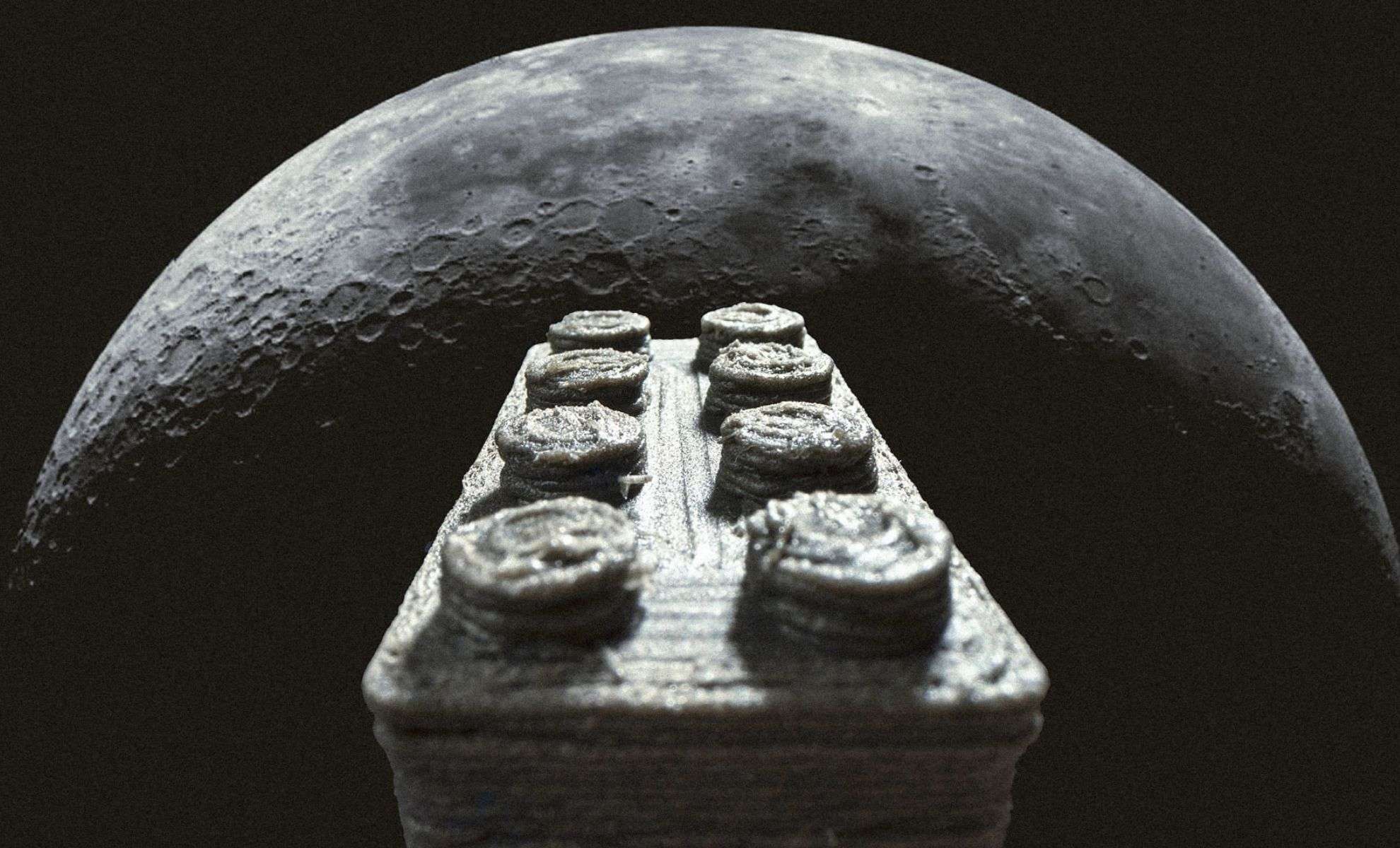
ESA is pioneering new techniques to overcome the critical challenge of constructing habitats on the Moon.
Shipping building materials from Earth is costly and impractical. As a result, ESA researchers are turning to the Moon’s indigenous resources to develop sustainable construction technologies, potentially transforming space settlement strategies.
Pioneering Lunar Construction with Space Materials
The Moon’s surface is blanketed by regolith, a loose layer formed from countless meteoroid collisions over billions of years. This plentiful natural material offers a promising building block. Since lunar soil samples are scarce, with limited retrievals from missions like NASA’s Apollo and China’s Chang’e 6, ESA scientists simulated lunar soil by pulverizing a meteorite roughly 4.5 billion years old. Using this, they 3D printed modular bricks akin to LEGO, termed “space bricks.”

These space bricks are engineered to interlock just like LEGO blocks, providing a versatile system for assembling different structures. While their rough surface and consistent grey color reflect their extraterrestrial origin, these bricks offer a pragmatic platform for ESA engineers to experiment with construction approaches suitable for lunar conditions before actual deployment.
Showcasing and Testing the Space Bricks
Fifteen of these bricks will be exhibited at the Lego House in Billund, Denmark, and various Lego retail locations worldwide. This initiative is designed to engage the public and highlight the potential uses of materials sourced beyond Earth for space exploration.
Producing habitats and facilities directly on the Moon could greatly reduce the dependence on Earth-imported supplies, making sustained lunar presence more achievable.
ESA’s project celebrates global space collaboration by integrating insights from previous missions and advancing technological solutions for emerging challenges.
Significance for Future Lunar Missions
The novel application of meteorite powder underscores the critical role of in-situ resource utilization (ISRU) in space exploration. By utilizing lunar materials, ESA is advancing more economical and sustainable missions. The progress of ESA’s space bricks initiative is a vital step in realizing permanent settlements on extraterrestrial surfaces.
Developing space bricks represents an early phase in humanity’s quest for a lasting lunar foothold. Future efforts must focus on testing the robustness of these materials under lunar conditions, scaling construction techniques, and evaluating potential astronaut health risks from handling regolith-based components.
Innovation and global cooperation remain key to overcoming these obstacles. The knowledge gained from ESA’s space bricks experiment will inform not only lunar endeavors but also pave the way for expeditions to Mars and other destinations.
As space agencies globally expand the limits of exploration, creating durable habitats beyond Earth moves closer to fruition. Projects like ESA’s space bricks are instrumental in transforming that aspiration into achievable milestones.
- Categories:
- Astronomy ,
- News ,
- Space ,
- Nasa ,
- Evolution







0 comments
Sign in to Comment