
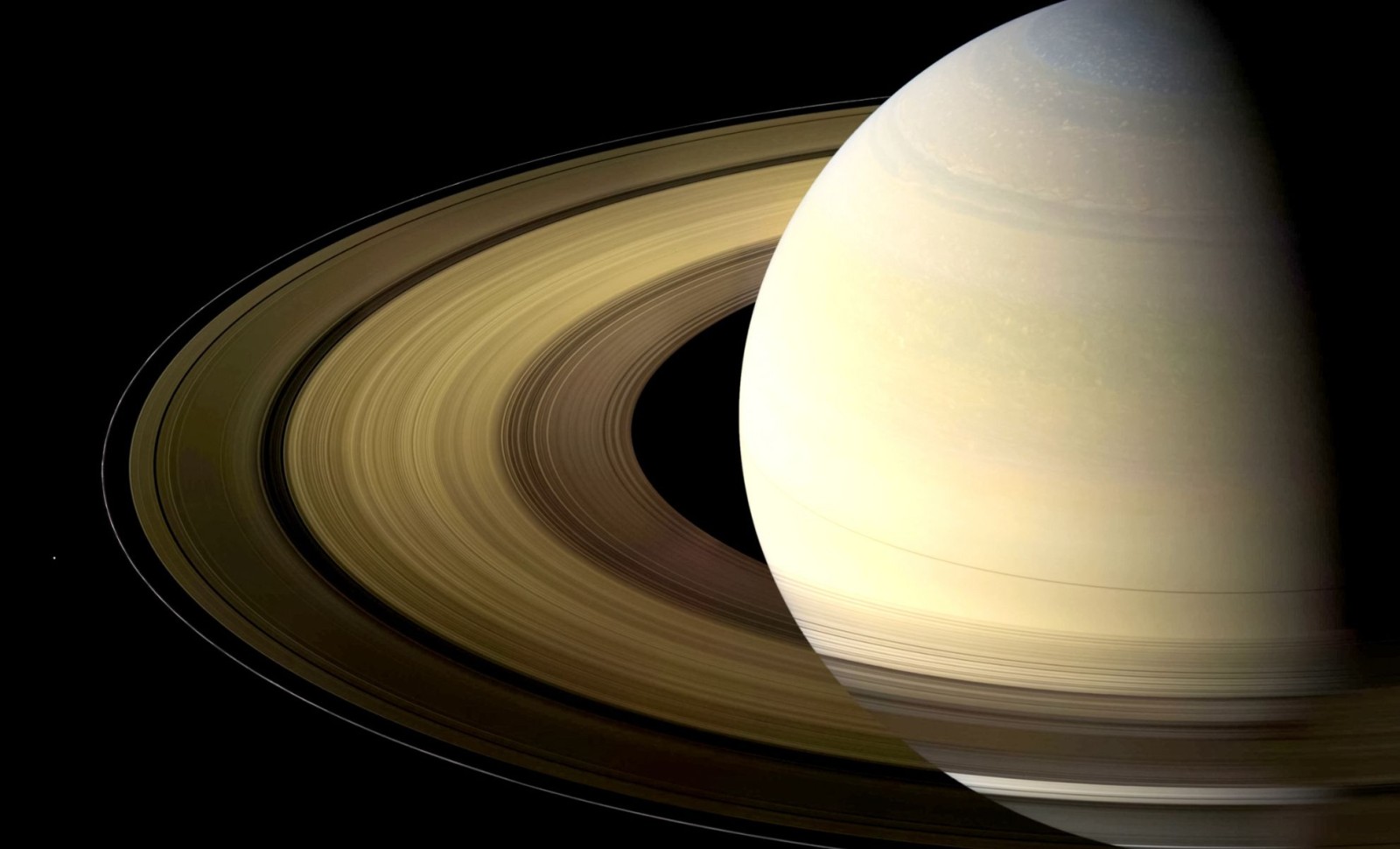
This weekend offers stargazers a unique chance to witness Saturn in a way seldom seen: its famous rings will become nearly invisible. This occurs during a phenomenon known as a ring-plane crossing, during which Saturn’s rings appear so thin that the planet seems to lose its signature adornment. Although the rings won’t fully disappear, this rare occurrence lets observers see Saturn from an uncommon perspective.
What Causes Saturn’s Rings to Nearly Disappear?
The intriguing reason behind Saturn’s rings seeming to vanish is linked to the planet’s tilted axis, somewhat like Earth’s. Saturn completes an orbit around the Sun in roughly 30 years, and throughout this journey, the orientation of its rings changes from our vantage point. Every 13 to 16 years, Saturn's rings align edge-on with Earth, causing them to shrink to an exceptionally thin line, almost vanishing from view. Noted astrophotographer Damian Peach observes:
“Saturn is a spectacular object to look at.” He added, “Even with small telescopes, you can see the rings.”
Add Cosmo Herald as a Preferred Source

Ring-plane crossings occur periodically, yet their timing and visibility differ. The last clearly visible crossing happened in 1995–1996, while those in 2009 and 2023 were obscured by sunlight. A brief crossing also took place earlier this year in March but was similarly hidden by solar glare. The upcoming crossing after this weekend won’t take place until 2038, making this an exceptional moment for enthusiasts to observe Saturn’s rings in this unusual state.
Utilizing the Opportunity to Study Saturn’s Elusive E-Ring
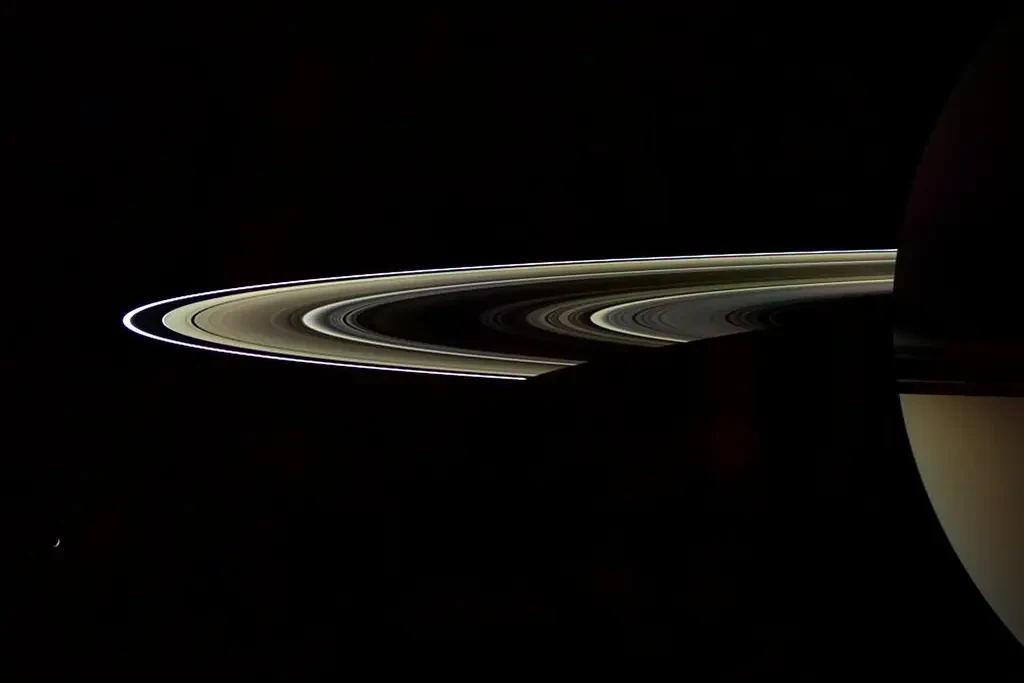
The apparent vanishing of Saturn’s rings is not just visually striking but also scientifically valuable. During this ring-plane crossing, reduced glare from the rings allows astronomers to better observe the faint outer ring known as the e-ring, which is difficult to see during the rest of the year.
Philip Nicholson, a Cornell University astrophysicist, highlights that this event is ideal for examining the e-ring’s composition. Scientists believe this ring forms from icy jets expelled by Enceladus, one of Saturn’s moons, and they aim to detect carbon atoms within the vapor to gain insights into the moon’s potential to support life.
Nicholson’s research group plans to use the James Webb Space Telescope to monitor the ring-plane crossing and analyze the reflected light from the e-ring. Their objective is to collect data supporting the theory that Enceladus may conceal a subsurface ocean beneath its icy shell, capable of sustaining life.
When and How to Watch This Celestial Event
According to the New York Times, Saturn will be visible in the southeast sky just after sunset on Friday, Saturday, and Sunday nights. The rings will appear thinnest on Saturday evening around 7 p.m. Eastern, roughly an hour after Saturn rises. Observers should be sure to view the planet before 3:30 a.m. local time, when it dips below the horizon.
Though nearly edge-on, Saturn’s rings will not be entirely vanished—they will be far less prominent than usual. This fleeting event offers amateur astronomers a rare chance to see one of the solar system’s most celebrated planets in a distinctive form. Over the coming months, the rings will gradually widen again, returning Saturn to its customary majestic appearance.
- Categories:
- Astronomy







0 comments
Sign in to Comment