
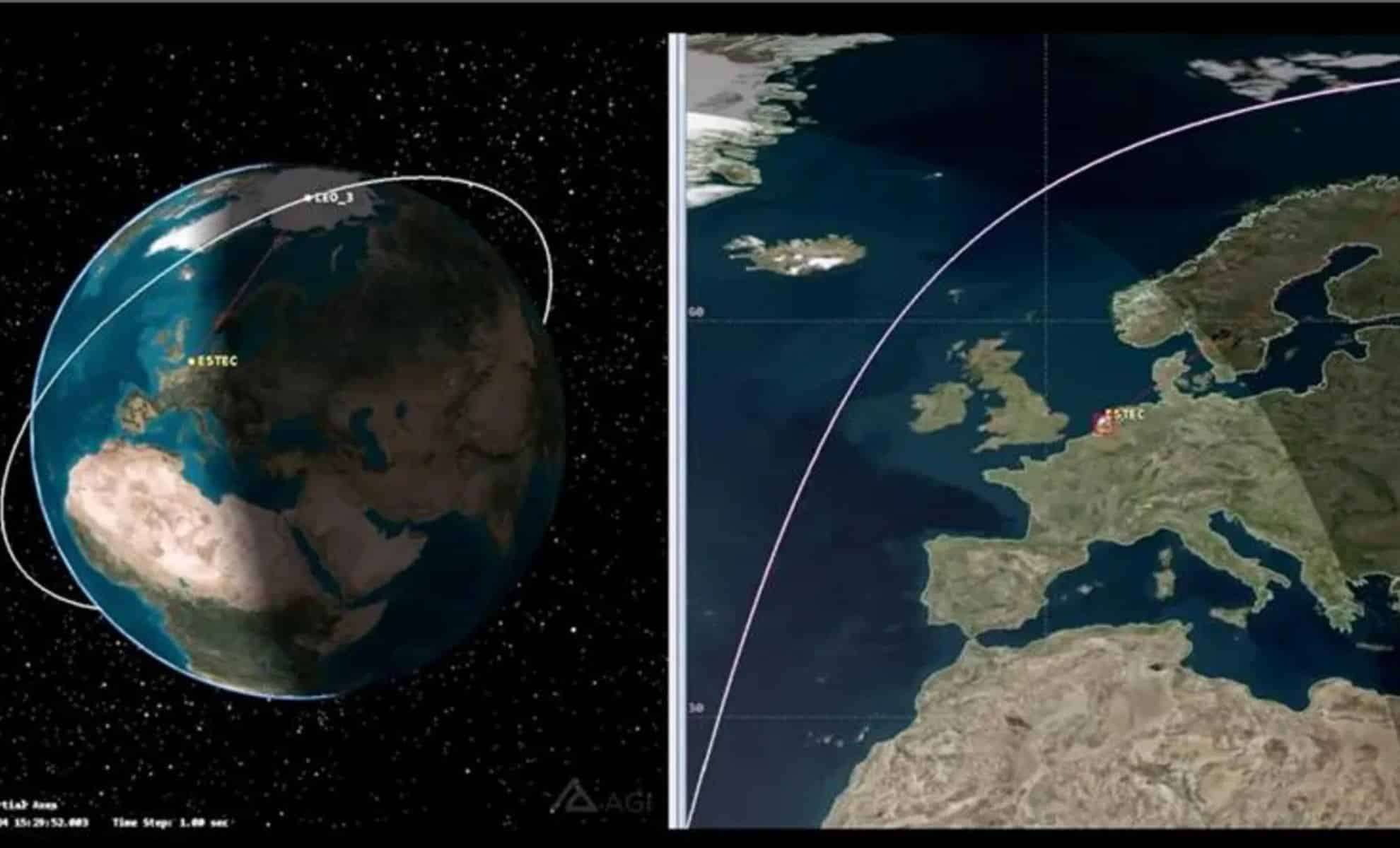
A major advancement in telecommunications has been achieved as 5G networks establish a direct link to a low Earth orbit (LEO) satellite for the first time. This milestone, led by the European Space Agency (ESA) in partnership with Telesat, represents a significant step towards delivering satellite internet with speeds comparable to terrestrial systems. This pioneering effort promises to extend rapid internet access to isolated regions and foster innovations across fields such as medical services, emergency management, and autonomous systems.
Unpacking the Technology
The cooperation between ESA and Telesat was formalized through a Memorandum of Understanding, allowing tests on the LEO 3 satellite. Unlike satellites in geostationary orbit, which remain fixed over one location, LEO satellites orbit quickly, posing challenges in maintaining stable communication links. Utilizing Amarisoft’s 5G Non-Terrestrial Network (NTN) platform, the experiment maintained uninterrupted connectivity as the satellite moved across the sky from horizon through a 38-degree apex and back down.
This success confirms the practicality of continuous communication between terrestrial infrastructure and orbiting LEO satellites. “This unprecedented test highlights ESA’s leadership in advancing broadband satellite communications,” remarked Alberto Ginesi, head of ESA’s Telecom Systems and Techniques at the Directorate of Technology, Engineering and Quality (TEC).

Such progress builds on guidelines established by the 3GPP standardization body, crucial for interoperability between cellular networks and satellite links. This standardization is essential for future “direct-to-device” connectivity, enabling smartphones and other devices to connect straight to satellites without relying on ground stations.
Why This Breakthrough Matters
The impact of merging satellite and terrestrial 5G infrastructures is profound. Several key areas stand to benefit:
- Disaster Relief: Secure and swift communication during emergencies where usual networks have failed.
- Healthcare Access: Facilitating remote diagnostics and surgeries via highly responsive connections.
- Autonomous Transportation: Enabling reliable connectivity for driverless cars and drones, even in network-scarce areas.
- Global Broadband: Delivering high-speed internet to underserved and rural communities, narrowing the digital divide.
Ginesi noted, “Building on the approvals from 3GPP, we have validated 5G NTN standards using a live satellite link in non-geostationary orbit. This accomplishment confirms ESA’s commitment to cutting-edge satellite broadband projects like IRIS².” He also acknowledged key contributions from Augusto Marziani, Stefano Cioni, and Matteo Conti in making this experiment a success.
The Power of Open Standards
One notable feature of the test was its foundation on open standards rather than proprietary protocols. The Third Generation Partnership Project (3GPP) ensures that diverse systems can work together efficiently, a crucial factor for scaling satellite 5G globally, reducing costs, and allowing smooth transitions between terrestrial and orbit-based networks.
This represents a paradigm shift away from legacy systems demanding specialized equipment and software. With open protocols, the vision of connecting everyday mobile devices directly to satellites is increasingly attainable, ultimately lowering infrastructure expense, boosting provider interoperability, and simplifying high-speed internet coverage.
Looking Forward: The Promise of IRIS²
This successful trial paves the way for ambitious initiatives like IRIS², the European Union’s strategic satellite communication program. Leveraging this foundation, IRIS² plans to deliver reliable and secure satellite services worldwide, supporting national security and commercial uses.
The advancements in satellite-enabled 5G extend beyond Europe, attracting global attention as a scalable solution to connect remote regions and enhance worldwide network integration. As 5G NTN technology evolves alongside LEO satellites, it promises to revolutionize internet accessibility everywhere.
Overcoming Hurdles Before Widespread Deployment
Despite reaching this vital milestone, several challenges remain before satellite 5G can be broadly deployed. Building the necessary infrastructure, ensuring device compatibility, and achieving cost-effectiveness will require coordinated efforts from governments, industry, and regulatory bodies. Furthermore, legal and regulatory matters may impede rollout in some regions.
Nevertheless, ESA’s pioneering test demonstrates the technology’s viability and strong potential. Continued innovation brings the vision of ubiquitous, location-independent connectivity ever closer.
Transforming Connectivity Through Space Innovation
The collaboration between ESA and Telesat to establish a 5G link with a LEO satellite constitutes a transformative milestone in communication technology. This test proves satellite 5G’s practicality and signals a future where high-speed internet is accessible globally—from major cities to remote locations. With projects like IRIS² building on these advances, global connectivity is poised for dramatic change.
This historic achievement exemplifies how cooperative innovation can push technological boundaries, reshape industries, and enhance quality of life worldwide. The limits of connectivity are truly extending beyond the skies.
- Categories:
- News











0 comments
Sign in to Comment