
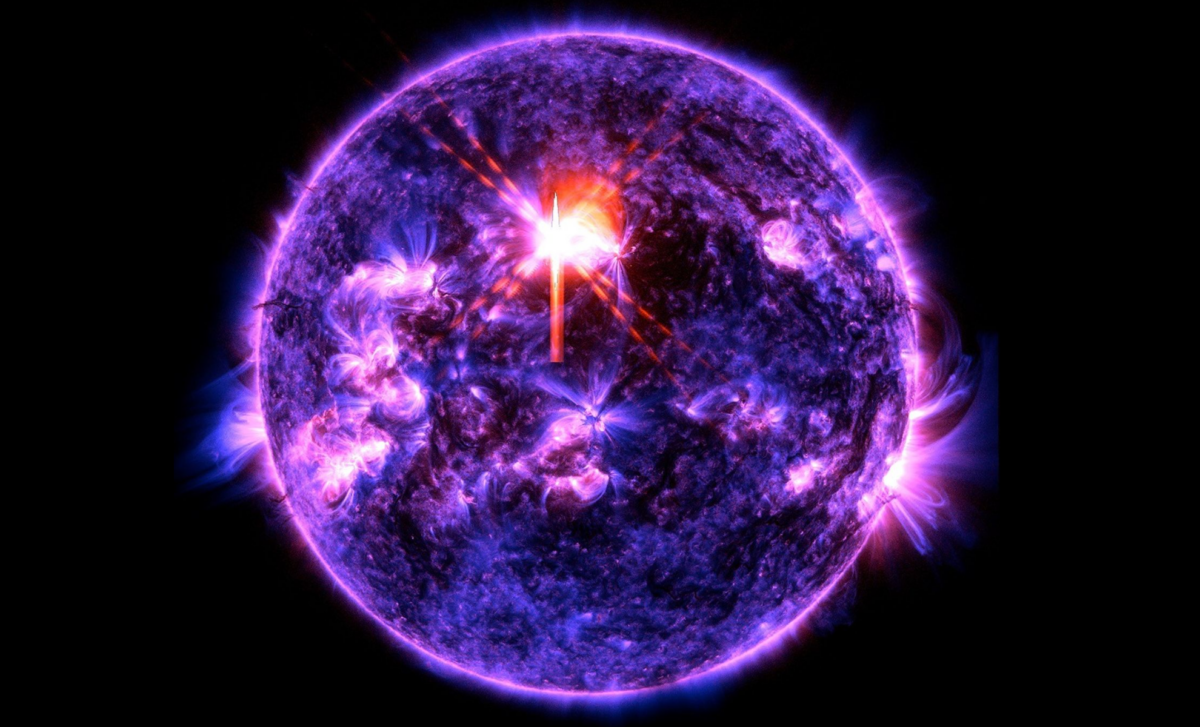
On February 4, 2026, an intense X4.2-class solar flare erupted from the Sun, causing significant radio communication outages across sections of Africa and Europe. This energetic event originated from sunspot cluster AR4366, an exceptionally active region that has recently produced an elevated number of solar flares. As reported by NOAA’s Space Weather Prediction Center, despite its strength, this solar flare did not generate a coronal mass ejection (CME), which could have amplified its effects. Scientists remain vigilant, continually evaluating potential long-term consequences. This piece explores the mechanisms behind solar flares, their impact on Earth, and what future activity from AR4366 may entail.
Decoding Solar Flares: What Unfolded?
Solar flares represent sudden, massive releases of energy from the Sun’s surface or atmosphere. They are divided into categories according to their power levels, with X-class flares being the most extreme. On February 4, the Sun emitted a potent X4.2 flare, caused by magnetic disturbances within sunspot group AR4366. This burst unleashed a surge of radiation into Earth’s upper atmosphere, disrupting radio waves extensively over western Africa and southern Europe. The flare’s force triggered radio blackouts lasting several minutes, affecting high-frequency communications critical to aviation and maritime services.
This event highlights the ever-changing and volatile nature of solar activity, where sunspots often act as focal points for intense eruptions. Such flares result from complex magnetic interactions where energy builds up and is suddenly released, somewhat like the explosion of a pressured balloon. Although temporary, the disruptions caused were notable but not unprecedented. Scientists have been closely tracking the Sun’s increasing activity as the solar cycle approaches its peak.

AR4366: Why This Sunspot Garners Attention
Sunspot AR4366 is a notably active and expanding area on the solar surface. Since its recent appearance, it has produced a significant number of solar flares, attracting the attention of space weather specialists. Measuring about 15 times the diameter of Earth, this sunspot ranks among the largest recorded recently and can be observed safely from Earth using solar viewing glasses during eclipses.
Despite generating strong flares, AR4366 has not yet released a notable coronal mass ejection (CME), which often accompanies such solar events. While CMEs release massive amounts of solar plasma that can cause more severe impacts, AR4366 has only sent Earth a minor, slow-moving CME following an earlier X8.4 flare. This event may still induce mild geomagnetic effects, as NOAA forecasts possible G1 category minor geomagnetic storms.
However, the increasing magnetic complexity of AR4366 raises concerns about future, potentially more powerful eruptions. If its magnetic configuration destabilizes further, it could emit stronger solar flares and potentially hazardous CMEs. Space weather observers continue to monitor AR4366 closely for such developments.
NOAA’s Critical Role in Solar Monitoring
The National Oceanic and Atmospheric Administration (NOAA) is essential in observing and forecasting space weather events. NOAA’s Space Weather Prediction Center (SWPC) provides up-to-the-minute information on solar flares, CMEs, and other solar phenomena. Their review of the February 4 flare confirmed its substantial strength, enough to cause radio blackouts, but noted the absence of a CME capable of severely impacting Earth’s magnetic environment. NOAA links this flare to the ongoing uptick in solar activity as the Sun nears the apex of its 11-year cycle.
An impulsive X4.2 flare occurred at 04/1213 UTC from Region 4366. No CME signatures have been identified in imagery at this time. Stay tuned for updates. pic.twitter.com/YDc2UHmeAA
— NOAA Space Weather Prediction Center (@NWSSWPC) February 4, 2026
NOAA relies on data from orbiting observatories such as NASA’s Solar Dynamics Observatory (SDO) to monitor solar behavior continuously and issue alerts. Accurate data enables experts to forecast solar events with varying certainty, aiding industries and governments in preparing for possible interference. Though flares like the February 4 incident are relatively common, NOAA’s timely notifications remain crucial to protecting communications and technology-sensitive infrastructure.
Consequences for Earth-Based Technology
X-class solar flares can significantly interfere with Earth’s technological systems. Intense radiation from such flares disrupts radio transmissions, particularly those using high frequencies vital for long-distance communication. The February 4 flare led to noticeable interruptions across Africa and Europe, affecting aviation and marine radio operations. Although many modern systems are designed to endure minor anomalies, stronger flares risk lasting damage to satellites and electrical grids.
Solar flare activity can also degrade GPS reliability, impacting navigation systems used in commercial flights and shipping logistics. The satellite vulnerability is a major concern; a sufficiently intense flare can damage spacecraft electronics, potentially causing communication failures or loss of function. While the recent X4.2 flare did not inflict critical satellite damage, it underscores the fragility of Earth’s interconnected technology in the face of space weather.
The Enigma of Coronal Mass Ejections
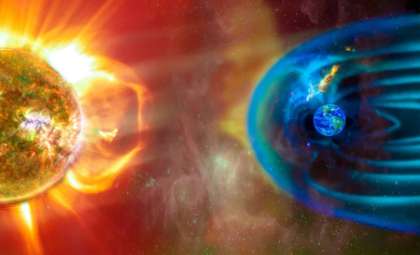
Although this flare did not produce a CME, these ejections remain a primary focus for space weather research. CMEs involve massive expulsions of solar plasma and magnetic fields that can trigger geomagnetic storms upon interacting with Earth’s magnetosphere. These storms might cause visible auroras and disrupt satellite and communication infrastructures, with severe cases threatening power grids.
As solar activity escalates toward its cycle peak, scientists vigilantly watch active regions like AR4366 for potential CME releases. While the recent X4.2 flare wasn’t accompanied by such an event, solar dynamics remain unpredictable. Ongoing research aims to better understand and predict the connection between solar flares and CMEs to mitigate future space weather impacts.
Rising Risks from Solar Storms
With the Sun’s activity intensifying, the likelihood of disruptive solar storms grows. These storms consist of surges of energy and radiation capable of disturbing Earth’s magnetic field, disrupting technological and communication systems worldwide. Solar storms range from minor inconveniences to catastrophic phenomena, like the historic Carrington Event of 1859 that severely hindered telegraph networks.
The current solar cycle—the peak anticipated around 2025—is expected to bring more frequent flares and potential CMEs. The February 4 flare serves as a reminder of how solar events can influence modern technology. Scientists and engineers are strengthening their strategies to shield critical infrastructure by advancing our understanding of solar flares and CMEs and their impacts on Earth.
- Categories:
- Science









0 comments
Sign in to Comment