

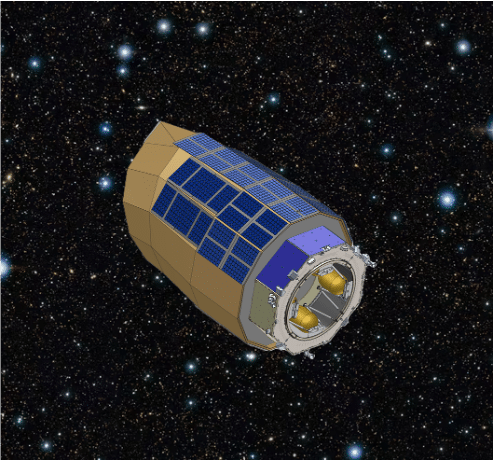
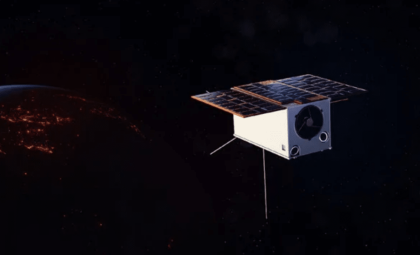
The Lazuli Space Telescope, a new privately funded observatory, is poised to exceed Hubble’s capabilities by featuring a larger mirror combined with state-of-the-art technology. This venture is financed by former Google CEO Eric Schmidt and his partner Wendy, and it’s already generating excitement among astronomers worldwide.
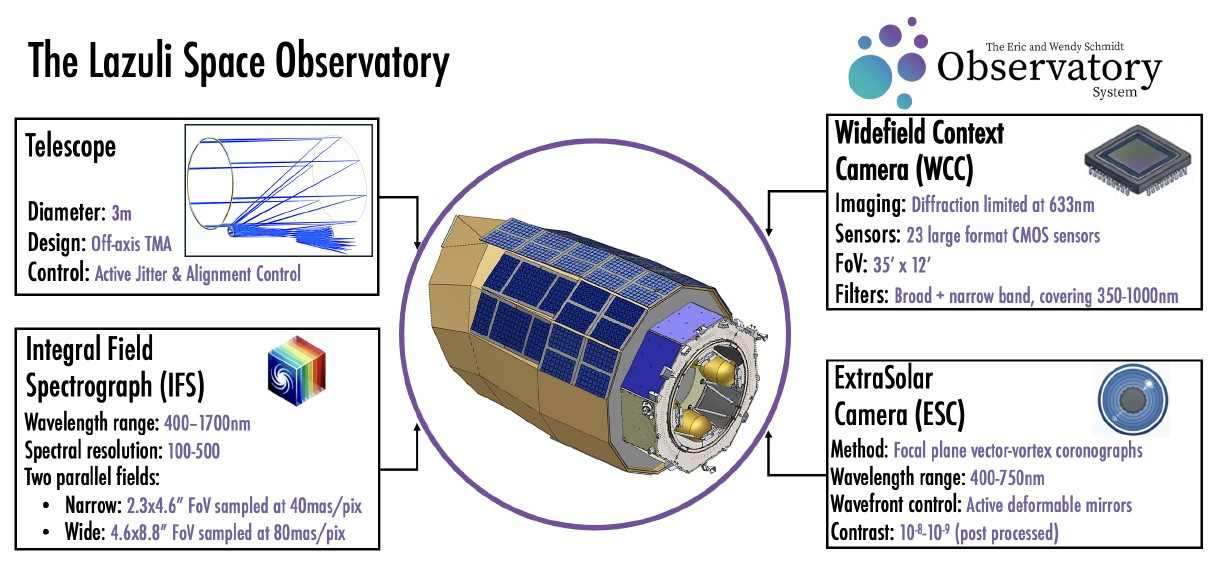
At the heart of Lazuli lies its impressive three-meter mirror, making it one of the most sizable space telescopes ever constructed, optimized to capture both optical and infrared wavelengths. While iconic instruments like Hubble have set the foundation for space observation, Lazuli aims to advance this legacy with enhanced speed and operational efficiency, propelled by its private backing and a rapid development schedule. If everything proceeds smoothly, this innovative project could transform our cosmic insights within just a few years.
Transforming Space Astronomy with a $500 Million Initiative
Lazuli represents a significant shift in the realm of celestial exploration. The era when NASA or ESA exclusively steered space science is evolving. The substantial funding by the Schmidt family marks an emerging movement towards private sector leadership in space missions. This funding model enables faster, more adaptable project timelines.

According to findings shared in a recent arXiv article, ventures like Lazuli are unburdened by the slow bureaucratic procedures typical of governmental space agencies. The project team can undertake greater risks, trial innovative technologies, and swiftly navigate challenges. Whereas many space missions require decades for completion, Lazuli is targeting a launch window of just three to five years.
Speed and Precision in Space Observation
The defining advantage of Lazuli lies in its responsiveness. Unlike Hubble, which can take days to reposition and capture transient cosmic phenomena, the team explains:
“Operating from a lunar-resonant orbit, the observatory will be able to respond to external targets of opportunity within four hours of trigger receipt, with a goal of 90 minutes, and will support continuous observations of individual targets for up to ~12 hours.”
This rapid targeting ability is crucial for studying fleeting events such as supernovae and gamma-ray bursts.
By quickly reacting to alerts, Lazuli could revolutionize observational astronomy, enabling scientists to gather richer data sets on short-lived phenomena—from star explosions to the growth of black holes.
Advancing the Hunt for Exoplanets
Another groundbreaking feature of Lazuli is its coronagraph, designed to block starlight and reveal exoplanets orbiting nearby suns.
While telescopes such as the Roman Space Telescope focus on exoplanet identification, Lazuli’s larger mirror and novel optical system may enable it to detect these distant worlds more efficiently and at a faster rate. The team highlighted in a statement via Schmidt Sciences:
“The mission adopts an open data philosophy, with science-ready data products released to the global community following quality assurance and calibration, typically within days.”
- Categories:
- News










0 comments
Sign in to Comment