
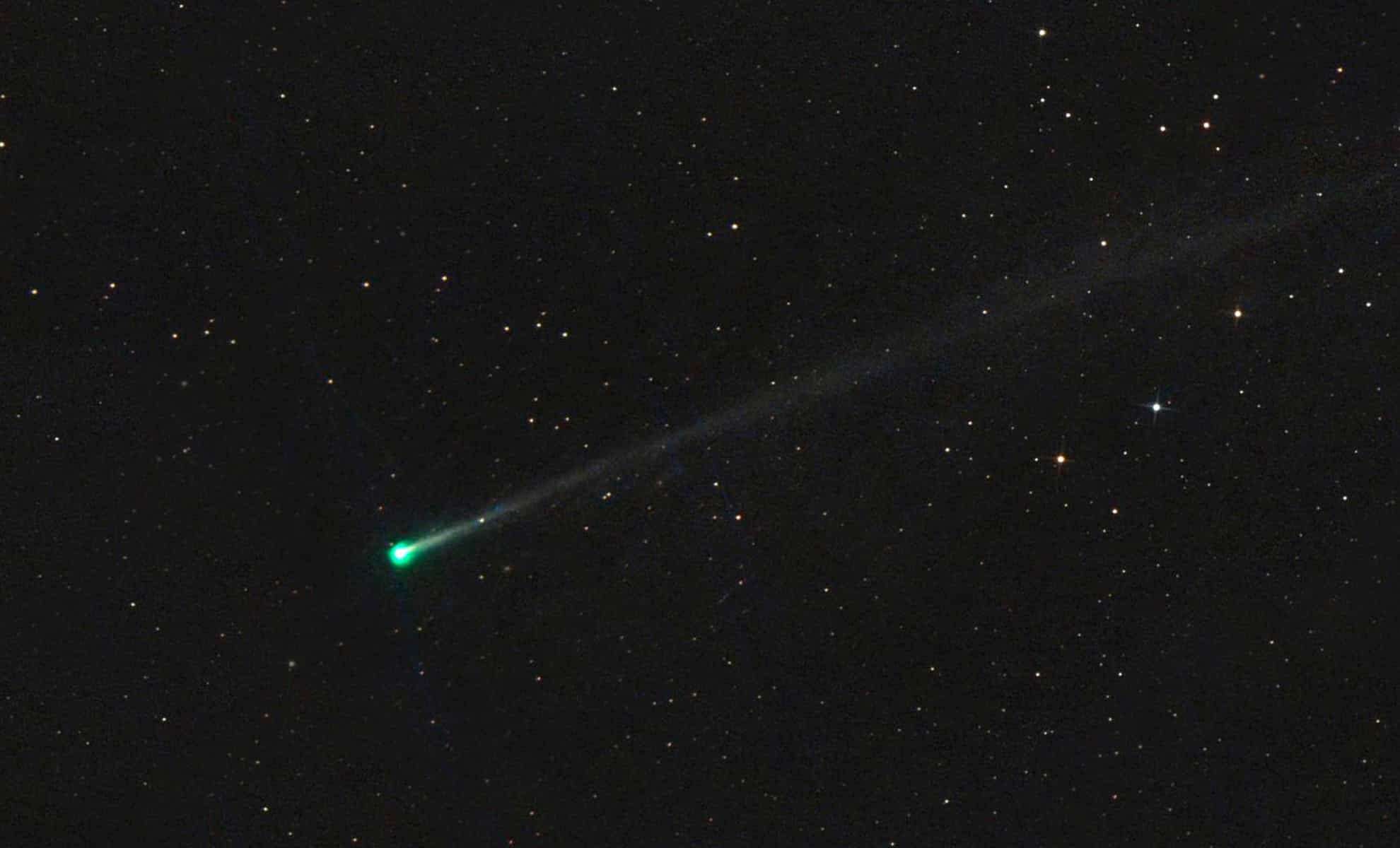
A rare and spectacular celestial event is expected to captivate observers as Comet C/2024 G3 (ATLAS) makes its close approach to the Sun. Classified as a "sun-grazer" due to its perilously tight orbit around our star, this comet is forecasted to achieve a maximum brightness of magnitude -6.1. If this prediction proves accurate, it will surpass Venus, the second-brightest object visible in the night sky after the Moon, captivating viewers with an extraordinary brilliance. Such bright comets are extraordinarily infrequent, making this a remarkable occasion. However, observing it will be challenging due to its proximity to the Sun, and its survival remains uncertain. Nevertheless, Comet C/2024 G3 has already generated considerable excitement within the astronomy community and among skywatching enthusiasts, who eagerly anticipate one of 2025's most stunning cosmic displays.
Introducing Comet C/2024 G3 (ATLAS)
Comet C/2024 G3 is a long-period comet that takes around 135,000 years to orbit the Sun. The last time this comet ventured near the Sun, Earth was still plunged in the Ice Age. Its orbit brings it extremely close to the Sun, categorizing it as a “sun-grazer”—a comet type prone to disintegrating under intense solar heat.
Here is a summary of its main features:

The comet’s route brings it exceptionally near to the Sun, exposing it to extreme temperatures that cause its icy core to vaporize, resulting in the glowing coma and an impressive tail visible from Earth.
What Makes It Shine So Brightly?
Comet C/2024 G3 (ATLAS) owes its extraordinary glow to its close passage by the Sun combined with the volatile composition of its icy nucleus. As the comet nears the Sun, solar heat causes the ices to sublimate—transforming directly from solid to gas—releasing dust and gas that form a radiant coma around the nucleus and an extensive tail that can extend millions of kilometers. The reflective particles make the comet especially luminous, ranking it among the brightest celestial phenomena of recent times.
Yet, comets are famously unpredictable. The very closeness to the Sun that enhances C/2024 G3’s glow also poses a serious threat of fragmentation. Powerful solar radiation and gravitational forces may disrupt the comet’s structure, dimming its brilliance. Although it has already exceeded many brightness estimates, its final outcome remains unknown, adding to the suspense and fascination surrounding it.
Challenges and Recommendations for Viewing
Despite its anticipated brilliance, spotting Comet C/2024 G3 won’t be simple. Around its brightest point on January 13, 2025, the comet will appear very close to the Sun in our sky, making it nearly impossible to observe directly without specialized tools, as the Sun’s glare will dominate the view.
For those determined to see this rare visitor, proper timing and location are essential:
- Southern Hemisphere Viewing: The comet’s trajectory favors observers in the Southern Hemisphere, with optimal viewing locations including Johannesburg, Cape Town, and São Paulo, where it will pass nearly overhead. Those in the Northern Hemisphere will find observing difficult due to its position and the Sun's overwhelming light.
- Best Viewing Time: Around January 20, the comet will have moved farther from the Sun. Although its brightness will be lower than its peak, it will be visible during twilight when solar glare weakens.
- Appropriate Equipment: Using binoculars or telescopes with solar filters is crucial for safe and effective observation, especially near the Sun or during daylight. These devices can reveal the comet’s detailed coma and tail structures.
Conditions like weather, ambient light pollution, and skyglow can affect visibility. Observers are advised to seek out dark-sky locations away from city lights to improve their chances of seeing the comet.
How Does This Comet Stand Among Others?
Comet C/2024 G3 has drawn comparisons to earlier phenomena such as C/2023 A3 (Tsuchinshan-ATLAS), which also stirred excitement but ultimately fell short of its brightest expectations. While the two share similar orbits and initial brightness forecasts, C/2024 G3 distinguishes itself in several ways:
- Brightness: C/2024 G3 is predicted to reach a staggering -6.1 magnitude, outclassing C/2023 A3’s peak of -4 magnitude, making it one of the most luminous comets in recent memory.
- Viewing Opportunities: Though both comets are sun-grazers, C/2024 G3’s orbit favors Southern Hemisphere viewers, offering better chances to observe its display compared to its predecessor.
- Orbital Timespan: With an incredibly long orbital period of 135,000 years, C/2024 G3 is a truly rare visitor to our inner solar system, unlike the shorter cycle associated with C/2023 A3.
These points emphasize the exceptional nature of C/2024 G3 and increase hopes of it providing a more memorable spectacle than recent comets.
Surviving the Sun’s Fiery Embrace
Sun-grazing comets like C/2024 G3 endure intense conditions as they near the Sun. The extreme heat and gravitational pulls can fracture or entirely disintegrate their icy cores. Still, C/2024 G3 has shown resilience, withstanding its previous journey near the Sun approximately 135,000 years ago. This resilience suggests a particularly sturdy nucleus that might endure its upcoming close solar encounter.
If the comet survives, it could present observers with a captivating display featuring a refreshed coma and tail as it continues its path. Conversely, if it breaks apart, it will join the many other sun-grazers lost to the Sun’s overwhelming forces, underscoring the fragility of these wanderers.
The Significance of This Event
Comets like C/2024 G3 represent not only dazzling spectacles but also remnants from the early stages of our solar system. Analyzing their composition and behavior provides scientists with valuable clues about the formation of planets, moons, and other cosmic bodies.
Observing sun-grazing comets also yields insights into the Sun itself. The interaction between the comet’s material and solar radiation reveals details about the Sun’s magnetic environment, solar winds, and corona, aiding our understanding of space weather and its effects on Earth.
For both amateur astronomers and researchers, Comet C/2024 G3 exemplifies the universe’s beauty and unpredictability. Whether it dazzles the skies or succumbs to the Sun’s harsh conditions, its voyage highlights the ever-changing and dynamic nature of our solar neighborhood.
- Categories:
- Astronomy ,
- News








0 comments
Sign in to Comment