
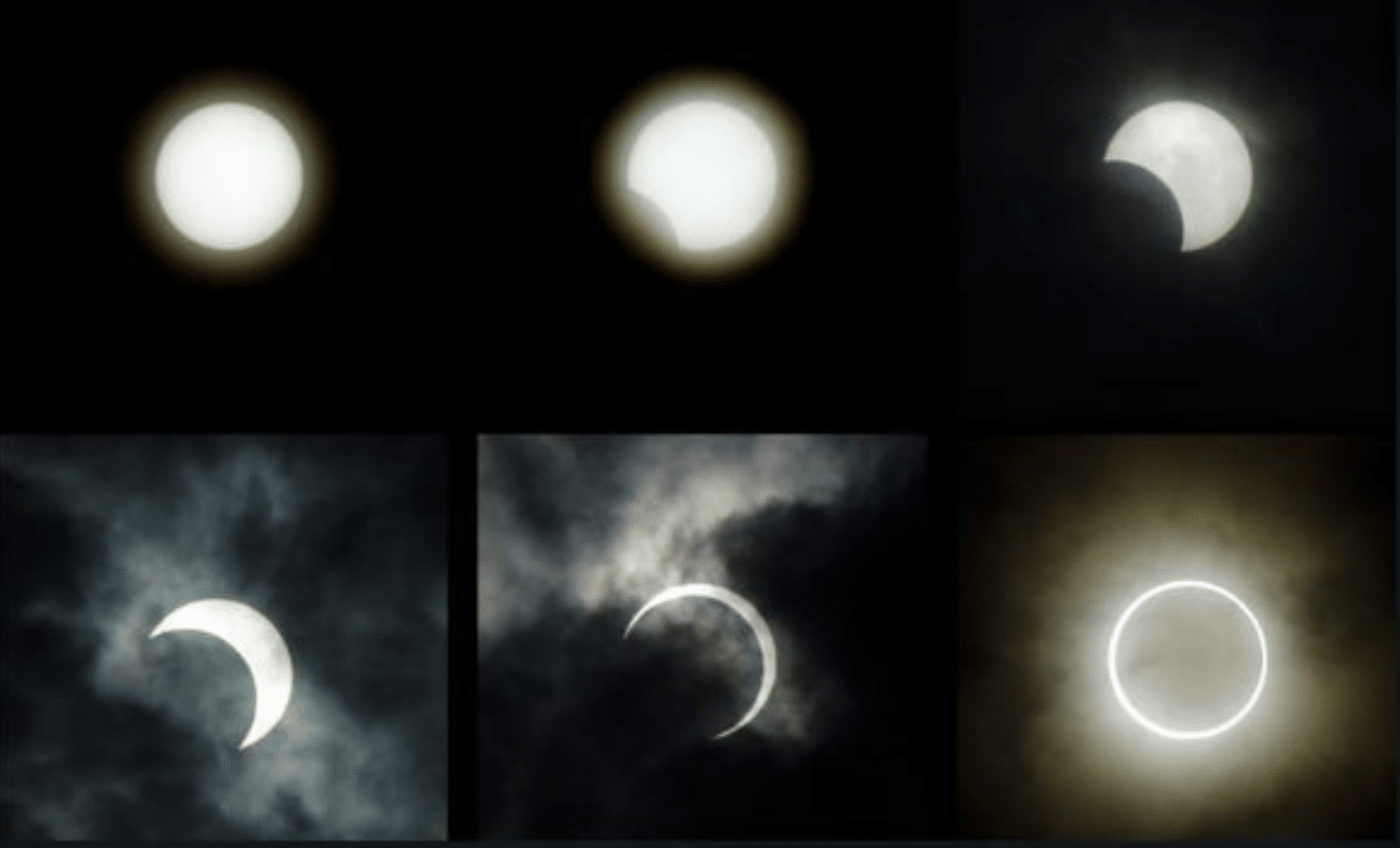
An extraordinary celestial show approaches as the Moon aligns perfectly between the Earth and Sun, resulting in a captivating annular solar eclipse.
This uncommon event occurs when the Moon is slightly farther from Earth, leaving a vivid halo of sunlight encircling its dark silhouette. Familiarly known as the “ring of fire,” this awe-inspiring phenomenon offers a display unlike total eclipses, in which the Sun is entirely hidden.
Understanding Annular Solar Eclipses
An annular solar eclipse takes place when the Moon’s distance from Earth makes it too small to cover the Sun completely. Consequently, a glowing ring formed by the Sun’s outer edges surrounds the Moon’s shadowed disk at eclipse peak. This brilliant ring manifests a unique spectacle distinct from total solar eclipses, where sunlight is fully obstructed and darkness envelops the sky.

During this forthcoming eclipse, the Moon will slowly traverse in front of the Sun, gradually obscuring it until only the fiery ring remains visible. The entire event will span hours, culminating when the Moon precisely aligns with the Sun to create this striking effect. This perfect alignment can only be observed from a narrow path on Earth where the geometry and timing align perfectly.
This annular eclipse offers a rare chance for both dedicated astronomers and casual viewers to witness one of nature’s most captivating sights. Unlike the more frequent total eclipses, annular eclipses require very particular conditions, making each event uniquely fascinating.
Best Viewing Spots and Timing Details
The visible track of this annular eclipse will pass through select areas, granting optimal viewing opportunities along its path of annularity, which extends roughly 165 to 206 miles wide. This path crosses parts of the Pacific Ocean, southern Chile, and southern Argentina, notably including the breathtaking region of Patagonia.
In Patagonia’s Santa Cruz region, the eclipse is set to reach maximum coverage at around 5:25 PM local time. Observers here will witness the complete “ring of fire,” with the Moon obscuring the Sun such that only a slender ring of light remains. This annularity phase will last up to 6 minutes and 20 seconds, providing ample time to enjoy and photograph this stunning event.
Across other parts of South America, including major cities like Buenos Aires, Argentina, and São Paulo, Brazil, the eclipse will appear as a partial covering of the Sun. Although less dramatic than the full ring of fire, this partial eclipse still offers a spectacular and rare celestial sight worth observing.
Ensuring Safe Eclipse Viewing
Viewing any solar eclipse demands careful precautions to protect your eyes. Looking directly at the Sun without appropriate filters can cause irreversible eye damage. To watch this annular eclipse safely, use certified solar eclipse glasses that comply with the ISO 12312-2 standard. These glasses block harmful solar rays while allowing a clear view of the eclipse.
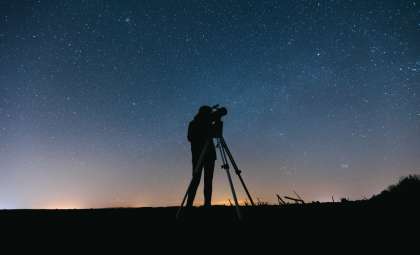
If planning to observe through cameras, telescopes, or binoculars, fitting these devices with proper solar filters is essential to safeguard both your vision and equipment. Filters must be placed over the lens before aiming at the Sun. Removing such filters can result in severe eye injuries or damage to the optics.
For those unable to view the eclipse live in person, live streaming options will be available through Space.com and institutions such as the Planetario Galileo-Galilei in Buenos Aires, providing worldwide audiences with expert commentary and real-time visions of the event.
Why the 2024 Eclipse Matters
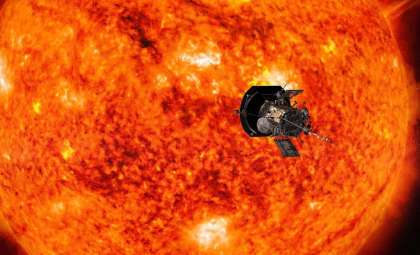
This approaching annular solar eclipse offers not only a spectacular view but also significant scientific insights and public engagement opportunities. Eclipses help researchers investigate the Sun’s corona, study lunar orbit mechanics, and test astronomical instruments, enriching our understanding of the solar system.
Furthermore, spectacular eclipses like this reveal the precise cosmic choreography between Earth, Moon, and Sun, underscoring the delicate balance sustaining life on our planet. Whether located within the path of annularity or watching remotely, this is a must-see celestial occurrence highlighting our universe’s wonder.
Prepare your viewing gear, save the date, and get ready to witness one of the most striking natural phenomena Earth’s skies offer.
- Categories:
- Astronomy ,
- News






0 comments
Sign in to Comment