
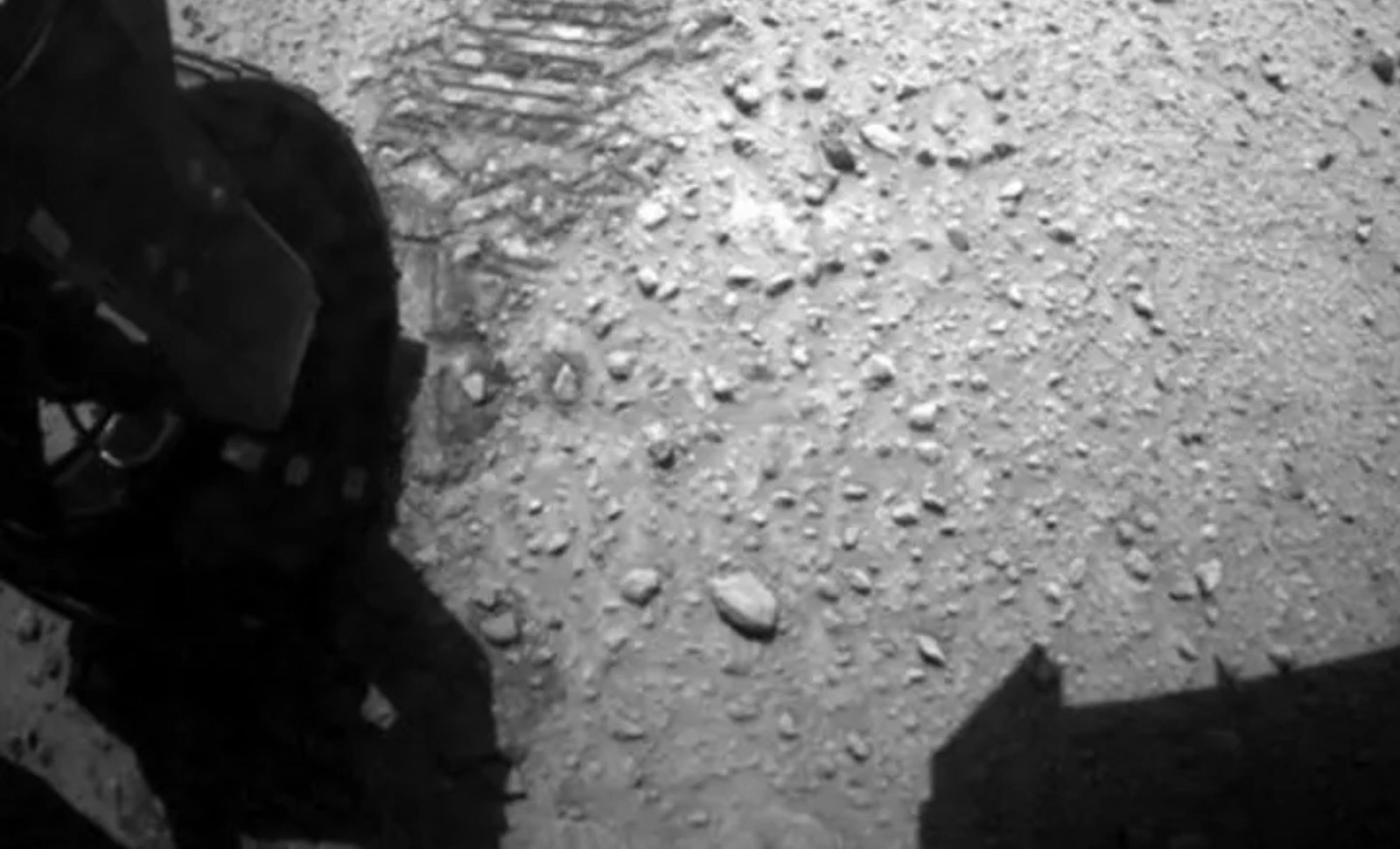
A controversial assertion that NASA rover photographs reveal insect-like organisms on Mars has captured public attention, yet experts remain skeptical, attributing the sightings to more mundane explanations.
The claim originated with William Romoser, a retired professor from Ohio University, who examined snapshots taken by NASA rovers. He suggested that certain formations in the Martian landscape bear a striking resemblance to insects and reptiles, highlighting shapes that resemble wings, legs, and segmented bodies.
Interpreting Rover Images as Signs of Life
William Romoser based his argument solely on analyzing visual patterns. He claimed the pictures display various features reminiscent of insects, some seemingly with wings or segmented anatomy. His presentation on these observations took place at a conference of the Entomological Society of America.

“While the Martian rovers, particularly Curiosity, have been looking for indicators of organic activity, there are a number of photos which clearly depict the insect- and reptile-like forms.”
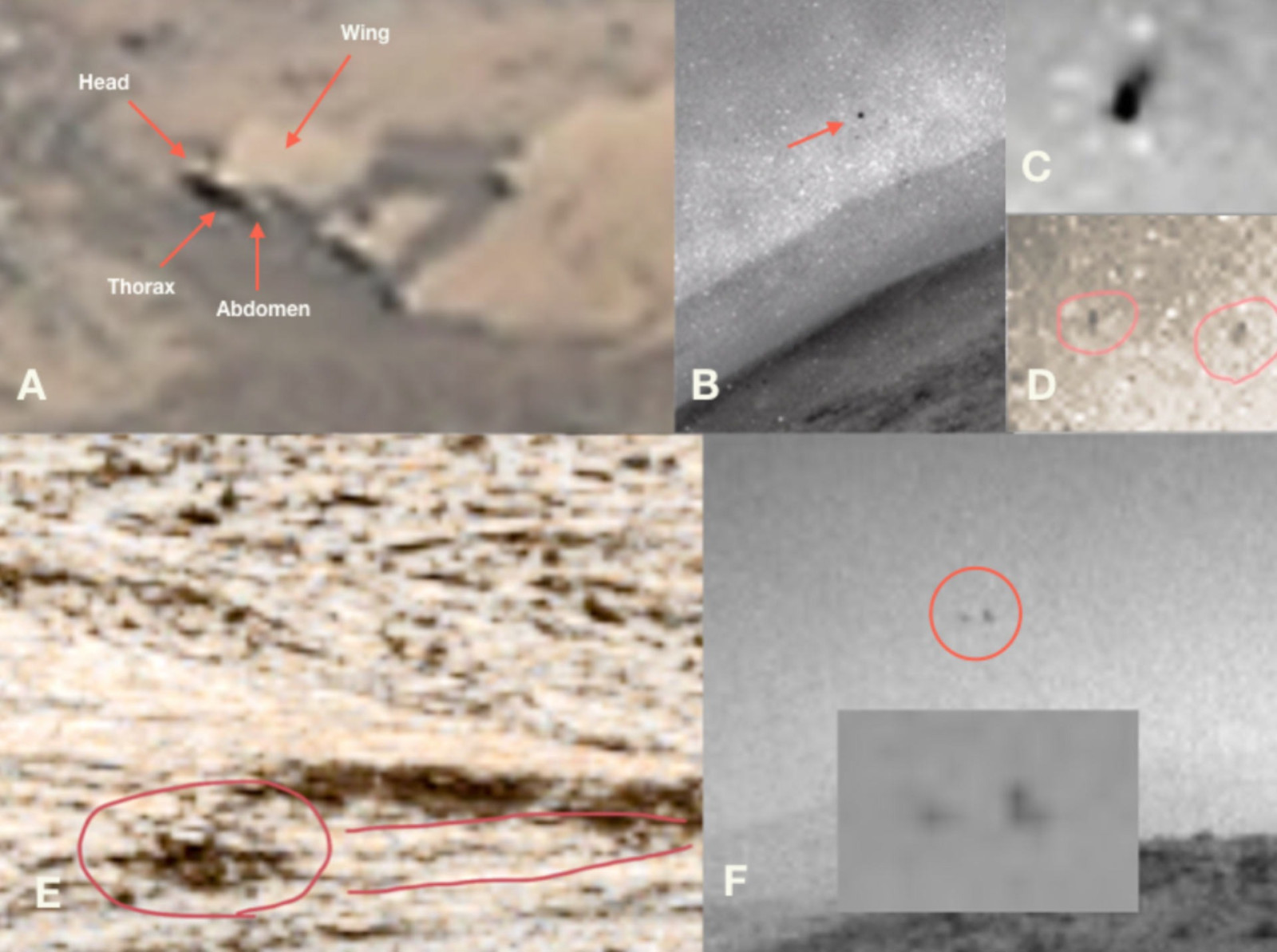
Romoser went further to propose that some shapes might indicate creatures capable of movement or flight, pointing out what he interpreted as wing-like appendages and jointed limbs.
“Numerous photos show images where arthropod body segments, along with legs, antennae and wings, can be picked out from the surrounding area, and one even appears to show one of the insects in a steep dive before pulling up just before hitting the ground,” he added.
However, this claim lacks supporting evidence such as physical specimens or chemical signatures, relying solely on subjective shape recognition.
When Our Minds See Patterns That Aren't There
The scientific community largely dismisses these conclusions, attributing the perceptions to pareidolia—a psychological effect where the brain identifies familiar shapes in random images. David Maddison from Oregon State University explained that this phenomenon even influences specialists. As covered by Space.com :
“I, personally, have pareidolia with respect to insects, beetles in particular,” he stated. “I’ve worked on beetles for decades; I have collected many thousands of beetles around the world. Through the years I have built into my brain a pattern-recognition system for picking out beetles.”
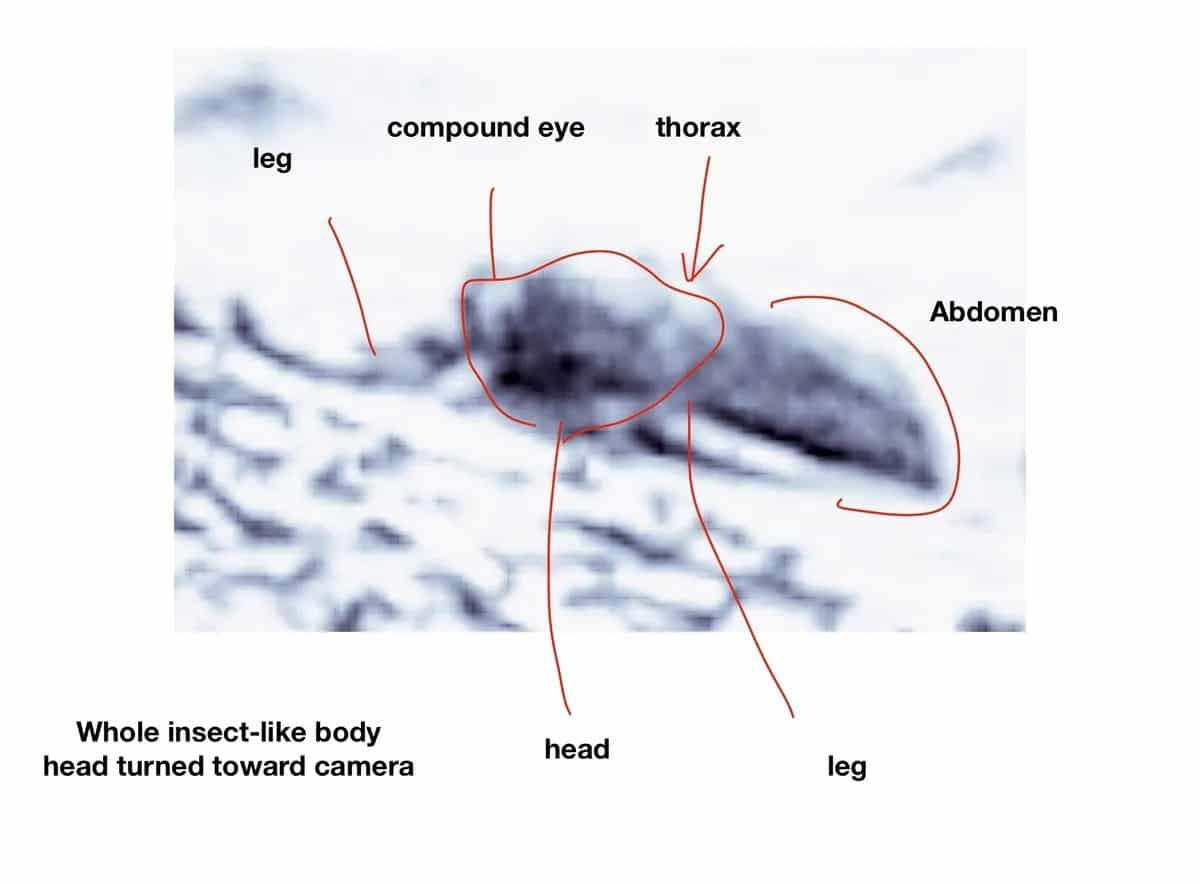
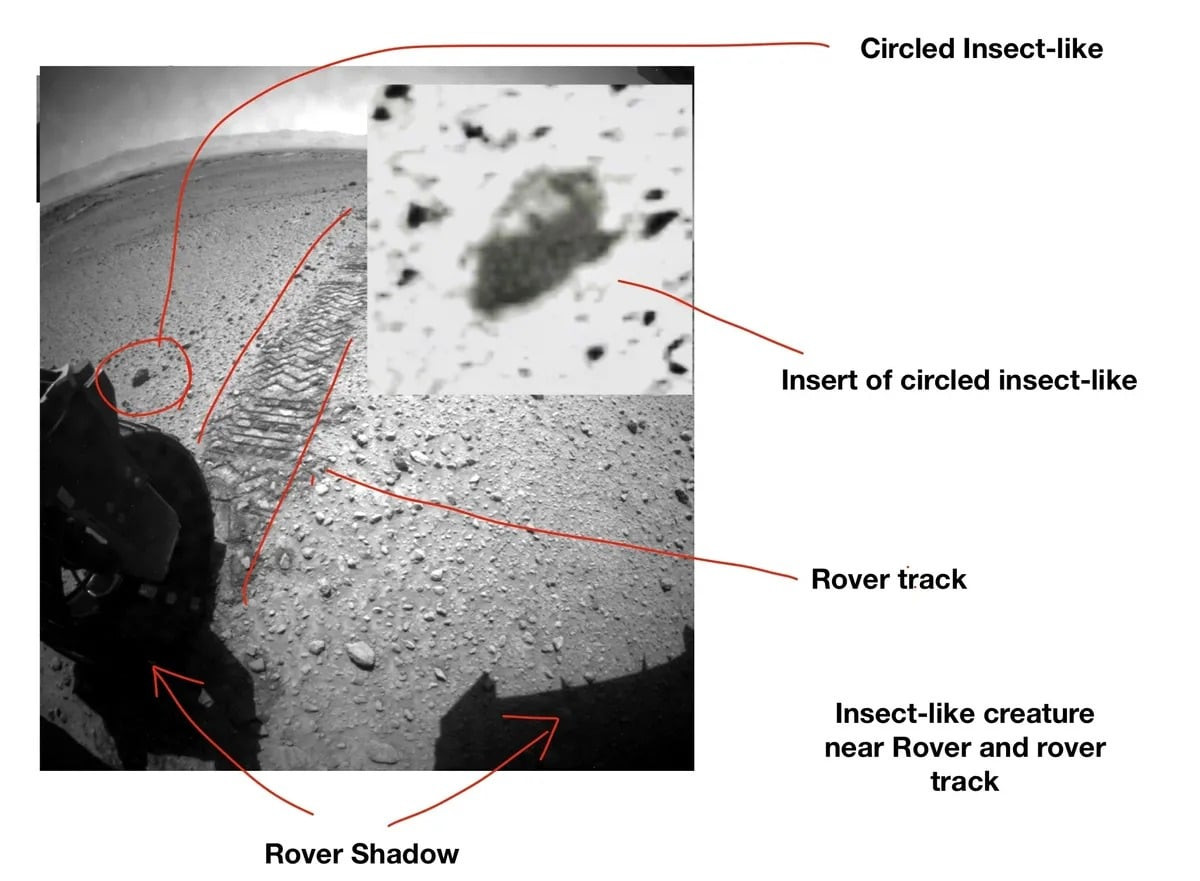
Such misinterpretations are especially likely in low-resolution and context-poor photos like those from Mars. Maddison noted that the purported insect shapes can be explained as simple rock formations and shadow patterns.
“I do not think there are insects on Mars. The photographs that are in that press release you sent are entirely unconvincing, as they fall within the range expected in zillions of non-insect objects photographed in lowish resolution on a Marscape,” he said. “It is vastly more parsimonious to presume the blobs are simply rocks.”
Understanding the Context of Space Images
Researchers like Nina Lanza at Los Alamos National Laboratory emphasize the importance of presentation. She cautioned that zoomed-in, uncropped pictures without scale indicators can be misleading. Lanza stressed this approach is insufficient for confirming potential signs of life, according to the same source.
“They’re little clips of larger images and there’s no scale bar on them … you could imagine a lot of different shapes in there. That’s not a good way to do this kind of assessment.”
Moreover, sensational claims often persist in public memory despite later refutations. The original release promoting these alleged Martian creatures was removed, and the researcher provided no further commentary. Meanwhile, scientists continue methodical investigations, aware that convincing evidence of extraterrestrial life demands rigorous validation.
- Categories:
- News






0 comments
Sign in to Comment