
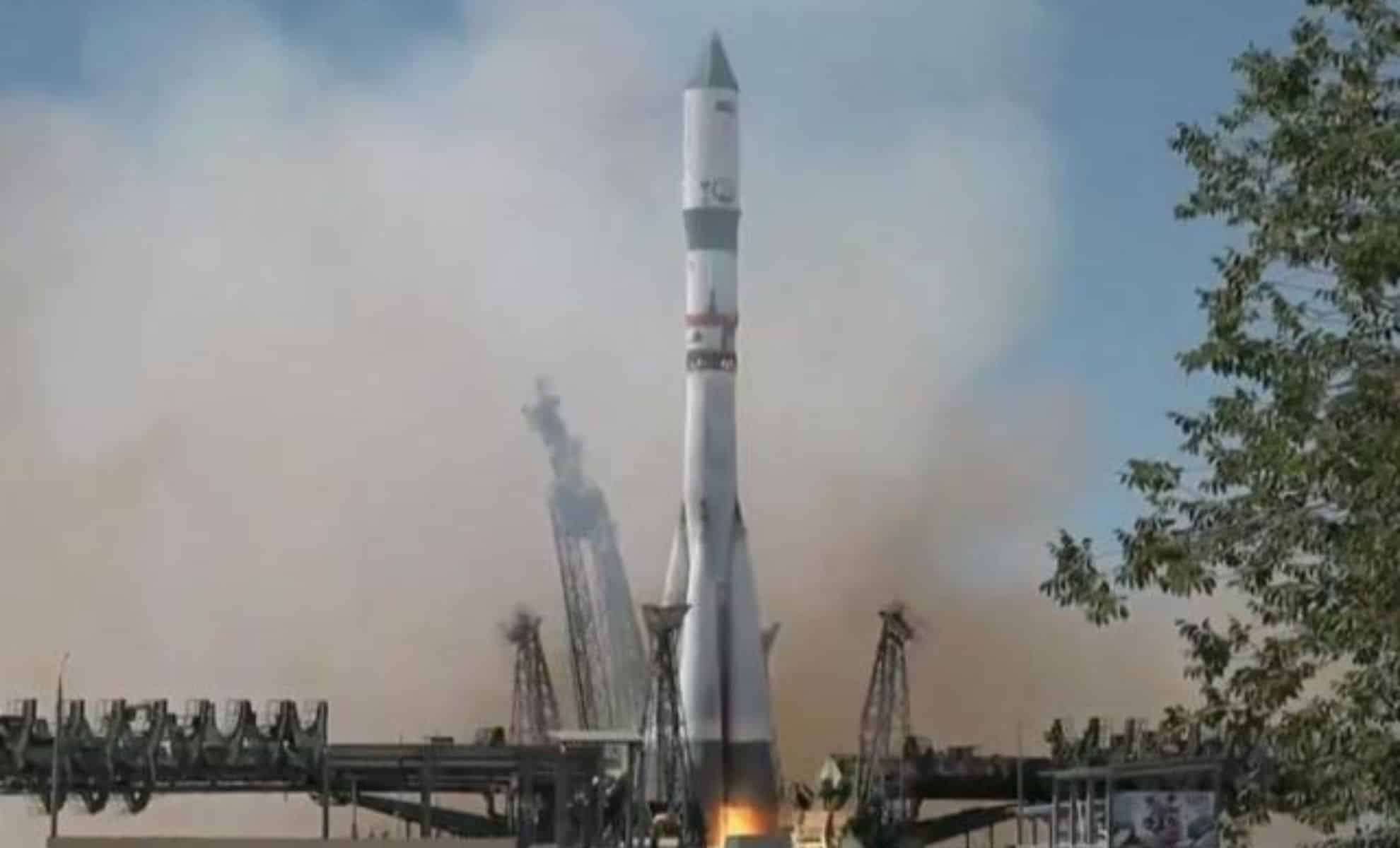
On May 30, 2024, early morning, a Russian Soyuz rocket successfully sent the Progress 88 cargo spacecraft towards the International Space Station (ISS).
Details of the Progress 88 Launch and Mission
The launch occurred at 5:43 a.m. EDT (0943 GMT) from Kazakhstan’s Baikonur Cosmodrome, marking a pivotal resupply mission for the ISS. The Soyuz rocket performed smoothly, guaranteeing that the cargo ship safely reached orbit.
This operation highlights Russia’s enduring contribution to ISS maintenance and demonstrates the reliability of its spaceflight technology.

Progress 88 is loaded with nearly three tons of essential items, including nourishment, fuel, and other critical materials needed by the station’s crew.
These supplies are crucial for astronauts’ daily sustenance and continued scientific research. Among the cargo is fresh food, a welcomed addition to typical space meals, plus vital hardware to keep the station’s systems operational. The spacecraft is slated to autonomously dock with the ISS’s Poisk module on June 1 at 7:47 a.m. EDT (1147 GMT) after a two-day transit in orbit.
Mission teams in both Russia and the U.S. will carefully oversee the docking process to ensure smooth attachment.
Details on Cargo and Station Operations
The resources delivered by Progress 88 are indispensable for the ISS crew’s wellbeing and the station’s functioning. Throughout its six-month attachment, the spacecraft will serve as storage for supplies brought in and waste accumulated onboard. Crew members will methodically offload equipment, scientific gear, and personal belongings to designated areas.
Progress 88 will remain docked for about half a year, allowing ample time for the crew to utilize its content. After the cargo transfer and waste loading, the vehicle will depart the station and safely disintegrate during controlled re-entry into Earth’s atmosphere, minimizing space debris risks.
How Progress Compares to Other Cargo Vehicles
The ISS is supported by three robotic cargo vessels: Russia’s Progress, Northrop Grumman’s Cygnus, and SpaceX’s Cargo Dragon. Each vehicle serves specific functions and has distinct features. Both Progress and Cygnus operate with a single-use design, burning up upon re-entry with station waste onboard, while Cargo Dragon is designed for multiple missions, returning safely via parachutes for ocean splashdowns.
Dragon’s reusability presents considerable savings and environmental benefits since refurbished capsules can be relaunched. The variety of cargo vehicles guarantees a constant supply chain and backup options, which are critical for uninterrupted ISS operations, especially when facing potential delays or technical setbacks.
Current Spacecraft Docked at ISS
At present, the ISS is hosting several docked spacecraft. Progress 87 and a Cygnus shipment are currently moored, providing reserves in case extra supplies become necessary. Progress 86 recently left after completing its mission, carrying away station waste.
The station also accommodates two manned spacecraft: SpaceX’s Crew Dragon from the Crew-8 mission and a Russian Soyuz capsule. Besides crew transport, these vehicles contribute additional cargo capacity. This setup reflects the intricate coordination and global teamwork needed to keep the ISS functioning and provisioned.
The successful deployment of Progress 88 underscores the ongoing international cooperation that sustains the ISS, ensuring astronauts have the resources they need to carry out experiments and daily tasks.
This mission exemplifies the dependability of the Soyuz rocket and the importance of cargo deliveries in supporting a permanent human foothold in space. It also highlights the effective collaboration among various space agencies, demonstrating how international partnerships drive progress in space exploration.





0 comments
Sign in to Comment