
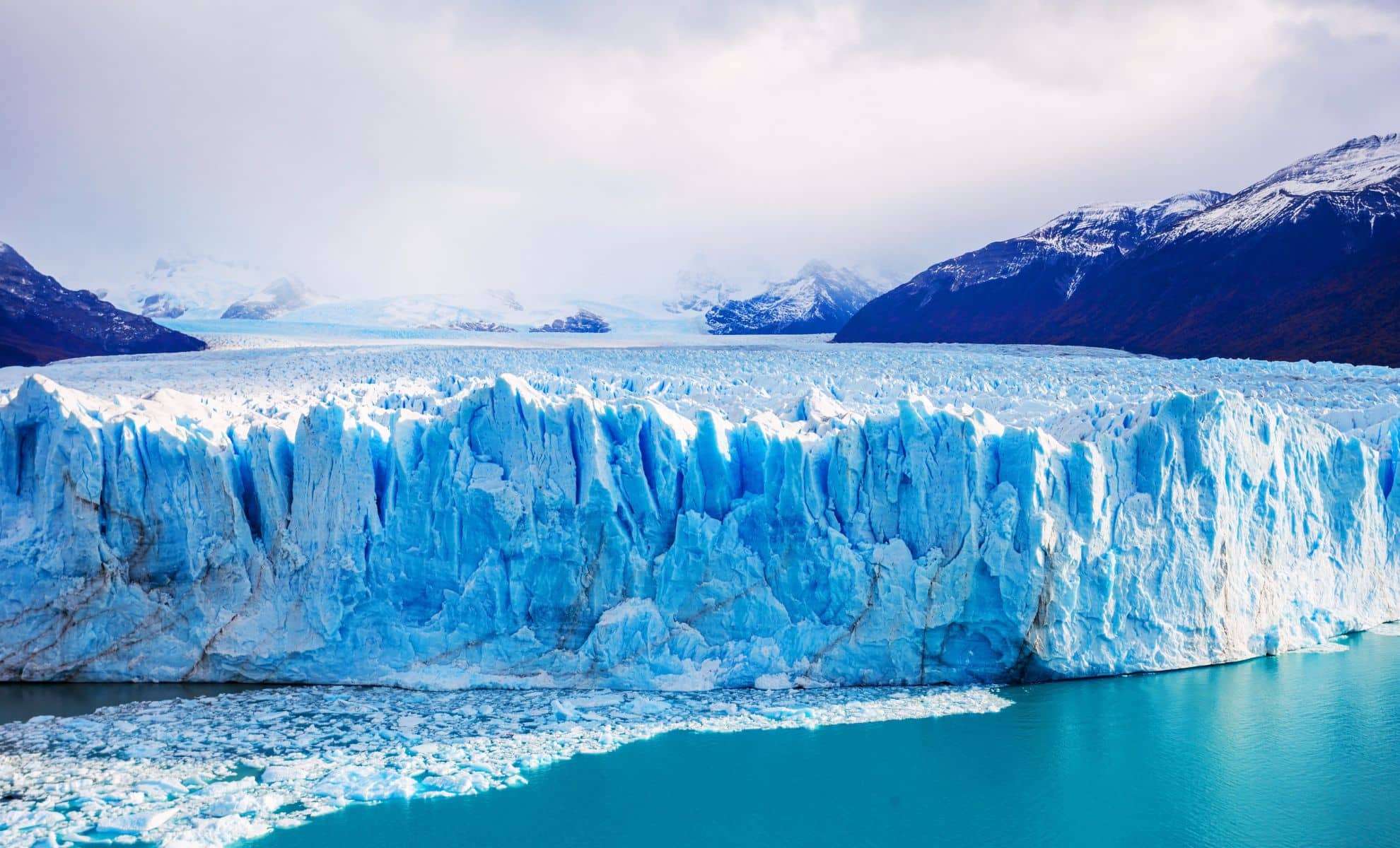
The Perito Moreno Glacier, a towering ice mass stretching 30 kilometers in Argentina’s Patagonia region, is undergoing a swift retreat that has caught scientists off guard. Previously known as one of the most stable glaciers in the Southern Hemisphere, it is now facing an unprecedented acceleration in ice loss that may drastically alter local landscapes and ecosystems. A recent peer-reviewed study published in Nature reports that the glacier’s thinning rate has surged more than sixteen times since 2019, with some sections pulling back over 800 meters. Researchers caution that Perito Moreno might soon lift from its long-standing underwater foothold, possibly sparking a massive collapse stretching several kilometers.
Unexpected Change After Years of Stability
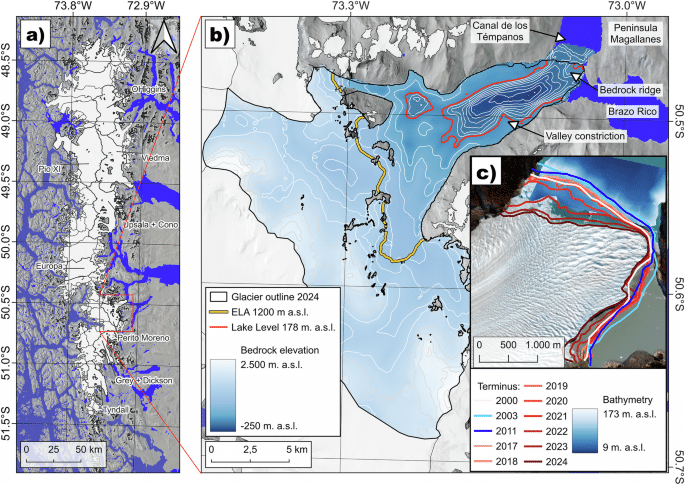
For nearly twenty years, the Perito Moreno Glacier defied expectations by remaining largely stable, even as neighboring glaciers in the Southern Patagonian Ice Field steadily receded under climate pressures. Between 2000 and 2019, its frontline shifted less than 100 meters, largely thanks to a submerged ridge beneath its terminus in Lago Argentino that acted as a natural anchor, preventing substantial ice loss.
Since 2019, however, the glacier has accelerated its withdrawal dramatically. Satellite data and aerial radar surveys reveal the terminus ice thinning by an average of 5.5 meters annually. This shift signals more than increased pace—it marks a fundamental change in glacier dynamics. The equilibrium between snowfall accumulation and melting ice has been disturbed, prompting urgent research into the causes. While rising temperatures and altered precipitation patterns are probable factors, local subaqueous processes may be intensifying the retreat.

Revealing the Underwater Ridge Supporting the Glacier
In March 2022, an expedition led by Moritz Koch used helicopter-mounted radar to chart the glacier’s depth and the lakebed beneath it. Their work confirmed a substantial submerged ridge at the glacier’s terminus — the critical feature that stabilized Perito Moreno for many years. This ridge has acted as a geological safeguard, blocking warmer lake waters and slowing iceberg calving.
Nonetheless, the study indicates the glacier is nearing disengagement from this ridge. If the ice edge retreats a few hundred meters more, it would move into deeper waters, exposing it to amplified undercutting by lake currents and significantly increasing calving rates. This could trigger a runaway retreat, causing the glacier to pull back several kilometers within a short timeframe. Losing this natural barrier would mark a critical tipping point, ending the glacier’s long-term stability.
Environmental Impacts of Accelerated Ice Loss
Breaking free from the ridge would have far-reaching effects beyond the immediate glacier. A rapid withdrawal of Perito Moreno would discharge vast amounts of freshwater and ice into Lago Argentino, reshaping the lake’s physical environment and its ecosystems. More frequent iceberg calving could disrupt tourism activities, such as boating, and alter nutrient availability, impacting aquatic species.
Moreover, the glacier’s retreat challenges its reputation as a resilient natural symbol. Drawing hundreds of thousands of visitors annually, Perito Moreno has long been a rare example of glacier stability amid widespread declines in Patagonia. Should it succumb to ongoing warming trends in nearby icefields, it would serve as a poignant indicator of the accelerating climate crisis affecting Earth’s frozen regions.
Uncertain Timeline Poses Management Challenges
A key concern is the unpredictability of when Perito Moreno may fully detach from its ridge. While current data imply an eventual break if conditions remain consistent, scientists cannot confidently forecast whether this will occur within years or several decades. The outcome depends on complex interactions among climate forces, glacier mechanics, and underwater geology.
This uncertainty complicates planning for regional officials and conservation efforts. As part of Los Glaciares National Park, a UNESCO World Heritage Site since 1981, the glacier’s transformation would influence park preservation, tourism infrastructure, and local water systems. Given these high stakes, experts are urging enhanced monitoring, expanded radar mapping, and advanced modeling to better predict future changes.
- Categories:
- News




0 comments
Sign in to Comment