
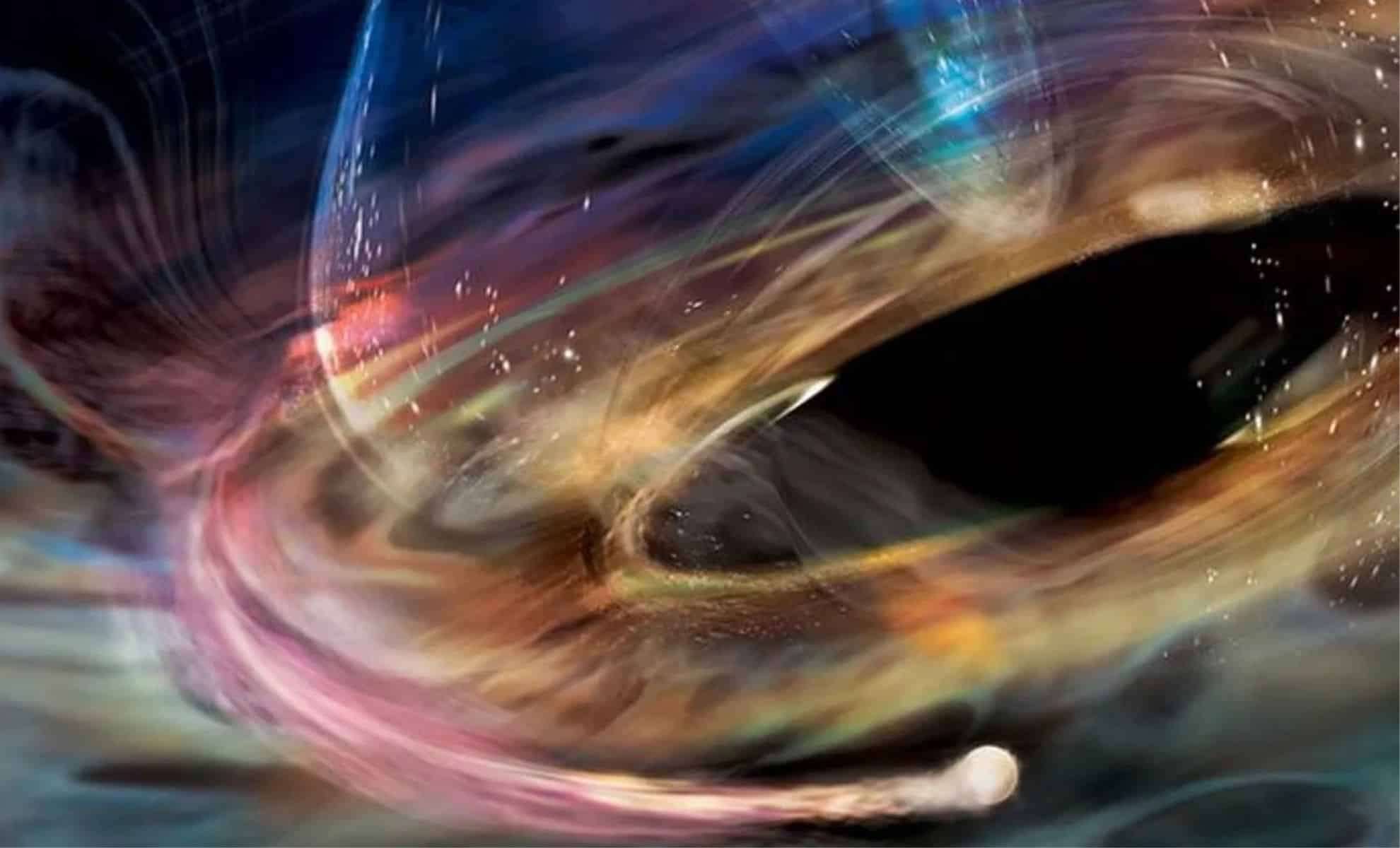
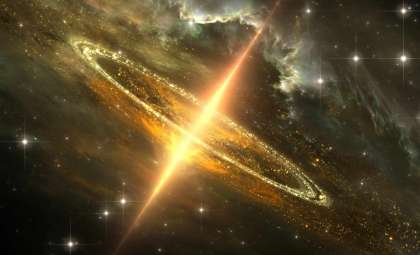
Researchers have witnessed an extraordinary event unfolding near the supermassive black hole at the center of galaxy 1ES 1927+654, situated 270 million light-years away in Draco. For the first time ever, astronomers have observed plasma jets erupting from this black hole in real-time, accelerating at unprecedented velocities. Adding to the fascination, rapid fluctuations in X-ray emissions close to the black hole’s event horizon reveal a highly active and complex environment, captivating the scientific community.
This black hole garnered particular attention following a dramatic eruption in 2018, which spanned optical, ultraviolet, and X-ray wavelengths. “Back in 2018, we saw the black hole transform dramatically, experiencing a powerful multi-wavelength flare,” explained Eileen Meyer, associate professor at UMBC. Since then, numerous research teams have diligently tracked its evolving activity, resulting in fresh discoveries that challenge our current understanding of black hole physics.
Real-Time Tracking of a Black Hole Jet Launch
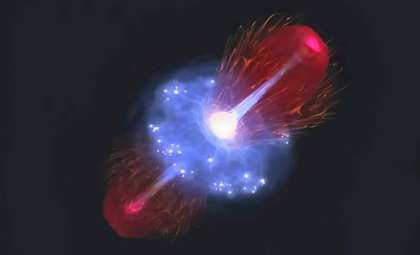
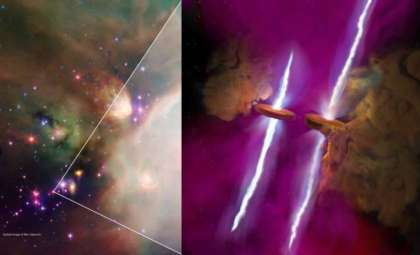
The initial 2018 flare sparked a new phase of continuous observation. After a period of relative inactivity, the black hole captured new attention in early 2023 when NASA’s Neil Gehrels Swift Observatory and allied instruments recorded a gradual rise in soft X-ray emissions. By mid-2024, these efforts revealed an astonishing sight: two plasma jets emerging from the black hole, accelerating to nearly one-third the speed of light.

“Witnessing the actual onset of a black hole jet is unprecedented,” noted Meyer. Scientists theorize the jet’s outflow began prior to direct detection, inferred from increasing X-ray signals before the radio flares appeared. “We suspect the outflow started earlier, with X-rays rising before the jet became visible when it finally broke through the obscuring hot gas early last year,” she added.
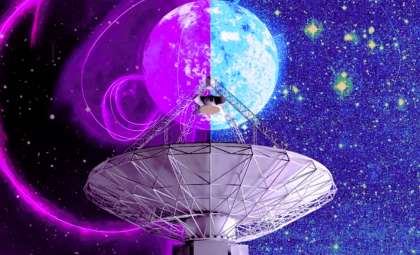
The jets expanded over roughly half a light-year by mid-2024, confirmed through radio imaging from the Very Long Baseline Array (VLBA), a precise network of radio telescopes. These observations raise questions about how some supermassive black holes generate such fast-moving plasma jets, an attribute seen in only a small subset of these giant cosmic objects.
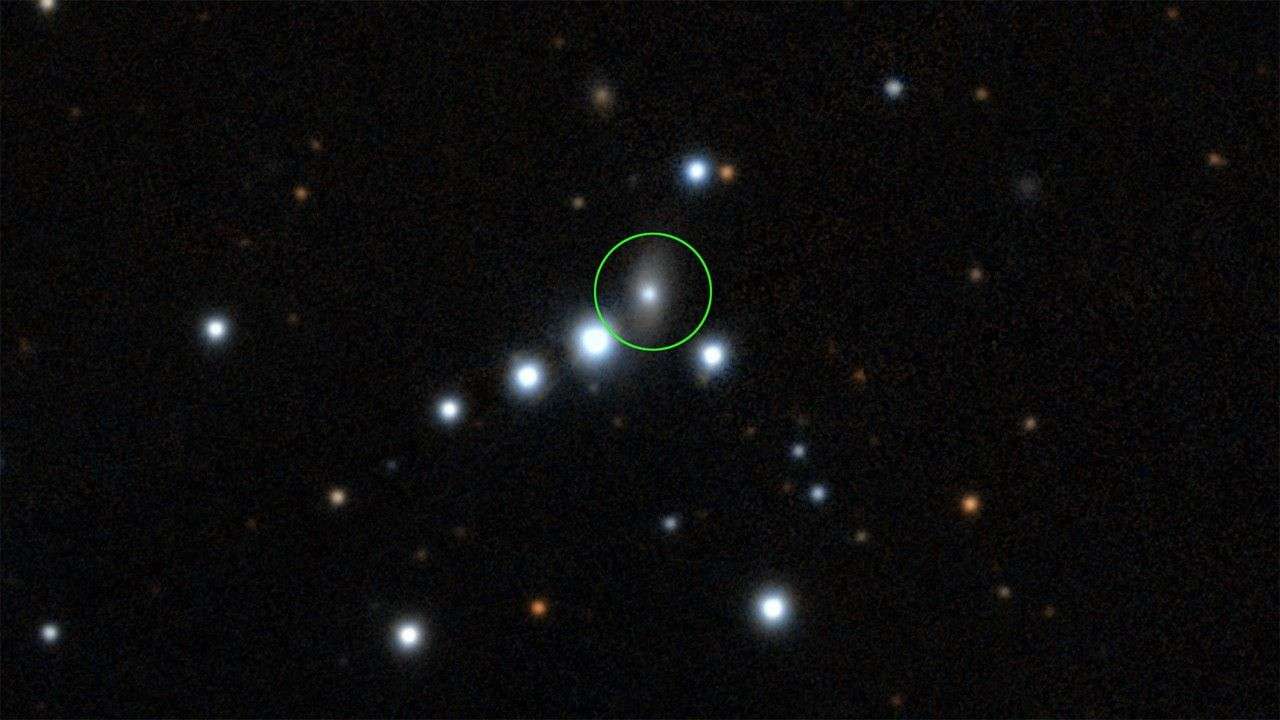
Intriguing Rapid X-ray Variations
Beyond the jets, the team detected swift X-ray brightness oscillations near the black hole’s edge from 2022 through 2024. These fluctuations, changing the X-ray intensity by about 10% within minutes, are known as millihertz quasiperiodic oscillations and are exceptionally rare, having been spotted in only a few astronomical objects.
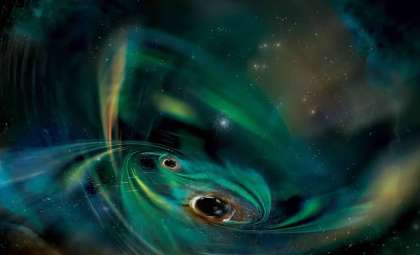
“Such oscillations might result from an object orbiting inside the black hole's accretion disk, where each burst corresponds to one full orbit,” said Megan Masterson, an MIT PhD student. This implies a possible nearby companion, potentially a white dwarf, influencing the black hole’s environment.
The oscillation intervals shrank over two years, from 18 to just 7 minutes, indicating the object was drawing ever closer to the black hole and moving at approximately half the speed of light. Then, unexpectedly, the period steadied. “Initially, this surprise puzzled us,” Masterson remarked. “But we realized the black hole’s gravity might be stripping material from the companion, balancing the inward pull driven by gravitational waves and halting its spiral inward.”
Unraveling the Companion’s Identity
Speculating a companion orbiting so near the black hole poses intriguing puzzles. Ordinary stars would be shredded by tidal forces, and smaller black holes would likely merge quickly. Researchers propose a dense white dwarf—a compact remnant roughly Earth-sized but far denser—could survive the harsh conditions near the event horizon.
If validated, such a white dwarf would be losing mass to the black hole’s accretion disk, causing the observed oscillations and possibly emitting gravitational waves detectable with upcoming observatories. The Laser Interferometer Space Antenna (LISA), a collaborative mission by NASA and ESA launching in the next decade, could confirm this hypothesis by capturing those signals.
Advancing Our Understanding of Black Holes
These findings shed light on supermassive black hole dynamics, from how plasma jets form to the puzzling phenomena within accretion disks. The synergy of data from NASA’s Swift Observatory, NICER, and NuSTAR, combined with ESA’s XMM-Newton, empowers scientists to reconstruct the intricate activity of this exceptional galaxy.
As investigation progresses, insights gleaned from 1ES 1927+654 could unlock secrets of similar cosmic systems. For now, this black hole’s extraordinary behavior exemplifies the staggering energies operating in our universe, often revealing surprises beyond current comprehension.
- Categories:
- News




0 comments
Sign in to Comment