
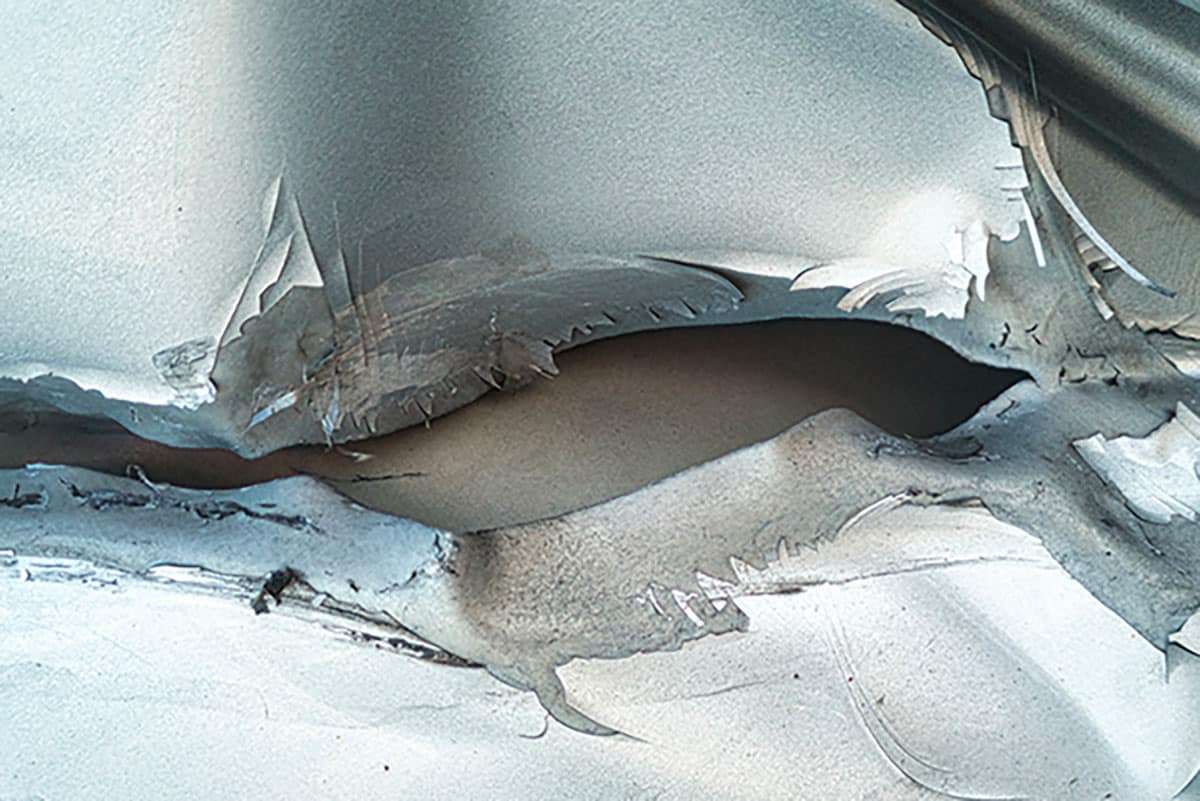
Scientists from Sandia National Laboratories and Texas A&M University have unveiled an unexpected self-repair phenomenon in metals during an investigation of metallic durability. Leveraging an advanced transmission electron microscope method, they exposed a 40-nanometer-thin platinum sample to rapid cyclic stress, stretching it up to 200 times per second within a vacuum setting. The outcome was truly surprising.
After roughly 40 minutes, the team observed the crack in the platinum spontaneously healing itself, reconnecting the fractured surfaces. This self-repair cycle repeated as new cracks appeared elsewhere. Brad Boyce, a Sandia materials expert, described the event as "astonishing to witness directly. It was definitely not something we anticipated."
This breakthrough holds enormous promise. Understanding and harnessing this self-healing capability could revolutionize fields by decreasing the frequency and cost of repairs in infrastructure, engines, and even electronic systems.

Scientific Background and Earlier Theories
Although witnessing metal self-healing firsthand is novel, this concept had theoretical roots. About ten years ago, Michael Demkowicz, a materials scientist at Texas A&M, proposed that microscopic crystalline grains in metals might realign under stress, enabling nanometer-scale crack repair.
Participating in the current experiments, Demkowicz confirmed his earlier hypothesis through enhanced computational models, which matched the newly observed nanoscale self-healing in platinum.
The discovery provokes interest due to several unique factors:
- The healing process took place at standard room temperature
- The experiment occurred in a vacuum environment
- The metal demonstrated innate fatigue damage remediation
Investigating Mechanisms and Future Potential
Researchers are delving into possible explanations for this healing effect. One likely mechanism is cold welding, where metal surfaces come extremely close, allowing atomic bonding without melting. Usually, surface impurities prevent this, but under vacuum conditions, pure metals can bond directly.
The implications are wide-ranging across multiple sectors, as illustrated below:
SectorPossible InnovationsAerospaceComponents and structures capable of self-repairInfrastructureLong-lasting bridges and buildingsAutomotiveDurable engine componentsElectronicsCircuits with extended lifespans
Although these initial results are encouraging, additional studies are necessary to verify if similar self-healing occurs in metals under ordinary environmental circumstances. Scientists are enthusiastic about exploring how this phenomenon can be harnessed and its potential boundaries.
Advancing Materials Science Into a New Frontier
This demonstration of metal’s natural ability to repair itself represents a major advance in materials science. It challenges existing perceptions of how materials behave and opens up fresh investigative paths. As Demkowicz remarked, "I hope this encourages researchers to realize that, under certain conditions, materials can exhibit unexpected capabilities."
This revelation could pave the way for engineering more robust and sustainable materials, lessening environmental impacts from production and disposal. As further research unfolds, we might be entering an era where self-healing materials become a foundational technology across numerous industries.
- Categories:
- Tech










0 comments
Sign in to Comment