
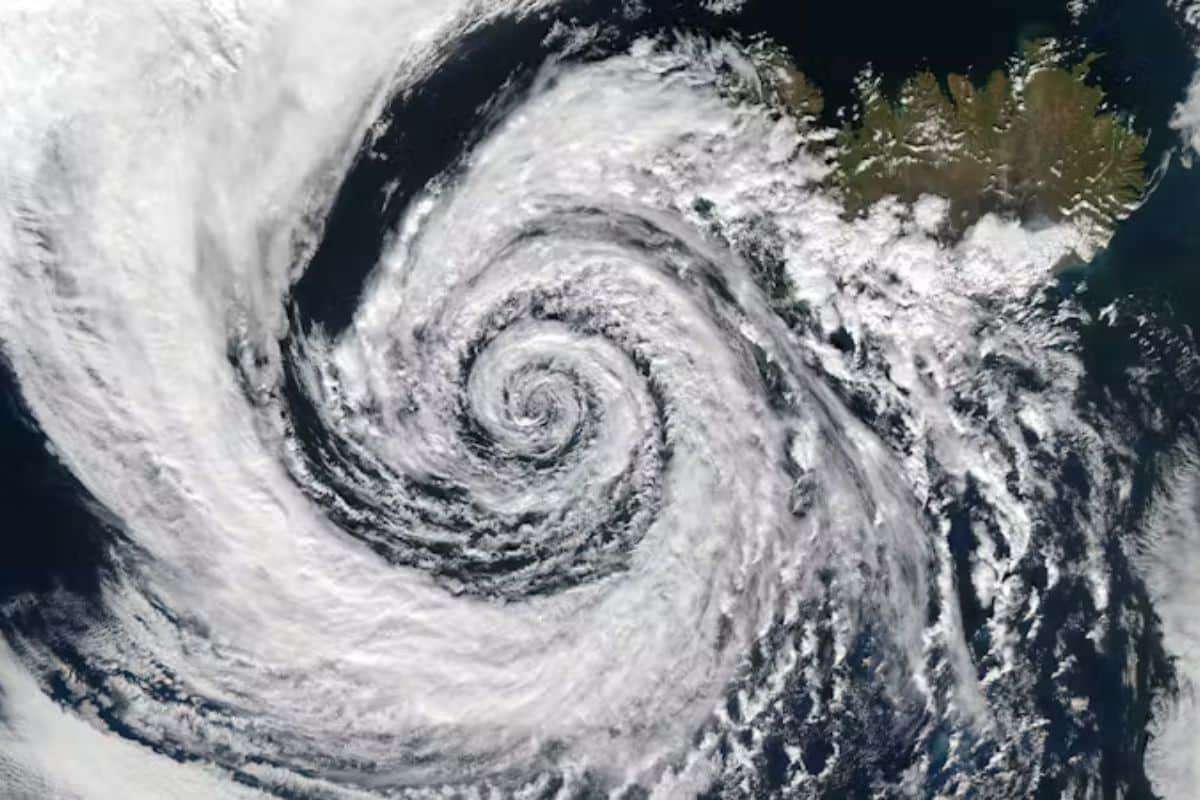
A cutting-edge AI-based forecasting system named Aardvark Weather is setting new standards in meteorological prediction by offering faster, more efficient, and more accessible weather forecasts than traditional supercomputer models, promising to democratize weather data worldwide.
Transforming Raw Inputs Into Instantaneous Weather Predictions
Unlike typical forecasting methods that depend on detailed physical simulations run on supercomputers over lengthy periods, Aardvark Weather leverages machine learning to directly convert raw observational data into timely forecasts. This approach creates a quicker, less resource-intensive forecasting process.
High Performance with Minimal Hardware
Traditional models like the Global Forecast System (GFS) require vast computational resources, but Aardvark operates efficiently on typical desktop hardware using only a small fraction of data.
Researchers at the University of Cambridge report that their AI model uses just 8% of the observational inputs that conventional platforms require while still matching or surpassing these models in global forecast precision.

Combining Rapid Predictions with Environmental Responsibility
Aardvark not only accelerates forecasting but also significantly reduces energy consumption. As detailed in a recent study published in Nature, this AI generates weather predictions dozens of times faster and uses thousands-fold less energy compared to traditional supercomputers by sidestepping intensive atmospheric physics calculations.
“Though established forecasting systems took decades to develop, we’ve engineered a solution competitive with the best in just 18 months, utilizing a tenth of the data on common desktop machines,” stated Richard Turner, an engineer at the University of Cambridge.
Current Limitations and Future Possibilities
Presently, Aardvark forecasts utilize a coarser spatial resolution compared to leading models, applying a 1.5-degree grid rather than the finer 0.25-degree resolution typical of the GFS. This affects precision in highly localized conditions, but ongoing development aims to integrate more regional data to enhance detail.
Co-author Anna Allen from the University of Cambridge highlighted the broader utility of this technique: “Aardvark’s end-to-end learning framework can be adapted to forecast not just weather but also hurricanes, wildfires, tornadoes, and even other Earth system phenomena like air pollution, ocean currents, and ice dynamics.”
Making Accurate Weather Forecasting Accessible Worldwide
For areas lacking access to supercomputing power, Aardvark offers a transformative solution. Scott Hosking from The Alan Turing Institute emphasizes its capacity to deliver trustworthy forecasts to locations with limited resources and sparse data.
By enabling high-quality, near-real-time weather predictions on everyday computers, this technology opens doors for substantial improvements in agriculture, emergency preparedness, and infrastructure development globally.
With climate variability intensifying, innovations like Aardvark are not solely about faster predictions, but about expanding essential access to critical weather insights.
- Categories:
- Tech








0 comments
Sign in to Comment