
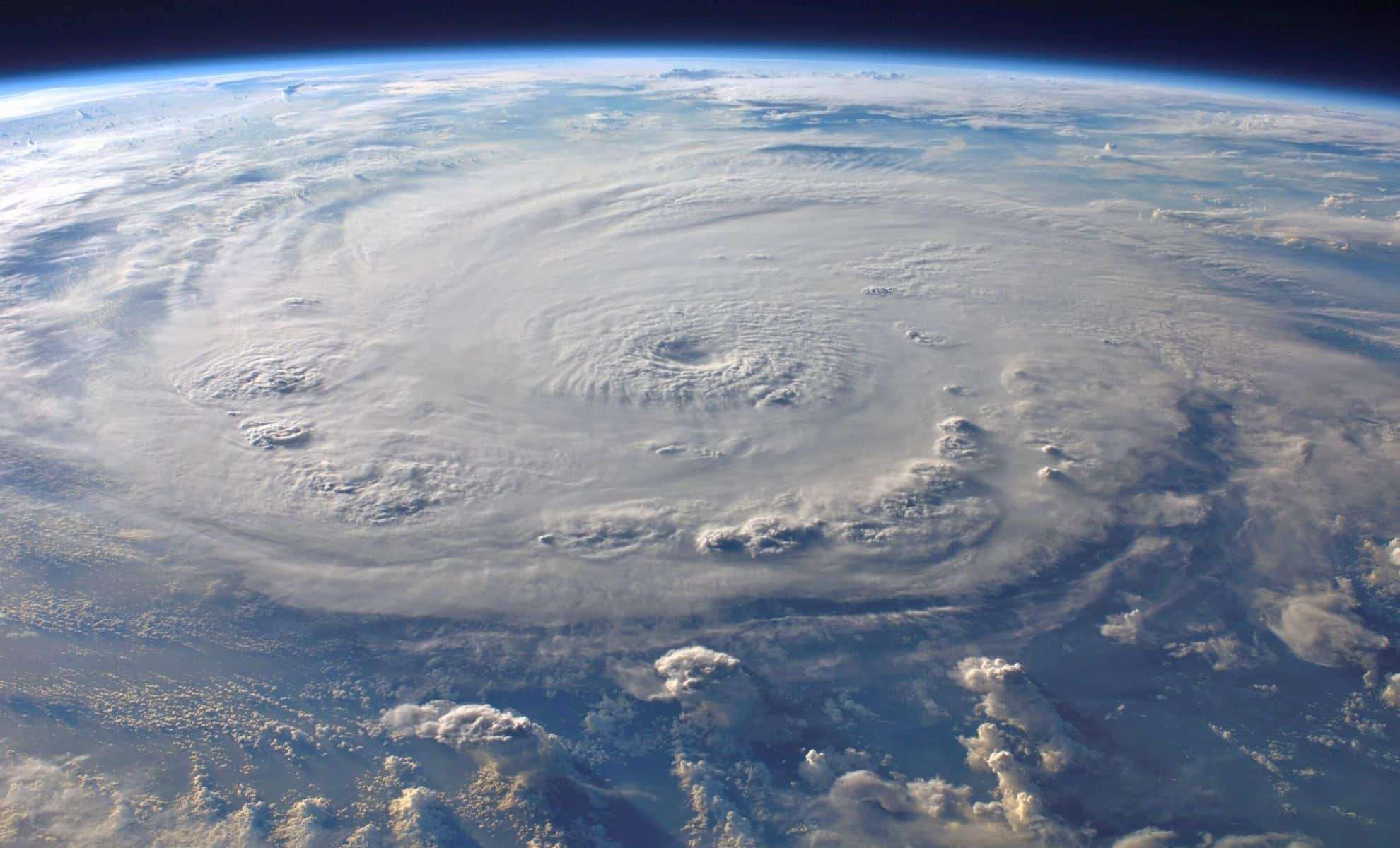
GenCast, created by Google DeepMind, represents a revolutionary advancement in weather prediction technology. This innovative AI system can estimate atmospheric conditions up to 15 days ahead, promising to transform meteorological practices and industry planning. Harnessing cutting-edge AI, GenCast delivers faster and more dependable forecasts than conventional weather models.
Outpacing Conventional Forecasting Techniques
GenCast distinguishes itself by exceeding the performance of established models such as the ENS from the European Centre for Medium-Range Weather Forecasts (ECMWF). Evaluated in 2019, it demonstrated superior prediction accuracy in 97.2% of cases compared to traditional methods. Moreover, whereas classic systems depend on extensive supercomputer runs requiring several hours, GenCast can produce complete 15-day forecasts within just 8 minutes.
This rapid processing is powered by Google Cloud’s Graphics Processing Units (GPUs), enabling swift handling of massive weather datasets. The model employs diffusion models to simulate complex weather dynamics grounded in extensive historical climate records. This approach equips it to accurately forecast both general trends and severe weather events such as cyclones and heatwaves.

Leveraging Generative AI for Meteorological Predictions
A defining feature of GenCast is its innovative use of generative AI, a technique more commonly associated with crafting images and videos. This method enables the AI to recreate intricate atmospheric processes by analyzing decades of past weather data. The system utilizes diffusion models that translate current atmospheric states into future weather scenarios.
By learning from historical climate data, GenCast generates detailed and realistic weather forecasts tailored to a variety of meteorological phenomena with remarkable precision.
Enhancing Disaster Preparedness with Precise Forecasting
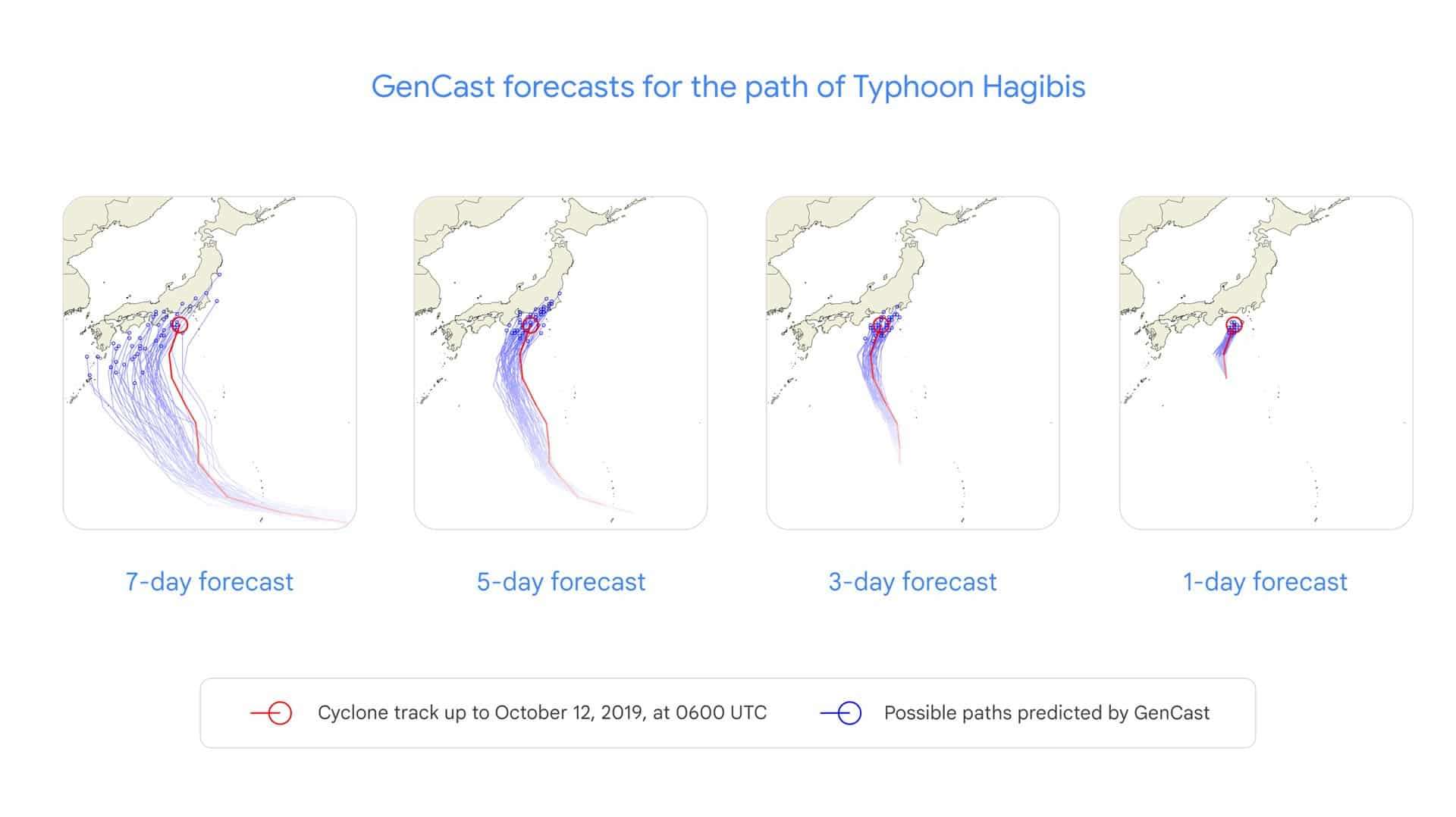
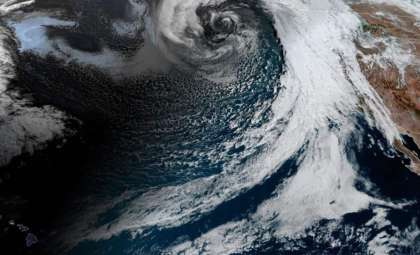
An important application of GenCast lies in its ability to anticipate severe weather events with enhanced accuracy. For instance, during the 2019 typhoon Hagibis, the system correctly forecasted the storm’s path 7 days ahead, enabling Japanese authorities to effectively mobilize evacuation efforts in vulnerable regions. This timely alert significantly helped in safeguarding lives.
Improved prediction of calamities like cyclones carries profound benefits. By offering tracking forecasts with a lead time of up to 12 hours, GenCast facilitates better preparedness, reducing damage to communities and infrastructure.
Versatile, Real-Time Forecasting Technology
Beyond accuracy, GenCast excels in speed and immediacy. Powered by the robust Google Cloud platform, the system can deliver quick updates, making it invaluable across fields such as climate risk assessment and renewable energy management.
Technical Highlights:
- Swift Computation: With the support of specialized AI processors known as Tensor Processing Units (TPUs), GenCast accomplishes forecasts within 8 minutes, far outpacing classical models.
- Flexible Scalability: GenCast adapts from local to global scales, providing continuous real-time weather insights suited for energy grids and disaster prevention systems.
Promoting Innovation Through Open-Source Sharing
GenCast also pioneers an open collaboration approach. By releasing its source code publicly, Google invites scientists, meteorologists, and developers worldwide to examine, refine, and build upon the model. This transparency accelerates AI adoption in weather science and supports efforts to mitigate the effects of climate change.
Evaluating GenCast: Strengths and Considerations
While GenCast introduces numerous benefits, certain challenges remain:
Advantages
- Superior Precision: Outperforming existing models, it excels in forecasting intense weather events including cyclones and heatwaves.
- Rapid Forecast Generation: The ability to create forecasts in mere minutes lends itself well to urgent, real-time uses.
- Open Accessibility: Its open-source nature promotes broad adoption and continuous advancement by the scientific community.
Limitations
- Data Dependence: Reliable performance requires access to comprehensive, high-quality historical weather datasets, which may be lacking in some regions.
- Technological Complexity: As generative AI is a relatively novel domain, users and institutions may need time to master its full capabilities.
By merging AI innovations with traditional meteorology, GenCast paves the way for a new age of atmospheric forecasting—offering practical solutions to challenges driven by climate change. This groundbreaking technology holds great promise for revolutionizing disaster preparedness and enhancing renewable energy utilization worldwide.
- Categories:
- Climate change ,
- Tech








0 comments
Sign in to Comment