
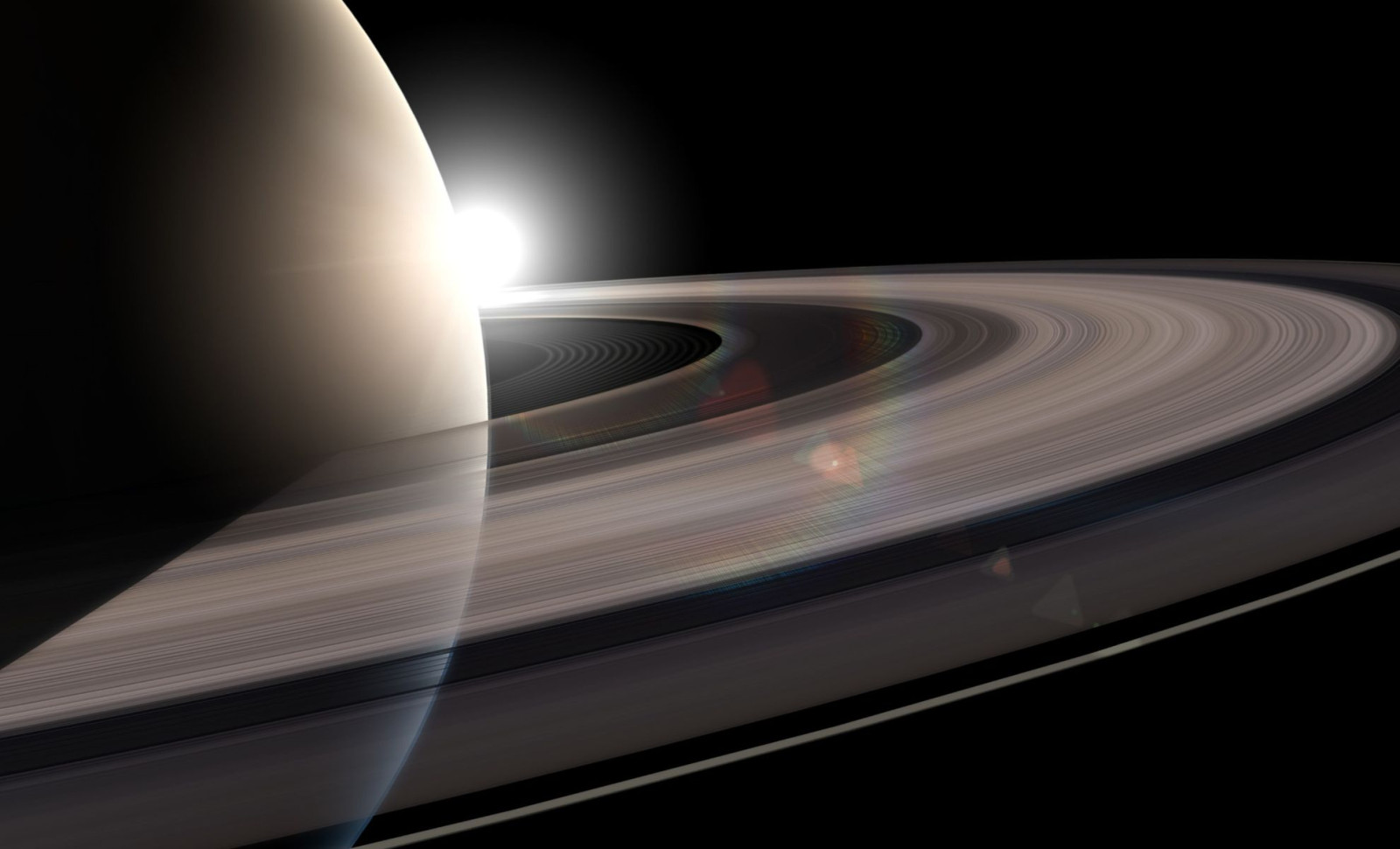
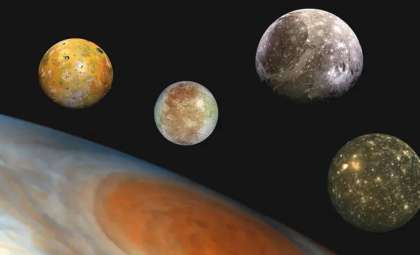
Researchers have uncovered a fresh group of tiny satellites encircling both Jupiter and Saturn, adding to their already extensive families of moons. With these latest finds, the total count of recognized moons within our solar system climbs to 442, a tally that continues to grow as detection technology advances.
These newly identified moons are considerably smaller and dimmer than the well-known major satellites commonly studied in planetary science, making detection only possible with some of the most advanced telescopes available.
The discoveries highlight an ongoing reality: that numerous small celestial bodies remain hidden in the distant regions of our solar system.

ultra-Faint Moons Near the Edge of Current Technology
The recently spotted moons—four orbiting Jupiter and 11 orbiting Saturn—each measure roughly 3 kilometers (1.9 miles) across. Their brightness ranges between magnitude 25 and 27, placing them well beyond the scope of amateur telescopes. Per EarthSky.org, detecting such faint moons requires numerous observations from large, ground-based observatories.
For Jupiter, the new moons were found by Scott Sheppard and David Tholen using the 6.5-meter Magellan-Baade telescope in Chile and the 8-meter Subaru telescope located in Hawaii. These powerful instruments enable astronomers to spot faint, slowly moving specks of light against the backdrop of stars.
Saturn Widens Its Lead in Moon Numbers
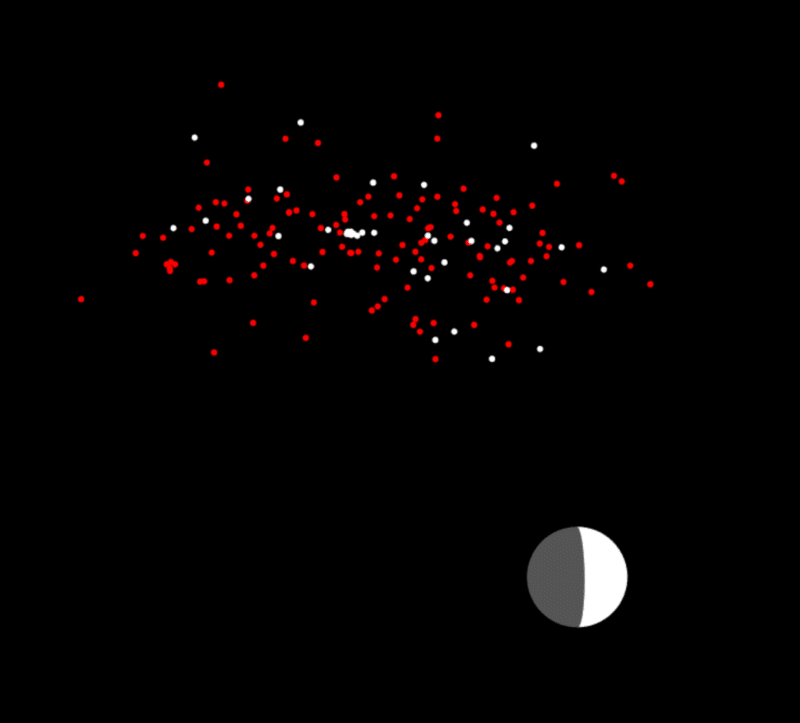
With the inclusion of 11 new satellites, Saturn’s moon count now totals 285, dramatically outnumbering Jupiter’s 101. According to The Minor Planet Center, which officially catalogs such findings, these moons were announced in recent circulars including MPEC 2026-F14 for Saturn and MPEC 2026-F09 to F12 for Jupiter.
The discrepancy between the two gas giants has notably increased in recent years, with Edward Ashton and his colleagues having discovered 128 moons around Saturn in 2025, significantly contributing to Saturn’s growing dominance.
In other parts of our solar system, the moon distribution remains uneven—Uranus has 28, Neptune 16, Earth hosts one, and Mars has two.
A Dedicated Team Behind Hundreds of Discoveries
The rapid surge in known moons is largely credited to a small group of astronomers. As noted by Space.com, both Scott Sheppard and Edward Ashton have each contributed to the discovery of more than 200 moons.
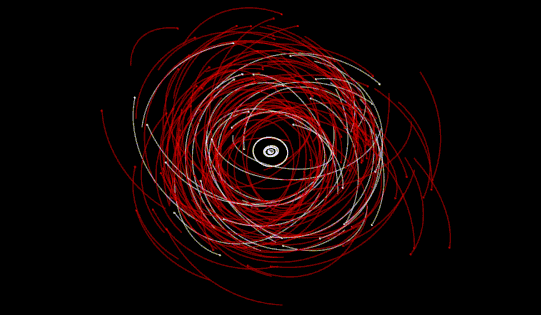
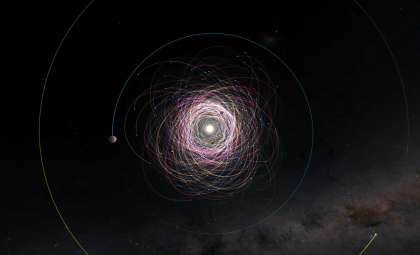
Their approach involves carefully surveying distant areas around the planets, where these irregular moons maintain wide, elongated orbits. Validation of any new moon requires tracking its trajectory over time to confirm gravitational attachment to the host planet.
- Categories:
- Astronomy





0 comments
Sign in to Comment