
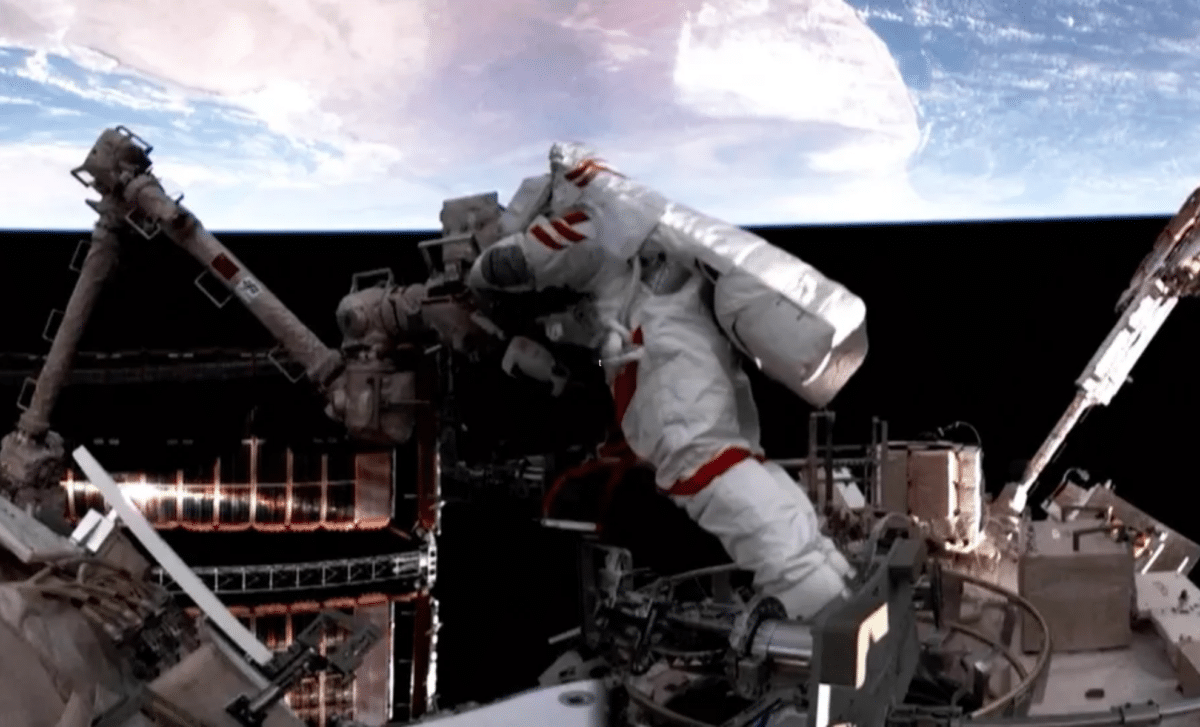
During a recent mission, Chinese astronauts aboard Shenzhou 21 conducted an important spacewalk focusing on the growing problem of orbital debris and its effects on spacecraft integrity. Led by commander Zhang Lu, the team examined damage to the Shenzhou 20 vehicle, which had been compromised after being struck by space debris.
Unexpected Impact: Cracks Found on Shenzhou 20's Windows
In April 2025, the Shenzhou 20 capsule docked at China's Tiangong space station during a standard crew rotation involving three astronauts. The plan was for the crew to spend six months on the station and then return to Earth. However, just prior to their scheduled return, officials identified concerning fractures in the spacecraft’s windows. Investigations traced these cracks to a collision with space debris.
As detailed by Space.com, the damage compromised the Shenzhou 20 capsule’s re-entry capability, as its structure was no longer deemed safe for atmospheric entry. As a result, the crew was rescued onboard the newly arrived Shenzhou 21 spacecraft. This event highlighted the significant threat that space debris poses to the safety of critical missions.

Critical Spacewalk: Inspecting and Reinforcing Against Debris Risks
To address the harm inflicted on Shenzhou 20, astronauts from the Shenzhou 21 mission performed an extravehicular activity (EVA). The team, composed of commander Zhang Lu, newcomer Wu Fei, and Zhang Hongzhang, undertook this spacewalk, marking a key moment in China’s spaceflight progress. Notably, Wu Fei set a record as the youngest Chinese astronaut to conduct a spacewalk.
During the EVA, the team carried out several essential operations. As they
“fully utilized their active role as first responders outside the spacecraft, successfully completing tasks including inspecting and photographing the Shenzhou 20 return capsule’s windows, installing the space station’s space debris protection system, and replacing the multi-layered cover of the temperature control adapter,” said officials with the China Manned Space Agency (CMSA) in a statement.
This mission not only examined the damage but also enhanced the Tiangong space station’s defense systems to better withstand future debris impacts.
Wu Fei’s Historic EVA and Its Implications for Space Exploration
Wu Fei’s participation in this EVA marked an important breakthrough for China’s astronaut corps. Becoming the nation’s youngest spacewalker, Wu’s role demonstrated the increasing reliance on younger astronauts in managing demanding space tasks. The success of this operation also signifies China’s growing expertise in training personnel capable of managing emergency scenarios beyond Earth’s atmosphere.
This accomplishment signals to the international community China’s expanding capabilities in space endeavors. With future ambitious projects underway, astronauts like Wu Fei are expected to take on critical roles ranging from emergency responses to routine operations.
Enhancing Orbital Debris Protection: Key Steps Forward
The incident involving Shenzhou 20 has spurred swift actions to upgrade the Tiangong station’s shielding against space debris. During the same EVA, astronauts installed improved protective layers on vital components to mitigate the effects of micrometeoroid and debris collisions. With the increasing volume of artificial objects in orbit, these precautions are essential.
As space traffic grows with more countries and private firms deploying satellites, robust strategies for debris management become even more critical. The Shenzhou 21 crew’s efforts exemplify proactive measures astronauts can employ to safeguard their habitats from orbital hazards.
Next Steps Following the Shenzhou 20 Damage
Looking forward, Chinese authorities intend to return the Shenzhou 20 spacecraft to Earth without a crew onboard. Though damaged, the capsule will undergo controlled decommissioning, providing valuable data to improve future spacecraft design and operational safety. Meanwhile, preparations are underway for the launch of Shenzhou 22, which will facilitate the safe return of the current crew at the end of their mission.
This event has also reignited discussions on international collaboration aimed at tackling the space debris challenge. As orbital traffic intensifies, enhanced sharing of debris monitoring data and collective mitigation practices are essential for the sustainability of space exploration.
- Categories:
- Space








0 comments
Sign in to Comment