
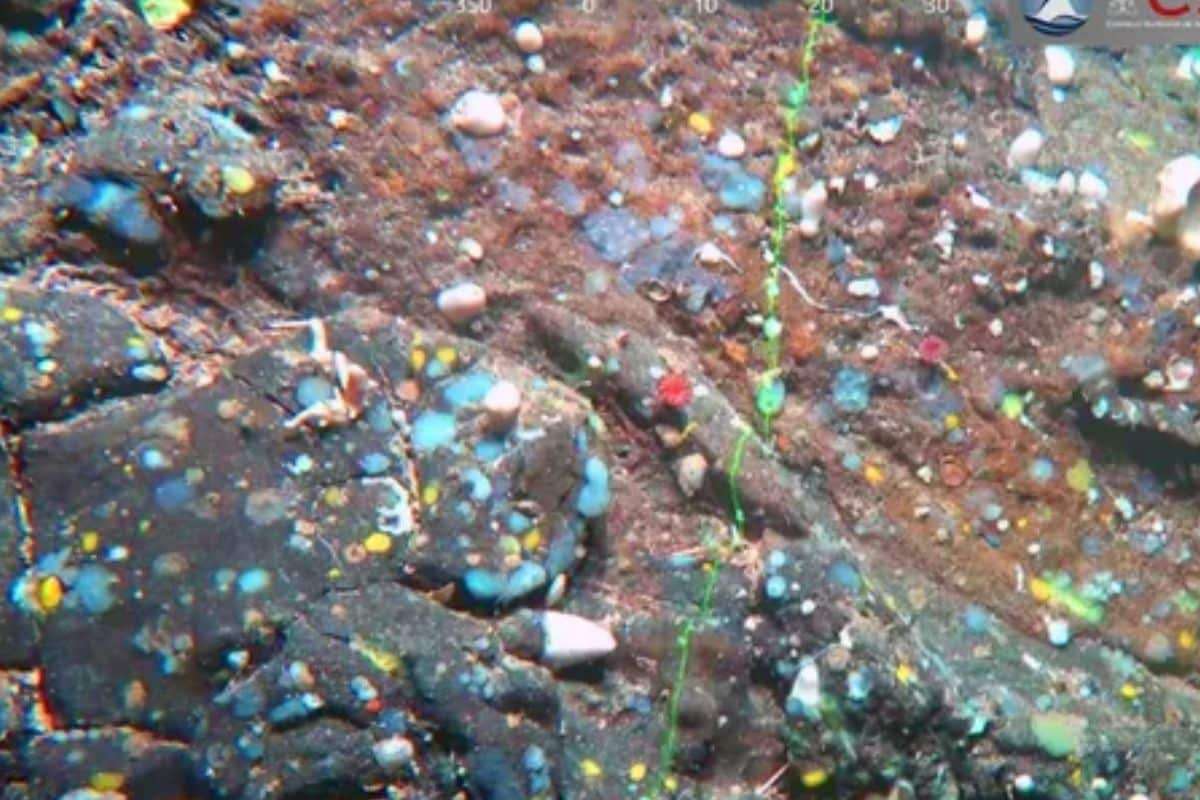
Off the shores of Lanzarote in the Canary Islands, researchers have uncovered an underwater mountain that might be tied to the enduring myth of Atlantis.
Live Science reports that this submerged feature, called Mount Los Atlantes, could be central to unraveling the story of a lost civilization beneath the sea.
Unveiling Mount Los Atlantes
A team of scientists from Spain has revealed a remarkable geological formation during their Atlantic Ocean seabed survey. Deploying a remotely operated vehicle (ROV), they located a seamount consisting of three dormant volcanoes at depths ranging from 100 to 2,500 meters (330 to 8,200 feet).
This seamount, Mount Los Atlantes, stretches roughly 50 kilometers (31 miles) wide, with its base lying about 2.3 kilometers (1.4 miles) beneath the water’s surface.

Positioned off Lanzarote’s eastern coast within the Canary Islands region, this underwater structure was once a chain of islands during the Eocene epoch, roughly 56 to 34 million years ago. Subsequent volcanic processes caused these islands to gradually submerge, leaving geological footprints under the sea.
Connecting to the Atlantis Narrative
Plato’s accounts describe Atlantis as an advanced civilization that was swallowed by the ocean due to divine retribution for its moral failings. The discovery of this sunken landscape, featuring geological features that parallel the Atlantis myth, offers fascinating new possibilities.
Luis Somoza, a geologist leading the effort from the Geological and Mining Institute of Spain (IGME-CSIC), stated, “This might be the origin of the Atlantis legend.” He added that Mount Los Atlantes once consisted of islands that have since sunk and continue to do so, mirroring the narrative told in the legend.
The team has identified remnants of ancient coastlines, including beaches, cliffs, and sand dunes, visible atop the flattened seamount. Remarkably, some of these former beaches lie only about 60 meters (200 feet) underwater.
Volcanic Origins and Island Submersion
The islands’ appearance above water was driven by volcanic activity. Over millions of years, eruptions produced lava that solidified into heavy, compact rock formations.
As these volcanic rocks densified, the islands gradually sank beneath the sea. During the previous ice age, when global sea levels were significantly lower, the volcanic peaks re-emerged as islands.
For Somoza and his colleagues, examining these processes provides a deeper understanding of Earth's ever-changing geological landscape.
Ongoing Investigations and Upcoming Studies
Though the identification of Mount Los Atlantes is a landmark finding, the scientific team intends to continue their research. They aim to analyze rock samples from the seamount to better establish timelines for volcanic events and subsidence.
This work promises to deliver key data about the region’s geological evolution and may further illuminate the connection between this underwater mountain and the storied Atlantis legend.
- Categories:
- Science







0 comments
Sign in to Comment