
The landscape of gold mining worldwide is shifting, with production increasingly dominated by a handful of nations. While global output remains fairly steady, the gold extraction industry is becoming more centralized, impacting international trade dynamics and national policies.
Growing global demand, fewer new discoveries, and soaring prices have amplified the significance of domestic gold supplies. However, challenges such as environmental regulations, mature mining sites, and investment patterns are causing variable outcomes among the leading gold producers.
According to fresh statistics from Statista for 2024, merely seven countries represent the bulk of worldwide gold mine production. These nations not only dominate current output but also shape refining processes, market access, and price stability over the long term.

The worldwide production of gold mines amounted to 3,300 metric tons in 2024, highlighting a concentrated distribution of influence within the global gold industry.
China – 370 Metric Tons
China continued to lead as the top gold producer in 2024, producing 370 metric tons. Mining activities are spread across provinces like Shandong, Henan, and Inner Mongolia.
Recent tighter environmental laws have led to consolidation in China’s gold mining sector, resulting in the closure or merging of smaller sites, enhancing efficiency albeit with fewer individual mines.
The ongoing demand from jewelry, electronics, and monetary reserves supports China’s domestic production. Additionally, the country holds substantial refining facilities, allowing it to meet both internal needs and export demands.
Russia – 310 Metric Tons
In 2024, Russia secured second place globally, producing 310 metric tons of gold. The mining operations remain heavily concentrated in Siberia, with large-scale mines like Olimpiada among the world’s largest.
Despite facing economic sanctions and limited Western market access, Russia’s production has remained strong. Much of the gold supply is channeled through domestic banks or through alternative international routes.
Vertical integration among mining companies and government support have been key factors in sustaining Russia’s mining activities in critical zones.
Australia – 300 Metric Tons
Australia’s gold output reached 300 metric tons in 2024, ranking third worldwide. The sector is backed by large-scale open-pit mines, including renowned operations like Boddington, Cadia, and Tanami.
Known as one of the leading gold exporters, Australia also holds the world’s largest confirmed gold reserves according to the US Geological Survey.
The country’s steady regulatory environment, robust infrastructure, and commitment to exploration investments contribute to its ongoing success in gold mining.
Canada – 200 Metric Tons
Canada, ranking fourth, produced 200 metric tons of gold in 2024. Major mining regions include Ontario, Quebec, and British Columbia, areas that benefit from favorable geology and investor-friendly policies.
The nation’s strong infrastructure, high ESG standards, and access to global markets support its export-oriented gold industry. Domestic demand remains low relative to output.
Exploration efforts have intensified in recent years to increase reserves and develop new mining sites.
United States – 170 Metric Tons
The United States produced 170 metric tons in 2024, making it the fifth-largest gold producer. Most production is centered in Nevada, with smaller contributions from Alaska and Western states.
The industry is dominated by major corporations managing long-life mines, and the U.S. holds a vital position in global refining and gold exports.
While gold reserves remain substantial, exploration investments have been more cautious compared to peers like Canada and Australia.
Kazakhstan – 130 Metric Tons
Kazakhstan placed sixth globally with 130 metric tons of gold output in 2024. Advances in industrial reform and targeted foreign investments have boosted mining activities in regions such as East Kazakhstan and Akmola.
Recent updates to the country’s mining laws have increased transparency and attracted longer-term mining ventures.
Kazakhstan primarily exports its gold, especially to markets in Asia and Europe, supporting its overall mineral export strategy.
Mexico – 120 Metric Tons
Ranking seventh, Mexico produced 120 metric tons of gold in 2024. Top mining states include Sonora, Zacatecas, and Chihuahua, where longstanding mines remain operational.
The country continues to be a key gold exporter, though recent regulatory and environmental policy changes have stirred investor uncertainty.
Mexico’s gold sector closely follows global price trends, with investment levels showing fluctuations accordingly.
Reserves and Demand Shape the Global Gold Outlook
According to Statista, the world’s recoverable gold reserves totaled 64,000 metric tons in 2024, predominantly located in Australia, Russia, South Africa, the U.S., and China. These countries also manage many of the largest refining operations and exert significant influence over gold’s downstream markets.
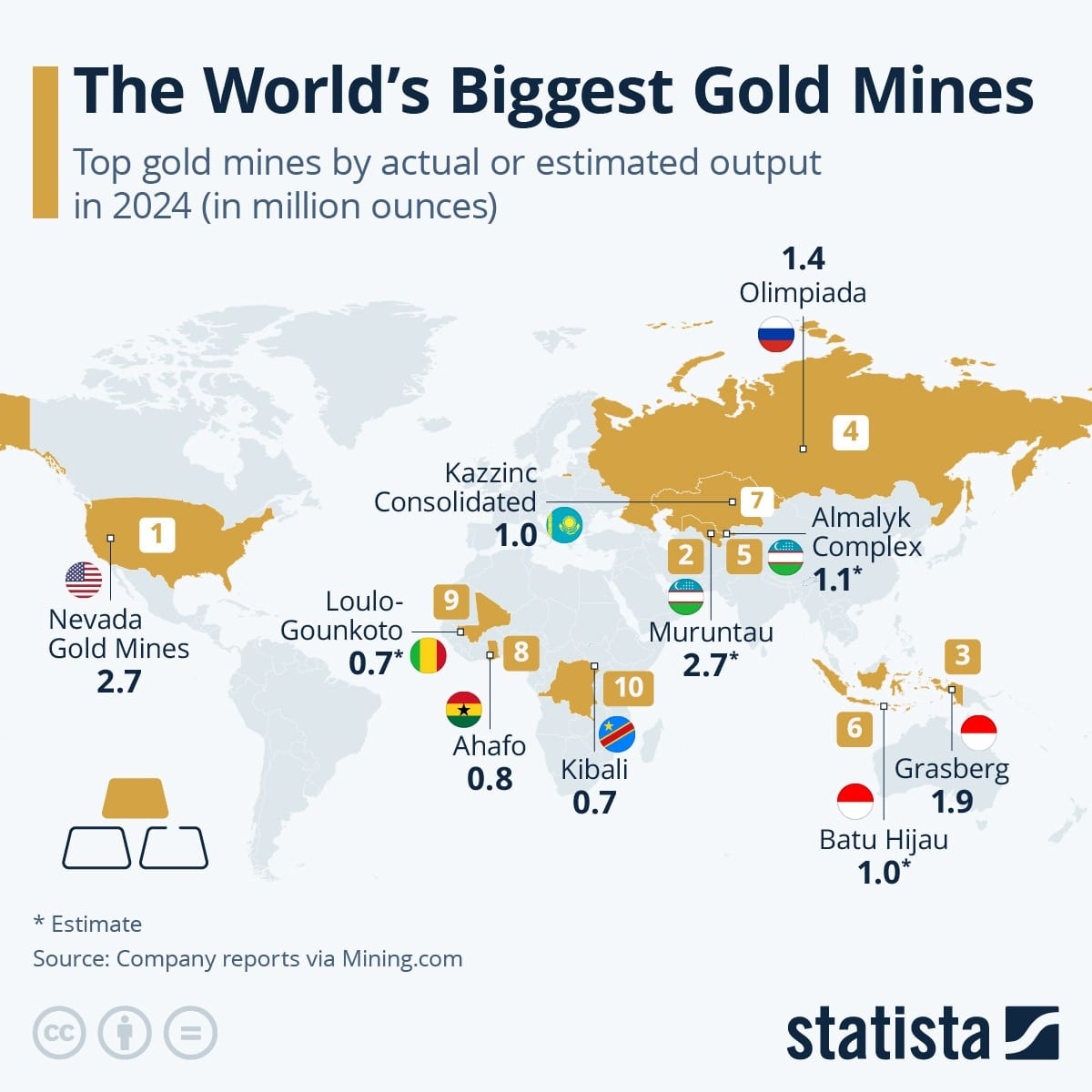
Data from the World Gold Council shows that global gold demand reached 4,606 metric tons in 2024, propelled by central banks increasing reserves to mitigate currency and inflation risks. The sectors of jewelry, electronics, and manufacturing remain robust demand contributors.
New gold discoveries are increasingly rare; production growth is mostly driven by expanding existing mines and reopening old shafts. Rising costs tied to energy, water, and environmental safeguards affect all producing countries, and regulatory approval processes have grown longer, especially in nations with stringent environmental rules.
- Categories:
- News












0 comments
Sign in to Comment