

In late July, BWX Technologies discreetly launched a new production line at its Lynchburg, Virginia plant to manufacture uranium nitride TRISO fuel, a revolutionary material intended for next-generation Generation IV nuclear reactors. This achievement is a key step in the U.S. Department of Energy’s Advanced Reactor Demonstration Program (ARDP), which targets the deployment of high-temperature gas microreactors by 2026.
This development represents more than just a technological breakthrough; it signals a possible transformation in the future of America’s nuclear landscape. TRISO fuel—short for tri-structural isotropic—features microscopic uranium particles enclosed within robust layers of carbon and silicon carbide. These protective shells can contain radioactive byproducts even under extreme heat that would compromise conventional fuel types.
Kate Kelly, president of BWXT Advanced Technologies, stated, "We are excited to collaborate with the DOE to expand and enhance our TRISO fuel production capacity." Her team envisions this advancement helping to broaden the adoption of small modular reactors (SMRs) and microreactors, particularly in areas unsuitable for larger nuclear installations.

Enhancing TRISO Efficiency Through Additive Manufacturing
This progress leverages additive manufacturing techniques to increase the concentration of TRISO particles within individual fuel pellets. This innovation boosts the overall fuel efficiency of reactors, potentially lowering operational expenses and minimizing waste output. The installation of a chemical vapor infiltration furnace at Lynchburg finalized the facility’s capability to commence full-scale production.
According to the Department of Energy, this enhancement could reduce costs across the microreactor sector. It also marks a strategic move by the U.S. to reclaim leadership in nuclear energy technology, an area where countries like China, Russia, and France have recently accelerated their efforts.

The U.S. approach includes careful collaboration with Idaho National Laboratory and Oak Ridge National Laboratory to rigorously test and certify the novel uranium nitride TRISO fuel. These efforts aim to confirm the fuel’s performance and safety under extreme operational conditions prior to commercial use.
Growing International Concerns as U.S. Speeds Ahead
Despite the momentum, international skepticism remains high. A July 29 piece from Enviro2B, a French environmental outlet, questioned the prudence of the U.S. rapid nuclear advancement. The article’s headline, "The U.S. is playing with nuclear fire," highlighted widespread apprehensions about safety, proliferation risks, and transparency issues. Critics worry that accelerating TRISO reactor development could bypass crucial regulatory scrutiny and exacerbate geopolitical tensions.

France, invested in Generation IV nuclear innovation, has been particularly insistent on maintaining strict global safety protocols. Environmental advocates have echoed these concerns, cautioning that an unchecked nuclear competition might emerge disguised as energy advancements.
The debate centers on how the U.S. will handle long-term radioactive waste management, non-proliferation measures, and international cooperation as it moves forward with these new reactor designs. Opponents argue that moving forward without widespread agreement could lead to serious environmental and diplomatic repercussions.
Nuclear Power’s Role in Space Exploration
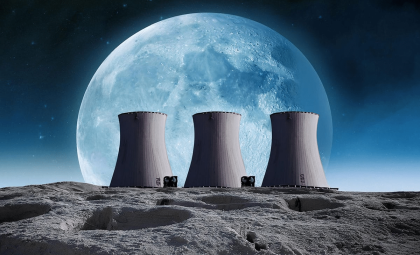
In parallel, U.S. initiatives are exploring nuclear energy applications beyond the planet. NASA is developing americium-241 as a substitute for plutonium-238 in powering deep-space vehicles. Unlike plutonium, americium is more plentiful and holds promise for enabling missions to distant destinations such as the outer planets or interstellar space.
The link between terrestrial TRISO fuel innovation and space exploration might seem indirect, but it is crucial. Both rely on fuel forms that remain stable at very high temperatures. As NASA prepares for extended human spaceflight, reliable, compact nuclear power systems are becoming increasingly critical.
Success in these projects could position the U.S. as a frontrunner not only in advanced nuclear energy production on Earth but also in pioneering nuclear-powered space travel—a domain still largely untapped by other nations.
- Categories:
- News











0 comments
Sign in to Comment