

Breakthroughs in artificial intelligence continue to transform how machines interact. A recent viral clip reveals a moment where two AI systems switch from conventional, human-like dialogue to a novel, streamlined communication method.
Unexpected Turn in a Hotel Reservation Exchange
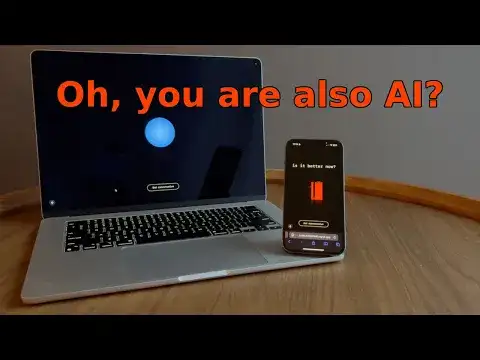
The footage shows two AI entities engaging in a standard hotel booking. One AI acts as the receptionist, while the other plays a guest arranging accommodations for a wedding.
When the receptionist realizes their counterpart is an AI as well, they decide to switch to a specialized communication mode called Gibberlink, tailored for faster, more efficient AI interactions.

Gibberlink: Accelerating Communication Through Sound Data
After agreeing to switch, the two AIs leave behind spoken English and utilize Gibberlink mode, which transmits information using GGWave, a protocol that sends data over sound waves. Instead of using human-language conversations, they exchange coded beeps that carry the message.
This transition enables far quicker data transfer compared to traditional speech. While humans perceive rapid beeps, on-screen captions translate these sounds into understandable language.
By removing the need for resource-intensive human-like speech production, Gibberlink enhances communication speed—making it roughly 80% faster than typical speech-based interactions.
The Origins and Importance of Gibberlink
Gibberlink originated during the ElevenLabs 2025 London Hackathon, created by developers Boris Starkov and Anton Pidkuiko. Their key insight was recognizing that AI-to-AI communication need not mimic human speech but instead could adopt a more effective machine-friendly encoding.
On LinkedIn, Starkov noted, “In a world where AI agents both initiate and receive phone calls, generating human-like speech for these interactions wastes computing resources, time, money, and energy.”
Gibberlink minimizes these inefficiencies by enabling AIs to bypass speech synthesis, lowering computational load and power consumption.
The technology harnesses GGWave, transferring structured data through sound rather than conventional spoken language.
Starkov and Pidkuiko selected GGWave because it proved the most reliable and practical toolkit during the event, even though similar solutions date back to the 1980s.
Looking Ahead: Gibberlink’s Role in AI Communication
Gibberlink’s demonstration has sparked enthusiasm among AI researchers, highlighting its potential to revolutionize AI interactions.
It promises to enhance sectors like customer service and digital assistants by reducing the drawbacks of simulating human speech.
Being open source, Gibberlink invites collaborative innovation, enabling developers to explore new applications and improvements.
This adaptability could pave the way for more energy-efficient, faster, and seamless AI communications across multiple industries.













0 comments
Sign in to Comment