
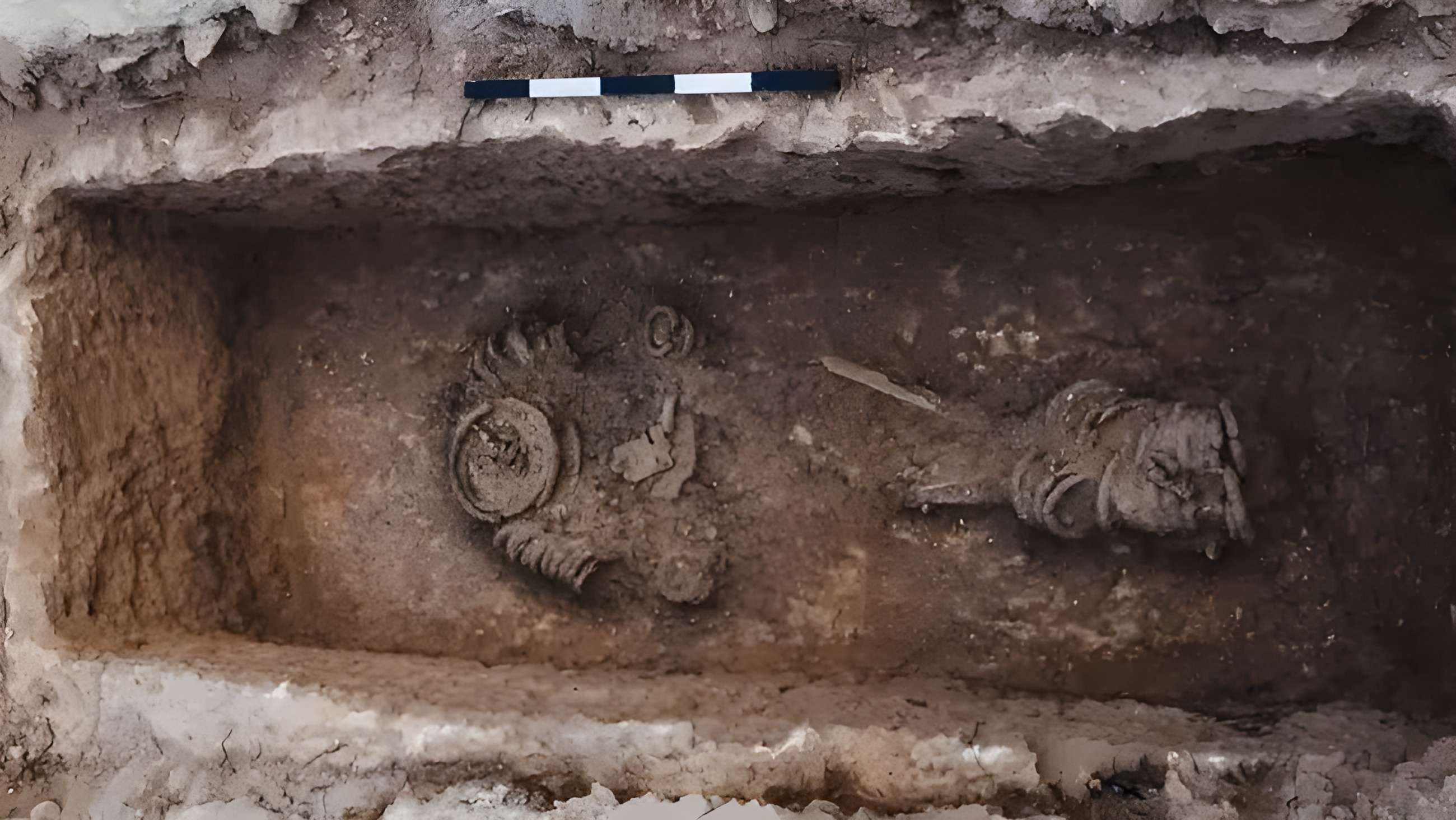
In the ancient city of Jerusalem, researchers have uncovered the remains of a woman over 1,500 years old who was interred while still wearing iron shackles around her neck, wrists, and ankles. This extraordinary find offers a rare glimpse into the harsh religious customs of the early Byzantine era, hinting that she might have been an ascetic who embraced intense self-discipline and suffering.
A Remarkable Burial Featuring Iron Restraints
The skeletal remains, excavated close to Jerusalem, show that the iron restraints remained firmly attached at the time of burial.
Since shackles were usually removed prior to burial, this extraordinary case stands out. Scholars suggest the woman could have been an extreme ascetic, a person who practiced rigorous self-denial often motivated by spiritual devotion.

Such rigorous self-mortification practices were known in early Christian circles, with some ascetics retreating into solitude, enduring fasting, wearing uncomfortable garments, or practicing self-flagellation to cleanse their soul. Still, graves containing shackles are virtually unheard of.
A Penitent or a Venerated Religious Devotee?
The inclusion of shackles sparks debate about her place in society. Was she a holy figure admired for her piety, or a penitent who sought redemption through harsh penance?
Historians highlight that Byzantine religious factions often embraced severe self-discipline as a path to spiritual enlightenment.
Some individuals believed enduring prolonged physical hardship could earn divine favor. If this woman was part of such a sect, her severities might have garnered respect rather than condemnation.
The Role of Asceticism in Early Christian Faith
Ascetic practices were a central element of early Christianity, especially within the Eastern Roman Empire. Many devoted followers isolated themselves in monasteries, caves, or deserts to focus on prayer and abstinence. Some, known as Stylites, famously lived on pillars for years, while others engaged in physical penance.
This finding supports historical accounts of women ascetics who embraced vows of poverty, chastity, and suffering. Yet, archaeological proof of these personal sacrifices has been scarce, making this skeleton an exceptionally valuable window into their world.
Implications for Future Archaeological and Historical Study
This discovery prompts fresh inquiries into burial rituals, religious customs, and the societal views surrounding female ascetics in Byzantine civilization.
Was this woman honored for her unwavering faith, or compelled into suffering against her will? Did she die from natural causes, or did the rigors of her austere lifestyle hasten her demise?
“The chains were likely viewed as integral to her identity as an ascetic. May have served to honor her ascetic life and ensure that her spiritual commitment continued to be recognized even after death,” said Elisabetta Boaretto, an archaeologist at the Weizmann Institute of Science in Israel.
In-depth bone analysis could reveal evidence of malnutrition, damage, or chronic effects caused by prolonged use of iron shackles.
- Categories:
- Science













0 comments
Sign in to Comment