

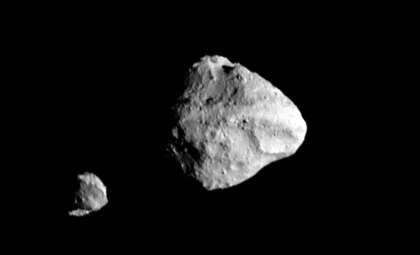
Known as 2024 PT5, this small space object first drew astronomers’ attention in September 2023. Initially classified as an ordinary asteroid, in-depth studies have shown it possesses distinctive traits. About the size of a bus, it temporarily entered Earth’s gravitational embrace, earning the informal title of a “mini-moon.”
What makes 2024 PT5 truly fascinating is its composition, which closely matches lunar rock samples collected during the Apollo missions in the 1970s. This unexpected correlation has led scientists to theorize that the object might have been blasted off the Moon’s surface within the past million years.
This revelation is remarkable because it connects 2024 PT5 not just to Earth’s neighborhood, but possibly to the Moon itself. Considering Earth’s formation narrative involves a giant impact with another planet-sized body billions of years ago, this small celestial body could be thought of as a material fragment of that shared history.

Linking to the Arjuna asteroid group
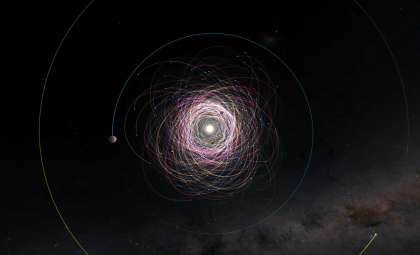
After its brief orbit around Earth, 2024 PT5 is predicted to rejoin the Arjuna asteroid group, a collection of near-Earth asteroids with orbits similar to our planet’s discovered in the 1990s. These asteroids might also contain material ejected from the Moon by past asteroid collisions, reinforcing the connection between Earth, its natural satellite, and these close-orbiting bodies.
The Arjuna asteroids offer tremendous research potential, providing insight into the early conditions of the Earth-Moon system. Their close proximity to Earth makes them ideal targets for observation and possibly future missions.
Revisiting the Earth-Moon relationship
The possibility that 2024 PT5 originates from lunar material sheds new light on our understanding of the Earth-Moon environment. It enriches knowledge about :
- How lunar surface activities can result in ejecta
- The processes that launch material from the Moon into space
- The gravitational interplay involving Earth, the Moon, and nearby objects
- The likelihood of other similar “mini-moons” temporarily orbiting Earth
This discovery underscores why monitoring near-Earth objects remains crucial. While asteroid flybys frequently attract attention over collision concerns, they also serve as valuable scientific opportunities.
Looking ahead: Upcoming observations and studies
Astronomers are preparing for 2024 PT5’s anticipated return to Earth’s vicinity in January 2025. With refined orbital data, they plan to conduct more detailed radar observations during this approach. This will aid in gathering further evidence and possibly confirming its lunar origin.
Key questions researchers aim to address include:
- Can conclusive proof be found for 2024 PT5’s Moon-based origin?
- Are there additional mini-moons with comparable makeups currently orbiting Earth?
- What insights can these bodies provide about the Moon’s evolution?
- How often does Earth’s gravity temporarily capture lunar ejecta?
To contextualize the uniqueness of 2024 PT5, here is a comparison with typical near-Earth asteroids:
The discovery of 2024 PT5 highlights the complex ties between celestial objects in our solar system. This mini-moon’s journey reflects the ongoing dynamism of planetary and lunar interactions, inspiring continued curiosity about the universe overhead.
- Categories:
- Astronomy






0 comments
Sign in to Comment