
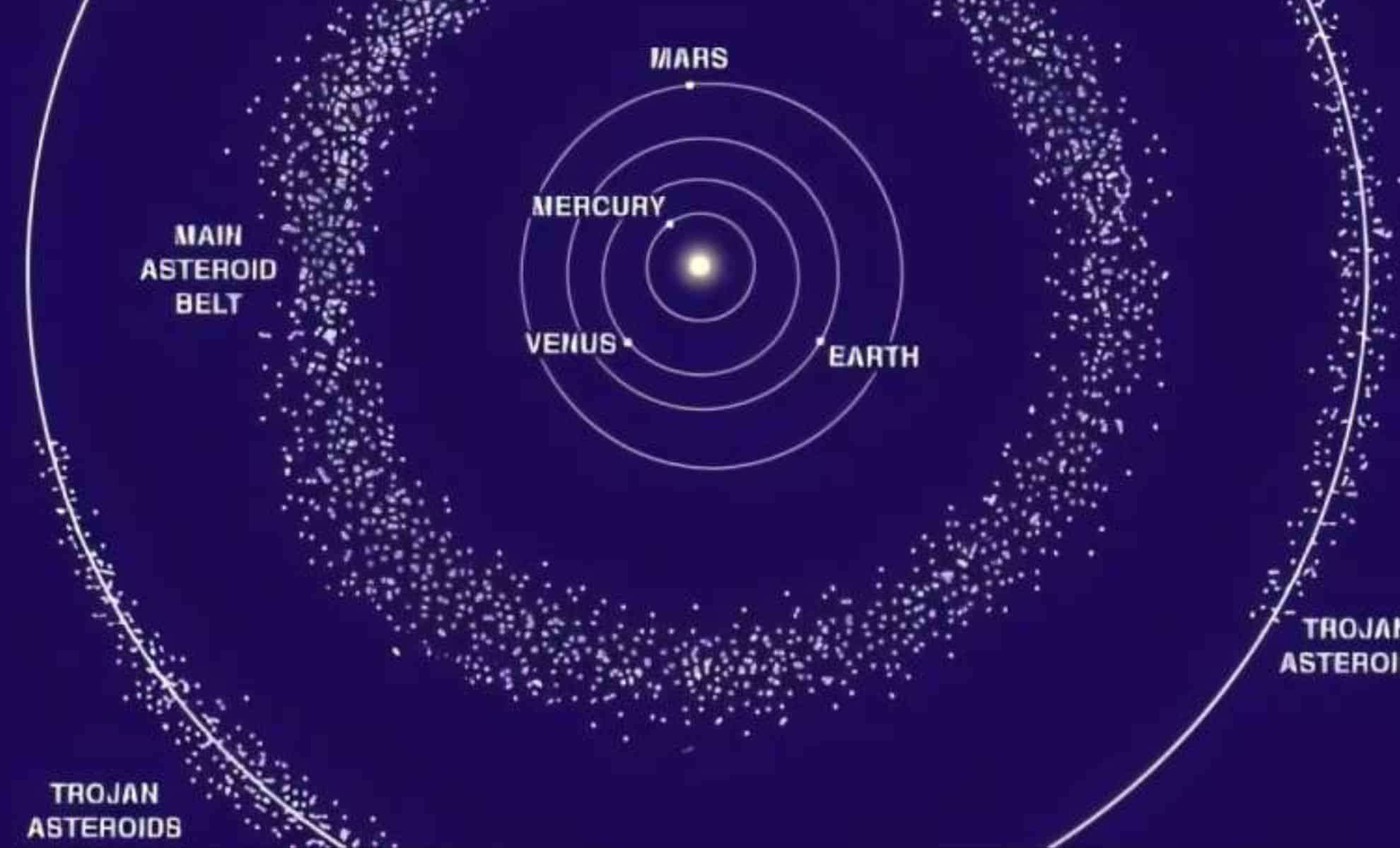
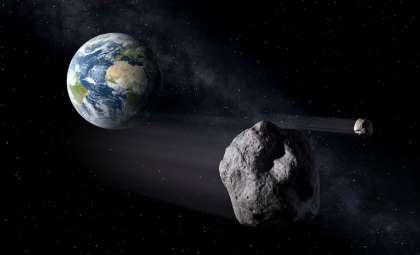
A recent investigation The Invisible Threat: Assessing the Collisional Hazard Posed by the Undiscovered Venus Co-Orbital Asteroids sheds light on a little-known group of asteroids traveling alongside Venus that could represent a significant hazard for our planet. Led by Valerio Carruba and his team at São Paulo University, the study highlights the challenges posed by these elusive celestial objects, which may elude detection from telescopes on Earth. Unlike the well-monitored near-Earth asteroid populations, these asteroids share their orbital path with Venus, complicating efforts to track them and increasing their unpredictability.
Venus’ Hidden Companions: Asteroids Masked by Shared Orbit
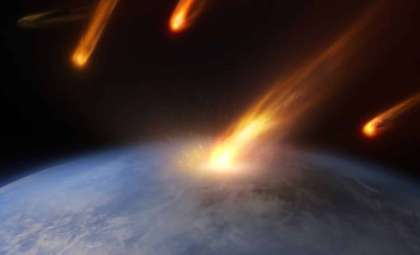
While Jupiter’s Trojan asteroids have been extensively studied, the group of asteroids co-orbiting with Venus remains less understood. The authors point out that there are currently about twenty known Venus co-orbitals, emphasizing a critical issue: “co-orbital status protects these asteroids from close approaches to Venus, but it does not protect them from encountering Earth.” If these bodies meet the criteria of being at least 140 meters in diameter and approach within 0.05 astronomical units of Earth, they qualify as potentially hazardous asteroids (PHAs). Such sizes are large enough to cause devastating damage upon impact. The unique combination of orbit-sharing with Venus and occasional Earth-crossing paths makes them particularly dangerous and more complex to predict compared to traditional near-Earth objects.
The Challenge of Chaotic Orbits and Predictive Uncertainty
The greatest concern with these Venus co-orbitals arises from their erratic orbital behavior, assessed through Lyapunov times, which measure how rapidly orbital predictions become unreliable. Carruba and colleagues used detailed simulations showing that minute differences in their starting orbits can lead to vastly divergent futures. “We aim to assess the possible threat that the yet undetected population of Venus co-orbiters may pose to Earth, and to investigate their detectability from Earth and space observatories,” the team explains. These models, run over spans up to 36,000 years with cloned asteroid populations, demonstrate that even asteroids with relatively stable orbits may eventually cross Earth’s trajectory due to gravitational perturbations or solar radiation forces. This gradual drift into Earth's vicinity presents risks that current tracking methods might entirely overlook.

Observation Limitations and the Blind Spots from Earth
Most Venusian co-orbitals remain virtually undetectable from terrestrial observatories because they spend much of their orbits obscured by solar glare. This poses a dangerous detection gap. According to the researchers, “there is a range of orbits with eccentricity < 0.38, larger at lower inclinations, for which Venus’ co-orbitals can pose a collisional hazard to Earth.” These low-eccentricity objects are particularly troublesome as their orbits are less prone to wide swings and consequently harder to identify early. The forthcoming Vera Rubin Observatory, expected to commence full operations in mid-2025, might catch some of these objects during brief opportunities when their position relative to the Sun allows a glimpse. However, these observational periods are limited and may fail to capture much of this hidden population. Without sustained monitoring from ideally positioned platforms, many hazardous asteroids could remain unseen.
Advocating Space-Based Surveillance Near Venus
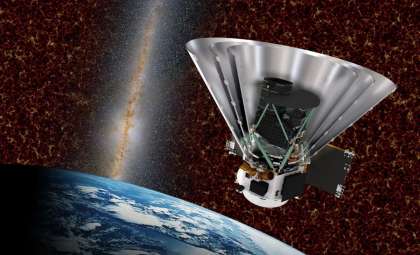
Given the shortcomings of Earth-based detection systems, Carruba’s group promotes the idea of dedicated space telescopes orbiting near Venus to enhance surveillance. A mission situated strategically to observe away from the Sun’s blinding glare could dramatically improve identification and tracking of these threats. “Among these, low-e Venus co-orbitals pose a unique challenge, because of the difficulties in detecting and following these objects from Earth,” the study authors conclude. They highlight the effectiveness of placing observatories at Lagrange Points such as Sun–Earth or Sun–Venus L1/L2 to optimize monitoring. “While surveys like those from the Rubin Observatory may be able to detect some of these asteroids in the near future, we believe that only a dedicated observational campaign from a space-based mission near Venus could potentially map and discover all the still ‘invisible’ PHA among Venus’ co-orbital asteroids,” they write. Such efforts would be essential to close the gap in our planetary defense, helping avoid surprise collisions originating from this hidden population.
- Categories:
- News





0 comments
Sign in to Comment