
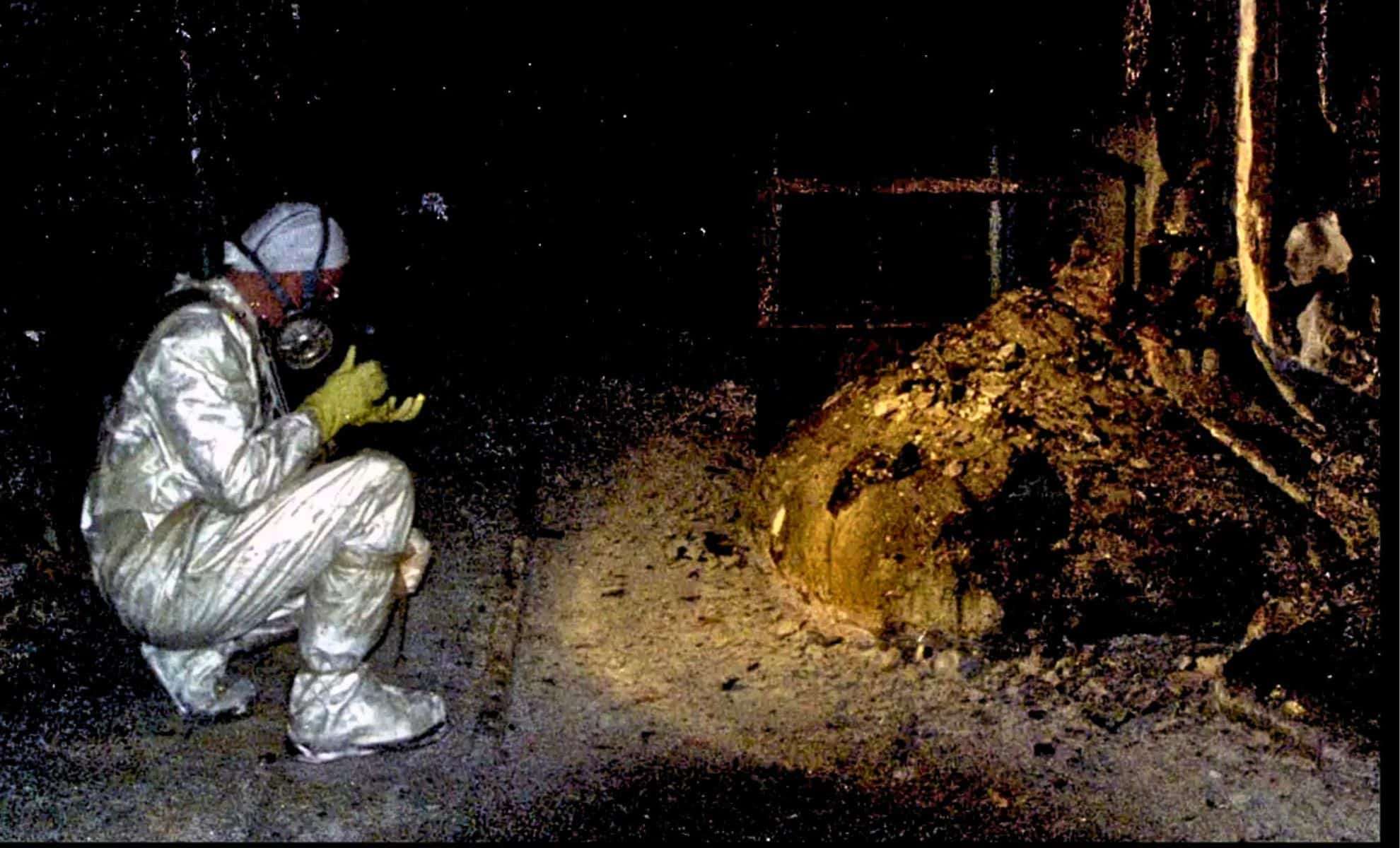
Hidden beneath the radioactive rubble of Reactor 4 at Chernobyl lies an incredibly hazardous creation: the Elephant’s Foot. This misshapen mass of solidified corium stands as a grim reminder of the catastrophic 1986 nuclear accident, embodying the raw destructive power released during the meltdown.
Understanding the Elephant’s Foot
The Elephant’s Foot formed as molten materials from the nuclear core—comprising uranium, zirconium, steel, concrete, and sand—fused together under intense heat. This amalgamation solidified into a rough, cracked shape that earned its name due to its resemblance to elephant skin.
Shortly after its creation, radiation levels from the Elephant’s Foot were so extreme that mere moments nearby caused severe symptoms like dizziness and nausea. Prolonged exposure for five minutes or more could prove fatal, with death ensuing painfully. Even decades later, though radiation has diminished, the site remains perilous to approach.


The Iconic Image That Endangered a Scientist
Despite its lethal nature, the Elephant’s Foot was studied firsthand. In 1996, nuclear safety specialist Artur Korneyev entered the Reactor 4 ruins to capture a photograph of this radioactive relic. His striking image of the cracked, molten lump in a deteriorating corridor became one of Chernobyl’s most memorable visuals.
Korneyev paid a heavy price for this close encounter; years of radiation exposure led to serious health issues, including cataracts and permanent damage. As a consequence, he is now banned from entering the Chernobyl Exclusion Zone, illustrating the ongoing risks connected to the disaster’s aftermath.

Renewed Peril Amid Conflict
The hazards of Chernobyl’s lingering radioactivity have been compounded by recent geopolitical turmoil. Almost three years ago, the conflict initiated by Vladimir Putin’s invasion of Ukraine thrust the nuclear site into the center of a major crisis—the deadliest European war since World War II.
In the conflict’s initial stages, Russian forces took control of Chernobyl, holding plant personnel hostage. These workers were compelled to acquire fuel from their captors to maintain power and avoid further catastrophes. Meanwhile, some invading soldiers reportedly dug through radioactive terrain, placing themselves at imminent risk from radiation exposure.
Although Ukrainian troops later regained authority over the facility, Chernobyl remains a dangerous environment due to both persistent radiation and ongoing military tensions. The presence of armed individuals traversing one of Earth’s most contaminated sites only heightens the disaster’s tragic legacy.
Enduring Legacy Beneath the Surface
Nearly 40 years after the initial catastrophe, the Elephant’s Foot endures deep within Chernobyl’s Reactor 4 as a potent symbol of the fallout from nuclear failure. Continuous monitoring is vital as containment structures weather over time, requiring constant upkeep to prevent further leakage.
Beyond its frightening history, the Elephant’s Foot serves as a stark emblem of nuclear energy’s dangers and mankind’s destructive capabilities—intentional or accidental. Its presence remains a haunting element of Ukraine’s environment, etched into its soil, air, and collective memory.













0 comments
Sign in to Comment