
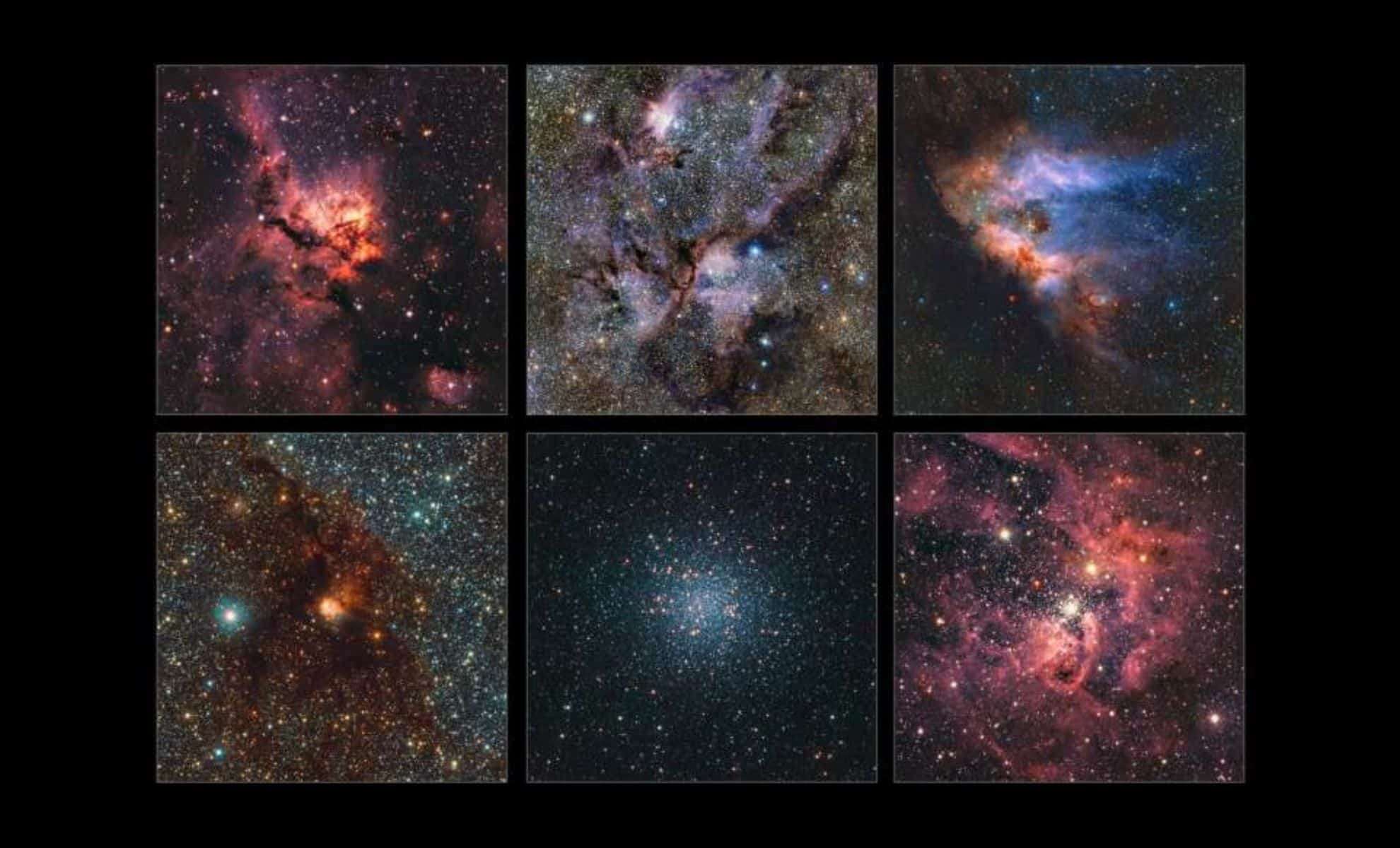
Scientists have crafted the most detailed infrared portrait of the Milky Way yet, cataloging over 1.5 billion celestial bodies. This extensive endeavor, conducted by the European Southern Observatory (ESO) over the span of 13 years and 420 nights at night, utilized the VISTA telescope located in Chile. Comprising nearly 200,000 images, the survey pierces through the thick cosmic dust and gas concealing large portions of our galaxy, unveiling elusive entities like brown dwarfs, rogue planets, and hypervelocity stars.
Infrared Vision Penetrates Galactic Dust
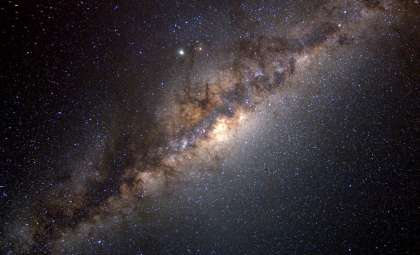
Observing the Milky Way is notoriously difficult due to the dense clouds of gas and dust especially concentrated near the galactic core. This region hosts abundant star formation zones and a supermassive black hole, but is largely hidden from visible light observation. By exploiting infrared wavelengths, astronomers can bypass these obscuring layers, revealing stars and other objects previously unseen.
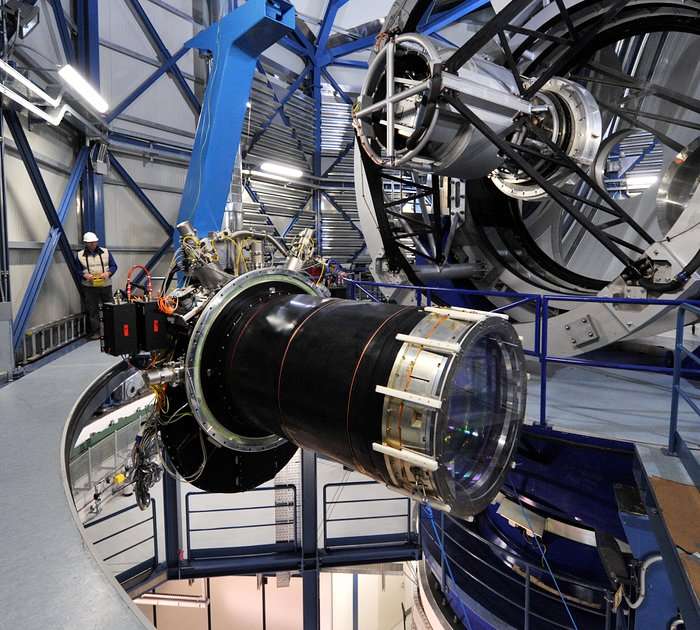
The VISTA telescope’s advanced VIRCAM infrared detector played a pivotal role in capturing this expansive survey. Unlike optical telescopes, infrared observations detect cooler objects and those embedded in thick dust clouds. As the lead scientist Dante Minniti remarked, “Numerous discoveries have reshaped our understanding of the galaxy permanently.”

By delving into these obscured areas, VISTA unveiled critical insights into brown dwarfs—substellar objects lacking sufficient mass for fusion—as well as planets wandering freely through space, unattached to stars. These bodies emit faint infrared glows that often go undetected by traditional telescopes. Moreover, the survey identified hypervelocity stars, ancient stars expelled from the galactic center at remarkable speeds, likely propelled by gravitational interactions with the central black hole.
An Ambitious Data Collection Journey
This project’s scale of data gathering is unparalleled. Over 13 years, the VISTA Variables in the Vía Láctea (VVV) survey and its extension, VVVX, amassed more than 500 terabytes of observations. The final map covers a celestial area equivalent to the diameter of 8,600 full moons and catalogs roughly ten times the number of objects measured in the team's previous 2012 survey. Its vast archive spans newborn stars up to ancient globular clusters, densely packed associations of the galaxy’s most venerable stars.
One breakthrough is the identification of stars whose luminosity varies regularly. These variable stars serve as essential cosmic yardsticks, helping astronomers precisely gauge galactic distances. Such data underpin a comprehensive 3D model of the Milky Way’s architecture, unveiling the structure shrouded until now by dust clouds. This enhanced view deepens insight into the galaxy’s birth and growth processes.
This enormous dataset, beyond its sheer volume, lays groundwork for scientific advancement spanning decades. Roberto Saito, the lead author and astrophysicist at Universidade Federal de Santa Catarina in Brazil, emphasized, “Our success was a collaborative triumph contributed by an exceptional team.” Already, the survey has fueled the publication of over 300 research articles, with many more anticipated as study continues.
Probing the Heart of Our Galaxy
Among the map’s most captivating achievements is its detailed exploration of the galactic center, a region marked by complexity and the powerful influence of the Milky Way's supermassive black hole. Stars flung outward at tremendous velocities, known as hypervelocity stars, owe their speed to interactions near this cosmic behemoth. Detection of these stars gives invaluable clues about gravitational dynamics and black hole physics.
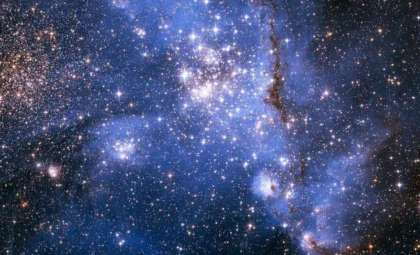
VISTA’s infrared sensitivity also captured intricate regions where star formation is actively underway, including Messier 17 and NGC 6357. These stellar nurseries, normally hidden behind thick dust in visible light, glow distinctly in the infrared. The survey not only maps these zones but tracks the changing brightness and movement of stars within them, offering a vivid portrayal of stellar development.
Additionally, this study uncovered numerous free-floating planets unbound to any stellar system. Identifying these elusive wanderers expands our knowledge of planetary system diversity and challenges existing models of planetary genesis.
The Next Frontier in Galactic Research
Following the completion of the VVV and VVVX surveys, the ESO’s Paranal Observatory is gearing up to enhance galactic research with new instruments such as 4MOST and MOONS, which will support both VISTA and the Very Large Telescope (VLT). These tools will dissect the light from countless stars and objects to determine their detailed chemical fingerprints, revealing the elements and molecules present.
This upcoming phase will help researchers unravel the chemical evolution of our galaxy, tracking how elements form and disperse within stars and across cosmic space. The groundbreaking VISTA map is only the beginning, ushering an era where hidden qualities of the Milky Way will be uncovered with unprecedented clarity.
Ultimately, this meticulously crafted infrared map has revolutionized our perception of the Milky Way by unveiling stars, planets, and star-forming regions once concealed by cosmic dust. It stands as a foundational resource for astronomers worldwide, promising to propel discoveries that enrich our understanding of our galactic home for generations.
- Categories:
- Astronomy ,
- News ,
- Space







0 comments
Sign in to Comment