

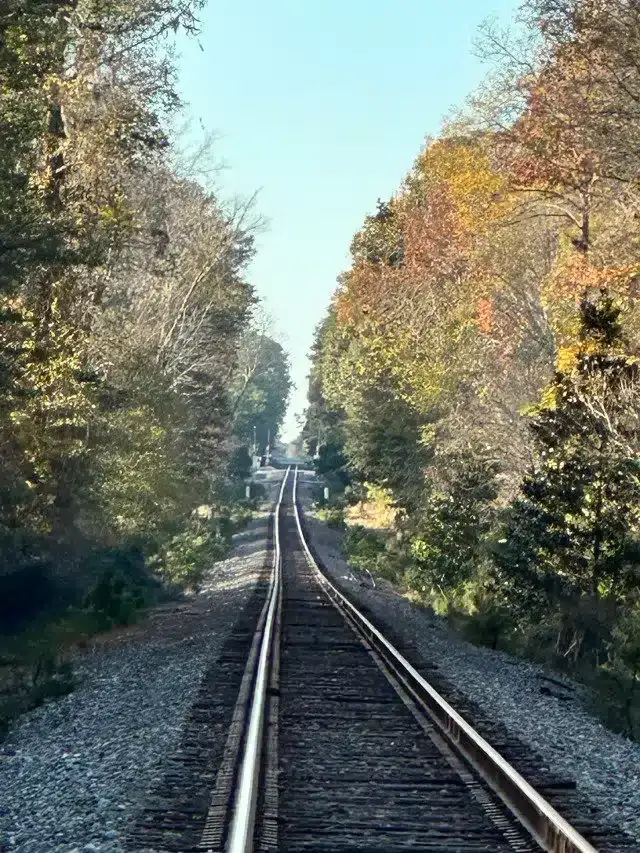
For many years, residents of Summerville, South Carolina have been mystified by unexplained lights appearing near an old, unused railway line. Folklore links these eerie glows to a sorrowful woman searching for her husband, who supposedly perished in a tragic train mishap.
Recent scientific investigations, however, point to a natural origin—earthquake lights, a rare and not fully understood geophysical occurrence.
The Tragic Legend Inspiring Local Lore
The unexplained illuminations have been part of community stories since at least the mid-20th century, predominantly noticed on foggy, dark evenings along the tracks. According to local myth, the lights are caused by a spectral lantern carried by a widow mourning her spouse, who allegedly lost his life in a fatal railway accident.

Alongside these lights, witnesses have reported puzzling incidents such as abrupt door slams, ghostly footsteps, and animals behaving nervously. These phenomena have long fueled beliefs in supernatural forces within the area.
Research Delves Into The Paranormal Claims
More recently, prominent seismologist Susan Hough from the U.S. Geological Survey (USGS) offered a grounded alternative explanation. Her studies suggest that these visible lights may actually be earthquake lights—an infrequent natural light display linked to seismic events.
Hough’s findings indicate that the earliest recorded appearances of Summerville’s ghost lights align closely with three earthquakes during the 1950s and 1960s.
These seismic events, ranging in magnitude from 3.5 to 4.4, could have caused subterranean methane or radon gases to escape and ignite due to static charges or physical stress within the rocks.
She hypothesizes that metallic structures like the steel railway rails might have facilitated the ignition of these gases, producing the glowing spheres mistakenly attributed to ghosts.
Understanding The Phenomenon Of Earthquake Lights
Earthquake lights remain a widely debated subject among geophysicists. Recorded sightings span centuries and continents, manifesting as glowing orbs, luminous streaks, or ambient glows near the ground or sky during or just before earthquakes.
One prevailing theory proposes that the stress and friction within the Earth’s crust build up electrical charges, ionizing the surrounding air and producing visible luminescence. Another suggests triboluminescence—electric discharges generated as rocks grind against each other, lighting gases or causing brief sparks.
Global Instances Of Similar Phenomena
Summerville’s faint lights are not an isolated case; alike phenomena have been documented in earthquake-prone locations such as Japan, Italy, and Peru days before significant tremors.
A notable historical example occurred during the 1886 Charleston earthquake, which severely affected South Carolina. Witnesses from that era described bright flashes illuminating the sky, resembling the Summerville occurrences.
Situated near Charleston’s seismic fault lines, Summerville likely experiences smaller quakes that may have triggered these luminous events over time.
Prospects For Future Verification
While compelling, Hough admits her hypothesis requires additional evidence. Future investigations aim to detect gas emissions locally to confirm if subterranean gases are escaping and igniting.
Such confirmation would categorize Summerville’s ghost lights among verified instances of earthquake lights, shedding scientific light on a longstanding local mystery.
- Categories:
- News











0 comments
Sign in to Comment