
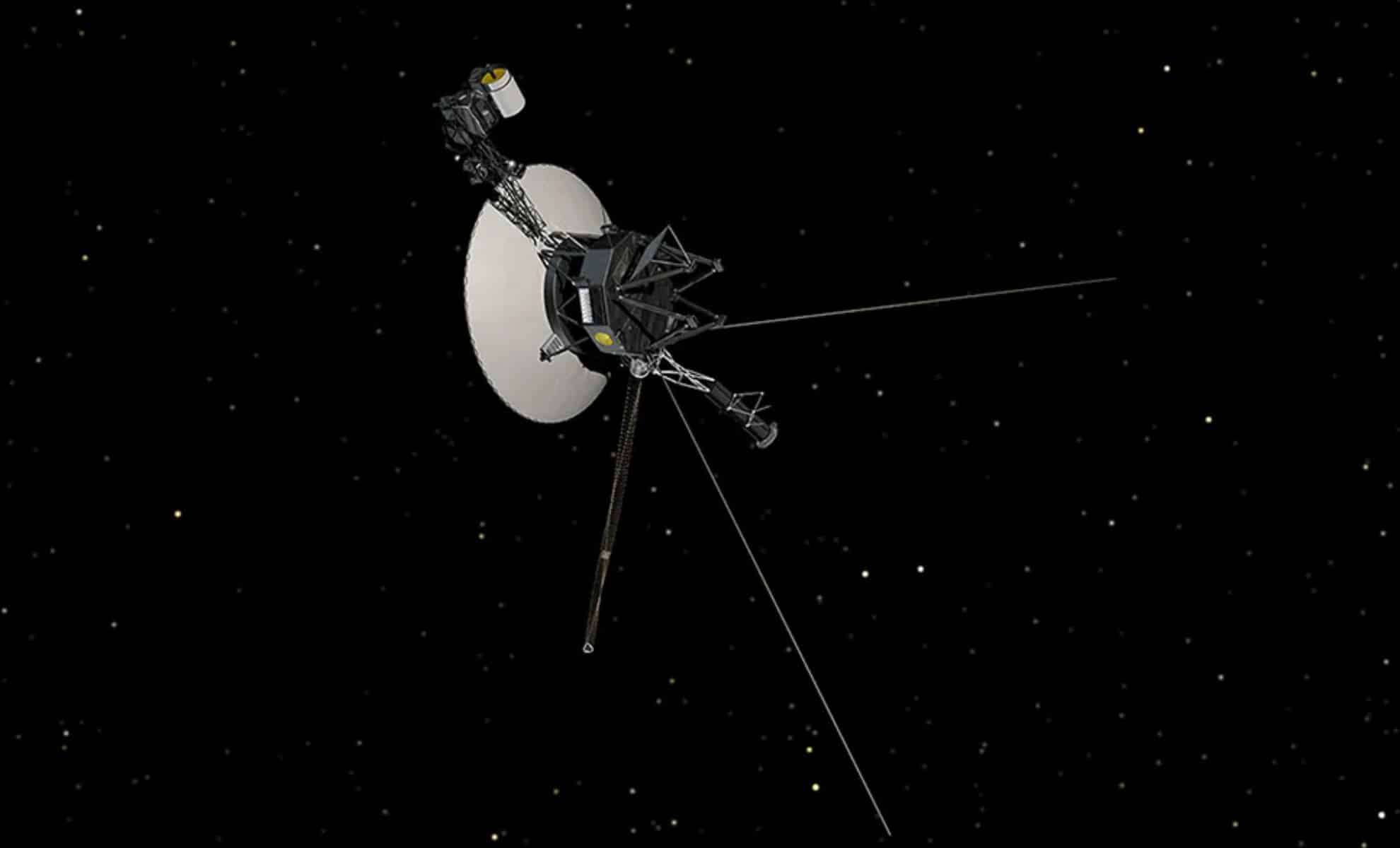
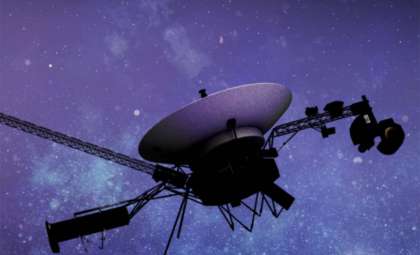
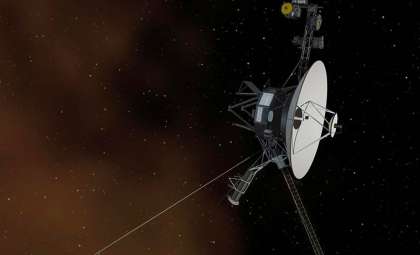
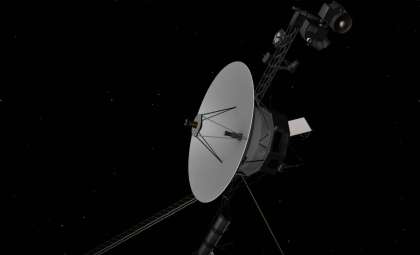
During its 1979 flyby of Jupiter, NASA’s Voyager 1 spacecraft detected a remarkable and mysterious event—plasma wave signals as it passed through the planet’s bow shock region. This fascinating audio, recorded over four decades ago, offers a vivid reminder of the complex and dynamic environment surrounding Jupiter, the giant at the center of our solar system. Though not quite Holst’s The Planets symphony, the sound has often been likened to the cosmic “music of the spheres,” granting scientists an unparalleled audio insight into the vast magnetic domain of Jupiter.
Understanding the Origins of These Plasma Sounds
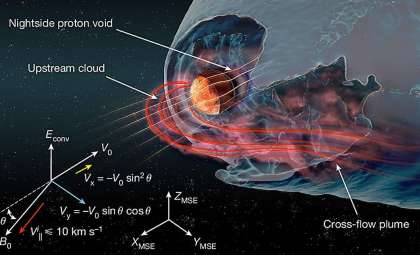
To grasp the source of this strange noise, it’s essential to examine what makes Jupiter’s bow shock distinctive. Essentially, when the solar wind—streams of charged particles emitted by the Sun—collides with a planet’s magnetic field, it slows abruptly. This interaction produces a shockwave comparable to the sonic boom created by supersonic jets on Earth. Around Jupiter, the bow shock marks the border where the solar wind is forced to bend around the planet’s enormous magnetic bubble.
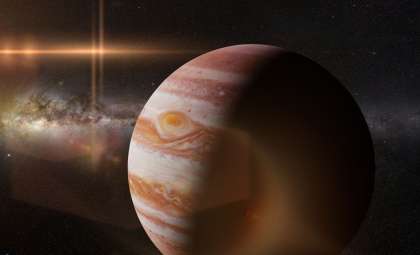
Jupiter’s magnetosphere is immense and dramatically bigger than Earth’s, stemming from the planet’s massive size and extraordinarily strong magnetic field. Jupiter’s magnetic intensity ranges from 16 to 54 times that of Earth and extends so far it reaches near Saturn’s orbit. During Voyager 1’s crossing of the bow shock in 1979, the spacecraft discovered that the magnetosphere was more compressed than expected, likely due to heightened solar wind activity at that time.

An Extraordinary Audio Snapshot
The data from Voyager 1 has been invaluable for decades, with the plasma wave audio being particularly captivating. It breathes life into an otherworldly sound, arising from the solar wind’s encounter with Jupiter’s magnetic boundary. These energetic plasma waves continue to intrigue researchers, helping them unravel how such charged particles propagate through planetary magnetic environments.
Voyager’s successful capture of this unusual sound remains a scientific milestone. Prior to the mission, no one could predict exactly how solar wind would interact with Jupiter’s intense magnetosphere. The recording provides a rare, tangible example of the tremendous forces influencing the giant planet. While eerily beautiful, the waves also highlight the many mysteries that Jupiter still holds.
The Scale of Jupiter's Magnetic Domain
Jupiter’s magnetosphere stands as one of the grandest magnetic structures found in our solar neighborhood. If visible to the naked eye, it would appear twice as large as the full Moon from Earth. This colossal magnetic bubble extends over 3 million kilometers toward the Sun and stretches far beyond, reaching nearly to the orbit of Saturn. The bow shock is the crucial frontier where the solar wind confronts this massive magnetic shield.
The moment Voyager 1 passed through Jupiter’s bow shock was pivotal for understanding how planetary magnetic fields behave. Earlier spacecraft expeditions, such as Pioneer 10 and Pioneer 11, had observed this boundary when the magnetosphere was larger. However, Voyager 1’s findings indicated the magnetosphere size shrank due to intensified solar wind conditions prevailing during its encounter.
From Voyager 1 to Juno: Continuing Jupiter Exploration
While Voyager 1 laid the groundwork in decoding Jupiter’s magnetic environment, newer probes like Juno have expanded our understanding further. In 2016, Juno also crossed Jupiter’s bow shock and revealed that the boundary’s structure is even more complex than once thought.
Investigating Jupiter’s magnetic realm remains a vital field, enriching knowledge about not just this gas giant but magnetic phenomena throughout the cosmos. As William Kurth, lead co-investigator for the Waves team, put it, “If Jupiter’s magnetosphere glowed in visible light, it would be twice the size of the full Moon as seen from Earth.”
- Categories:
- News




0 comments
Sign in to Comment