

On July 5, 2024, at approximately 1 a.m., Earth reached aphelion—the point in its orbit furthest from the Sun. This event often prompts curiosity: how is it that summer temperatures remain high even when Earth is at its greatest solar distance?
What is Aphelion?
At aphelion, Earth is positioned roughly 94.5 million miles (152 million kilometers) from the Sun. This contrasts with perihelion, occurring in early January, when the planet comes closest at about 91.4 million miles (147 million kilometers).

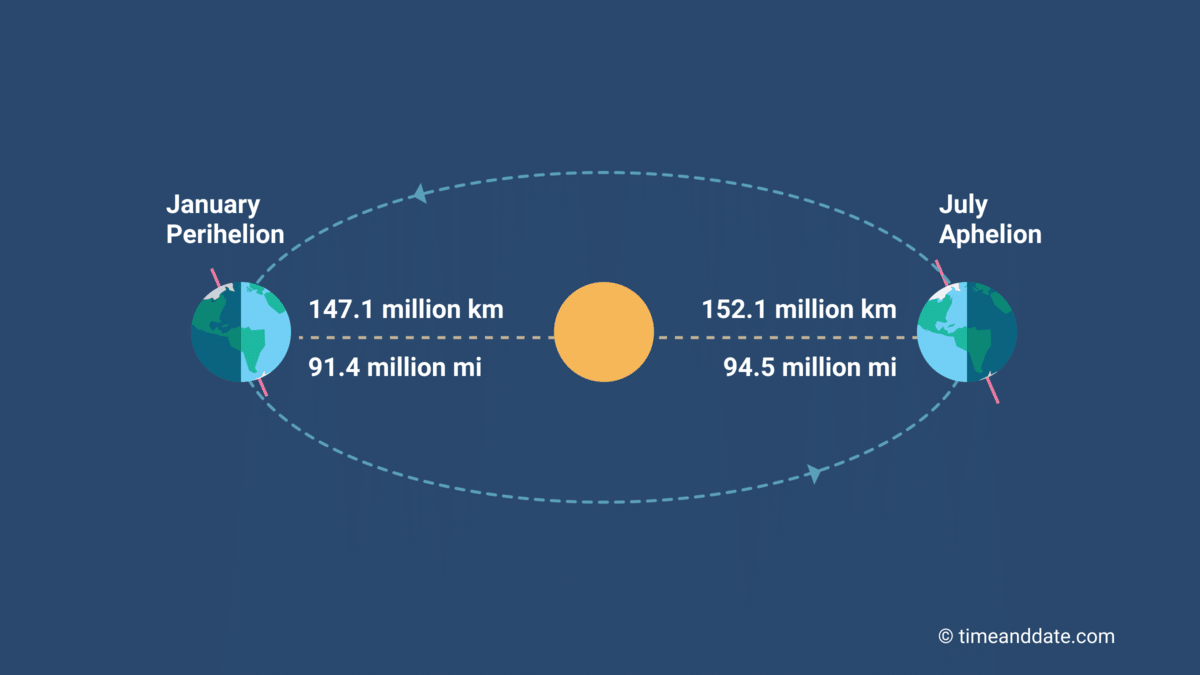
While the difference of nearly 3 million miles (5 million kilometers) is noticeable, it only accounts for about a 3% variation in distance—insufficient to dramatically shift seasonal temperature patterns.
Johannes Kepler, the 17th-century German mathematician, elucidated this through his laws of planetary motion, which clarify how planets orbit the Sun in ellipses, resulting in fluctuating distances throughout the year. These changes influence the solar energy Earth receives, but only to a minor degree.
Nevertheless, these distance variations take a backseat to the real driver behind our seasons: Earth’s axis tilt.
What Drives the Seasons?
Although Earth's distance to the Sun impacts the solar radiation slightly, the dominant factor shaping seasonal temperature changes lies in the planet’s axial tilt. Earth’s tilt of roughly 23.44 degrees influences the intensity and duration of sunlight reaching each hemisphere throughout the year.
This tilt causes different latitudes to receive varying sunlight amounts across seasons, thereby generating seasonal shifts.
In July, the Northern Hemisphere leans toward the Sun, resulting in extended daylight hours, shorter nights, and the Sun positioning higher in the sky. This alignment boosts direct solar energy, warming the hemisphere and creating summer.
Meanwhile, the Southern Hemisphere tilts away from the Sun, experiencing colder temperatures, shorter days, and longer nights. Importantly, aphelion happens about two weeks after the June solstice, marking the start of summer in the north and winter in the south.
Impact of Earth's Tilt Explained
The axial tilt clarifies why the Northern Hemisphere's warmest weather coincides with aphelion, when Earth is actually farthest from the Sun. During this time, the increased concentration of sunlight overrides the slight reduction in solar energy due to distance.
This also accounts for the paradox where, despite Earth being closest to the Sun at perihelion in January, the Northern Hemisphere remains in winter because it is tilted away, reducing sunlight intensity and daylight duration.
Overall, seasons are controlled by how Earth’s tilted axis directs sunlight rather than by orbital distance alone. This understanding explains the seemingly contradictory seasonal warmth during aphelion.
Expert Perspectives and Insights
Grasping how Earth’s orbit and axial tilt interplay to create seasonal variation enriches our comprehension of climate dynamics. As reported by The Seattle Times, “aphelion happens every year as the summer is underway,” highlighting its consistent role in Earth's celestial cycle.
This yearly event reaffirms the dominance of axial tilt over distance in shaping climate patterns.
Additionally, studying aphelion and perihelion provides valuable learning about our solar system’s mechanics and enhances climate science, enabling better predictions of Earth’s weather and climate trends.













0 comments
Sign in to Comment