
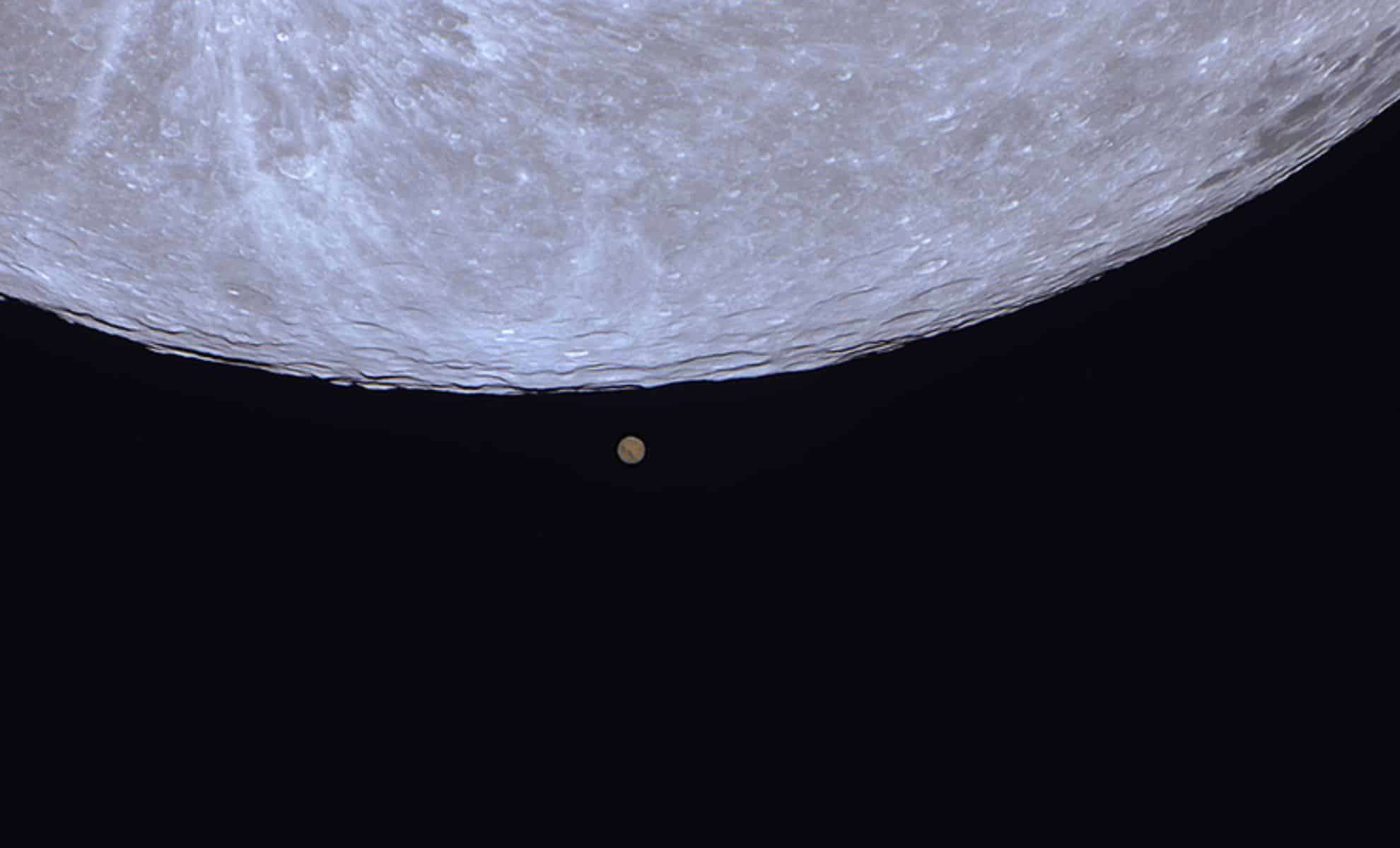
This weekend offers a stunning astronomical show as Mars and Jupiter sequentially line up with the moon, illuminating the night sky beautifully. The spectacle began on February 6 when Jupiter appeared near the moon, separated by less than 5 degrees. Now, attention turns to Mars, which will make an even tighter approach on February 9, coming as close as 1 to 2 degrees from our lunar neighbor.
This exceptional sky event is a great moment for both amateur and seasoned stargazers to observe planetary motion firsthand. Watching the evolving positions of these celestial bodies provides insight into the dynamic orbits shaping our solar system. While visible without instruments, using binoculars or a telescope enhances the experience, allowing for a clearer view of Jupiter’s atmospheric bands and Mars’ characteristic reddish glow as they draw near the moon.
Whether you’re an astronomy buff or just enjoy skywatching, this weekend’s planetary alignment promises a memorable and dazzling night sky display. From urban rooftops to rural landscapes, it’s a celestial event not to be overlooked this season.

Viewing Details: Times and Locations
The moment of Mars’ closest approach to the moon will happen at 2:36 p.m. EST on February 9, but the optimal viewing period is after sunset when the darkened sky highlights Mars’ glow near the moon’s brightness.
- Face the eastern horizon just after dusk.
- Mars will be situated roughly 2 degrees just above and to the west of the moon.
- The moon’s illumination reaching about 90% will aid in spotting Mars easily.
- People in Canada, Scandinavia, Russia, and parts of Asia may observe a rare occultation where Mars briefly disappears behind the lunar disk.
Outside the occultation region, Mars will remain prominently close to the moon throughout the evening, creating a spectacular scene for viewers.
Experiencing a Rare Lunar Occultation
In select areas, this celestial event becomes even more captivating as Mars will vanish behind the moon temporarily. This lunar occultation occurs when the moon passes directly between Earth and Mars, momentarily obscuring the planet before it reappears.
The occultation starts at 1:09 p.m. EST when Mars disappears behind the moon and ends at 4:30 p.m. EST with Mars’ reemergence. For many residents of North America, this will take place during daylight, limiting visibility, but observers at more northern latitudes might still catch the event’s onset or conclusion during twilight.
If unsure about your viewing prospects, consulting an interactive sky chart or astronomy app will help pinpoint visibility for your location.
The Significance of This Celestial Event
Conjunctions between planets like this highlight the lively pace of the nighttime sky. As the moon journeys around Earth and planets continue orbiting the sun, such alignments grant us a rare chance to witness orbital dynamics firsthand.
Unlike fleeting phenomena such as meteor showers or eclipses, planetary conjunctions evolve slowly, giving ample time for skywatchers to observe. Mars’ intense red hue nestled near the luminous moon offers a striking visual contrast, making this one of the standout astronomical events of the season.
If you miss this celestial encounter, there’s no need to worry—Mars will keep moving through the sky with its fiery brilliance visible over the coming weeks. Yet, for the closest lunar approach, mark your calendar for the evening of February 9.
- Categories:
- News










0 comments
Sign in to Comment