
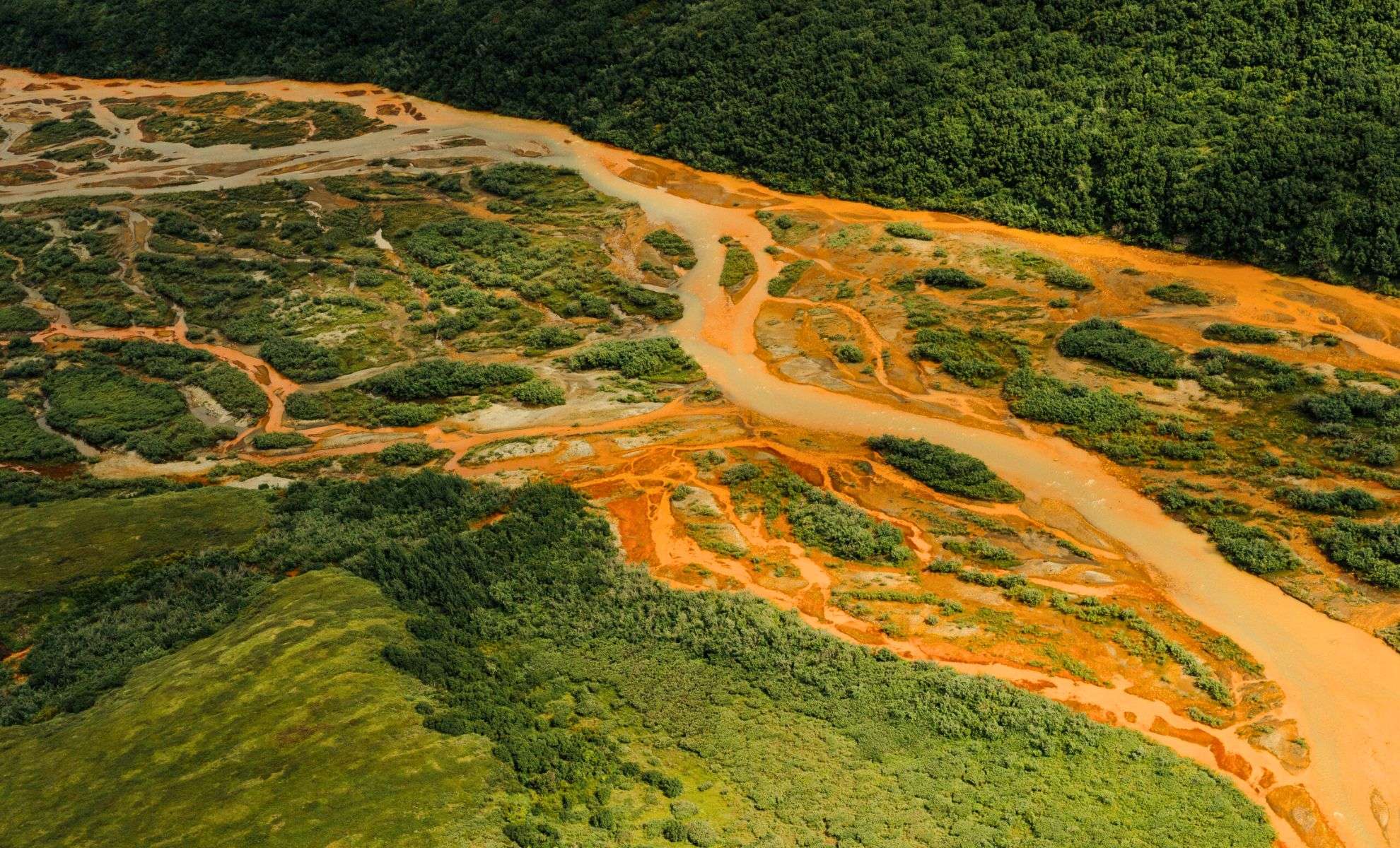
In the remote regions of northern Alaska, rivers that once boasted crystal-clear waters are now exhibiting a striking rust-orange hue. Recent research published in The Proceedings of the National Academy of Sciences reveals the environmental process causing this irreversible change, involving the release of metals into the waterways as permafrost thaws.
Widespread Appearance of Orange-Tinted Waterways
Travelers exploring Alaska’s Brooks Range over the past ten years have observed rivers that resemble those contaminated by mining runoff rather than pristine glacial melt. “It resembles acid mine drainage,” explains Tim Lyons, a biogeochemist at the University of California, Riverside. “Yet, no mining activity is present here. The culprit is permafrost thawing, which alters the regional geochemistry.”
Seasoned scientists also note the dramatic shifts. “Since I began studying and traversing the Brooks Range in 1976, the recent alterations in landforms and river chemistry are remarkable,” states David Cooper, co-author of the study and researcher at Colorado State University.

The concern first emerged back in 2019 when University of Alaska ecologist Paddy Sullivan was informed by a bush pilot that the Salmon River appeared “like sewage” after the snow melted. That remark triggered the research that led to the current discoveries.
Ice Thaw Releases Trapped Metals into Waterways
The explanation lies beneath the surface. Permafrost, a permanently frozen soil layer preserving minerals for millennia, is melting due to the rapid warming of the Arctic, which is outpacing global averages. As the frozen earth softens, runoff carries iron, zinc, copper, and aluminum once locked inside the ice. Exposure to oxygen triggers oxidation, causing the characteristic orange tint to spread through the rivers, a large-scale equivalent of rust formation.
The researchers validated that sulfide-rich geological formations become exposed, leading to acidic conditions that free harmful metals into the environment. Some rivers now show metal concentrations surpassing limits set by the U.S. Environmental Protection Agency, endangering aquatic habitats.
Threats to Fish Species and Local Ecosystems
The orange coloration signals more than a visual anomaly. Species such as Arctic grayling are vanishing from impacted streams as these waters become toxic and oxygen-depleted. Additionally, chum salmon, a crucial resource for Indigenous populations, face reproductive challenges when sediment and chemical precipitates cover spawning beds, smothering eggs.
Currently, metal accumulation in fish flesh does not pose significant risks to humans, but ecological implications are severe. Reduced insect populations and damaged spawning grounds jeopardize the food web, jeopardizing creatures from fish to birds and bears.
Permanent Transformation with No Easy Remedy
This phenomenon is not a fleeting pollution event but an ongoing, irreversible consequence of climate warming. “Whenever suitable rock types coincide with thawing permafrost, this process initiates,” Lyons warns. “Once underway, there’s no way to reverse it. It exemplifies a permanent shift linked to global temperature rise.”
The researchers emphasize that re-freezing permafrost would be the only natural solution, a scenario unlikely under current climatic trends. “Few pristine areas remain anywhere, but even remote regions like these are bearing the clear mark of human-driven warming,” Lyons concludes. “No location escapes the impact.”
- Categories:
- News




0 comments
Sign in to Comment