
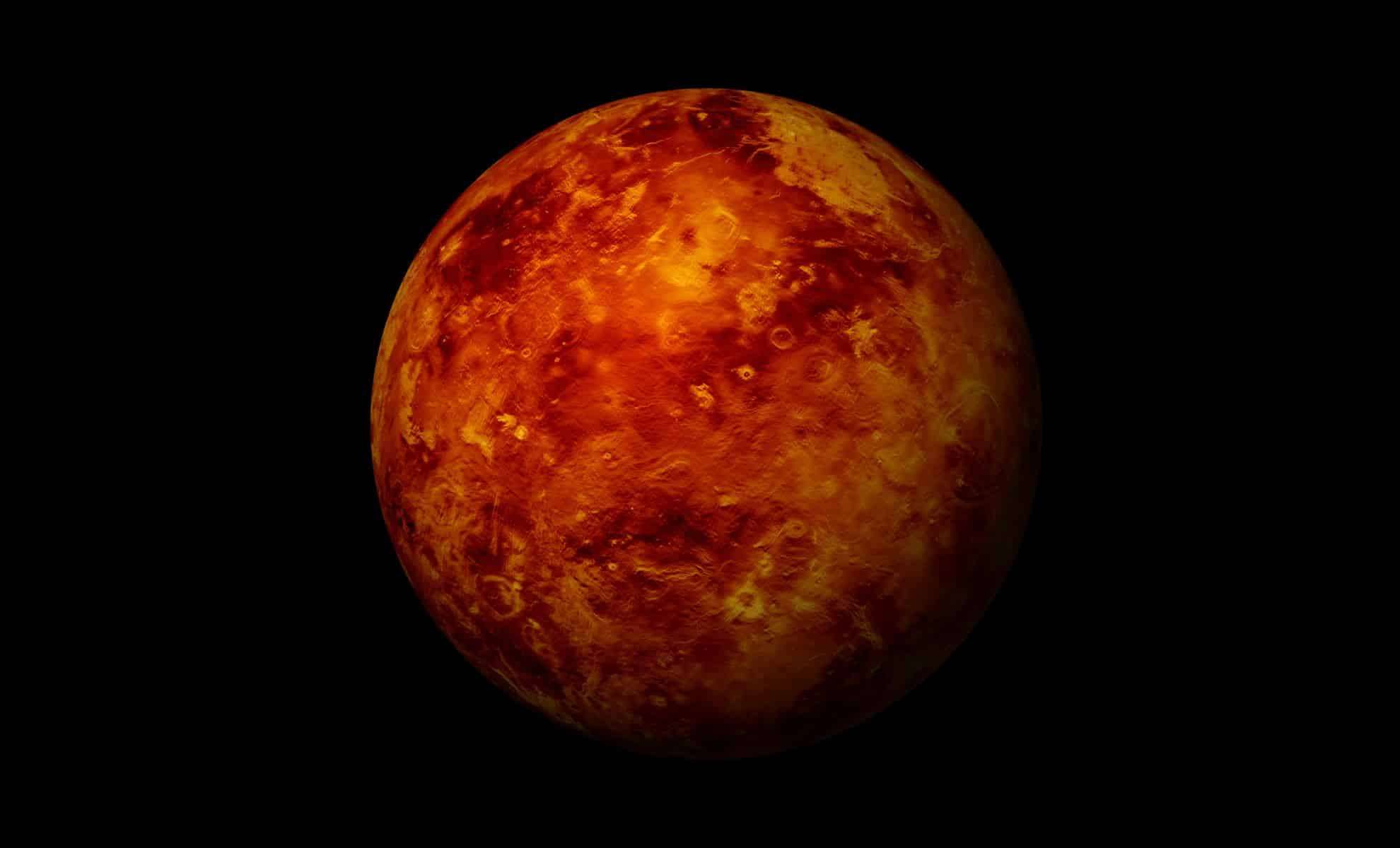
A bold and groundbreaking initiative to collect samples from the hostile atmosphere of Venus has been announced by a coalition of China's foremost space organizations, including the Chinese Academy of Sciences, the China National Space Administration, and the China Manned Space Engineering Office.
Revealed toward the end of 2023, the mission is targeted to launch sometime between 2028 and 2035, aiming to deliver unprecedented data about one of the most extreme planetary environments within our solar system.
Unraveling the Enigma of Venus
Venus is often described as Earth's twin, yet its atmosphere is radically different. Surface temperatures soar beyond 800 degrees Fahrenheit (427 degrees Celsius), and the atmospheric pressure is nearly 90 times that of Earth, making Venus a planet long deemed inhospitable for life.

Aside from the intense heat and crushing atmospheric pressure, the planet’s atmosphere mainly consists of carbon dioxide with dense sulfuric acid clouds, creating an environment lethal to both living organisms and spacecraft. Nevertheless, recent studies indicate that Venus might still conceal surprises, including the possibility of microbial life existing within its upper cloud layers.
This Chinese-led mission seeks to probe these intriguing possibilities more closely. Scheduled to launch between 2028 and 2035, the project will collect atmospheric samples directly from Venus to enhance scientists’ understanding of the planet’s atmospheric dynamics and its potential to harbor life.
Core Objectives of the Venus Expedition
The mission tackles multiple ambitious aims, foremost among them the search for evidence of microbial life. Scientists have hypothesized for years that Venus’s upper atmosphere could host microbes capable of surviving extreme conditions, possibly through unknown chemical mechanisms. This hypothesis gained attention following the debated detection of phosphine gas in Venus’s clouds, a potential biosignature still under scrutiny.
Another goal is to deepen knowledge of Venus’s geological history. Investigating how Earth’s “sister planet” developed such a toxic atmosphere could shed light on its evolution. Additionally, the mission will study the unusual properties of Venus’s clouds, especially their ability to absorb ultraviolet radiation, which current models struggle to explain.
Mission Strategy: How the Operation Will Proceed
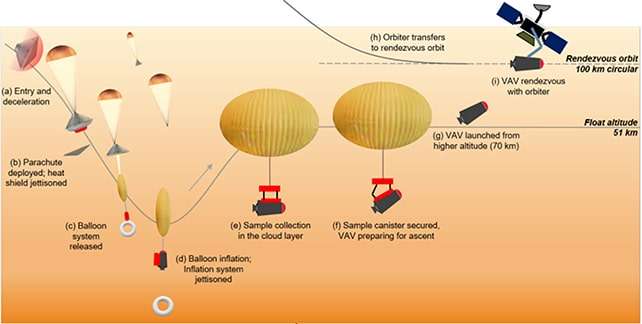
The mission is planned to deploy at least two spacecraft: one orbiter to monitor the planet, and an atmospheric probe to descend into Venus’s dense, volatile atmosphere. This probe will collect gases and particulates for analysis to reveal new insights about Venus’s chemical and physical environment.
One innovative sampling technique, suggested by MIT in 2022, involves a Teflon-coated, corrosion-resistant balloon drifting through Venus’s clouds to gather samples in a container. Once collection is complete, the container would be sent back to orbit before transportation to Earth.
Yet, overcoming the vast distance—tens of millions of kilometers—between Venus and Earth to return the samples remains a crucial challenge.
The Broader Impact: Advancing Planetary Science
If the mission succeeds, it could significantly transform our understanding of Venus, Earth’s closest planetary cousin. The data obtained could unlock fresh insights into atmospheric development and how life might endure in extreme environments, even in seemingly hostile settings.
Venus, a planet of extremes, holds many unanswered questions. This mission aims to reveal hidden secrets about its atmosphere and clouds, providing researchers with the critical data needed to test longstanding theories and expand our knowledge of planetary systems both within our solar neighborhood and beyond.
- Categories:
- Space









0 comments
Sign in to Comment