

China’s Chang’e-6 spacecraft is currently en route back to Earth, transporting the inaugural samples gathered from the moon’s far side.
This pioneering achievement in lunar exploration promises to deepen our understanding of the moon’s composition and the early dynamics of our solar system.
Details and Science Goals of the Chang’e-6 Mission
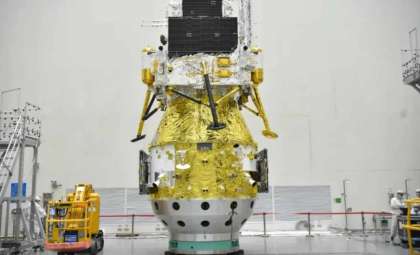
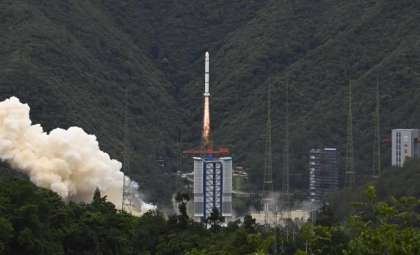
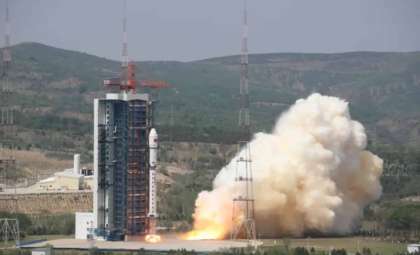
Launched on May 3, 2024, atop a Long March 5 rocket from Wenchang, the Chang’e-6 spacecraft entered lunar orbit within five days. It successfully touched down on the moon’s far side on June 1, in the Apollo crater inside the South Pole-Aitken basin—a region prized for its distinct geological characteristics unlike those found on the near side.

The mission aimed to collect up to 2 kilograms of lunar soil and rock, achieved through use of a drill and scoop on the lander designed to extract subsurface material. About 49 hours post-landing, the ascent vehicle carrying these samples launched from the lunar surface and docked with the service module in orbit on June 6, demonstrating China’s sophisticated spaceflight capabilities through precise synchronization.
Big bunch of Chang’e-6 updates: At 2338 UTC June 3 the ascender launched from atop the Chang’e-6 lander, carrying the samples into orbit. Here’s the action seen from the lander: pic.twitter.com/IcNUAqcFxS
— Andrew Jones (@AJ_FI) June 4, 2024
Journey Home and Expected Touchdown
After a smooth docking, the lunar samples were autonomously transferred to the capsule designated for reentry. The spacecraft then commenced its return trajectory toward Earth. The reentry capsule is anticipated to land in Siziwang Banner, Inner Mongolia, within a 30-minute window starting at 1:41 a.m. Eastern Time (0541 UTC) on June 25. To manage its high velocity and the intense heat from atmospheric entry, the capsule will perform a skip maneuver before completing its descent.
Scientists eagerly anticipate analyzing these samples to gain fresh insights into the far side’s geological composition and evolution. This research may clarify the stark differences between the moon’s near and far sides while expanding understanding of early solar system history. The materials gathered will provide valuable information about the processes shaping this largely unexplored lunar region.
Significant Achievements and Future Lunar Plans
The Chang’e-6 mission represents key progress in exploring the lunar far side, following the trailblazing Chang’e-4 mission in 2019. Its success sets the stage for subsequent missions—Chang’e-7 and Chang’e-8—which will focus on further investigation and utilization of lunar resources. Collectively, they highlight China’s expanding expertise and ambitions in space exploration.
Integral to the mission’s success was the Queqiao-2 relay satellite, deployed prior to Chang’e-6. This satellite maintained continuous communication between Earth and the moon’s far side, overcoming the communication blackout caused by the moon’s rotation, thus enabling seamless data transfer and command execution.
Global Cooperation and Upcoming Missions
The accomplishments of Chang’e-6 have attracted international praise and collaboration. Leaders such as NASA Administrator Bill Nelson and European Space Agency Director Josef Aschbacher commended the mission’s milestones. ESA’s involvement included contributions like the NILS instrument data and ground station support, underscoring the value of multinational partnerships in space science.
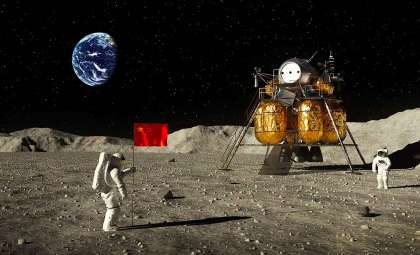
Looking forward, China plans to launch the multi-spacecraft Chang’e-7 in 2026 and Chang’e-8 in 2028, emphasizing in-situ resource use and technology demonstrations. These projects pave the way for the multinational International Lunar Research Station (ILRS), aiming for construction in the early 2030s. Ambitiously, China also targets sending crewed missions to the moon by 2030, demonstrating its long-term commitment to lunar exploration.
- Categories:
- Astronomy ,
- News ,
- Space ,
- Aircraft







0 comments
Sign in to Comment