
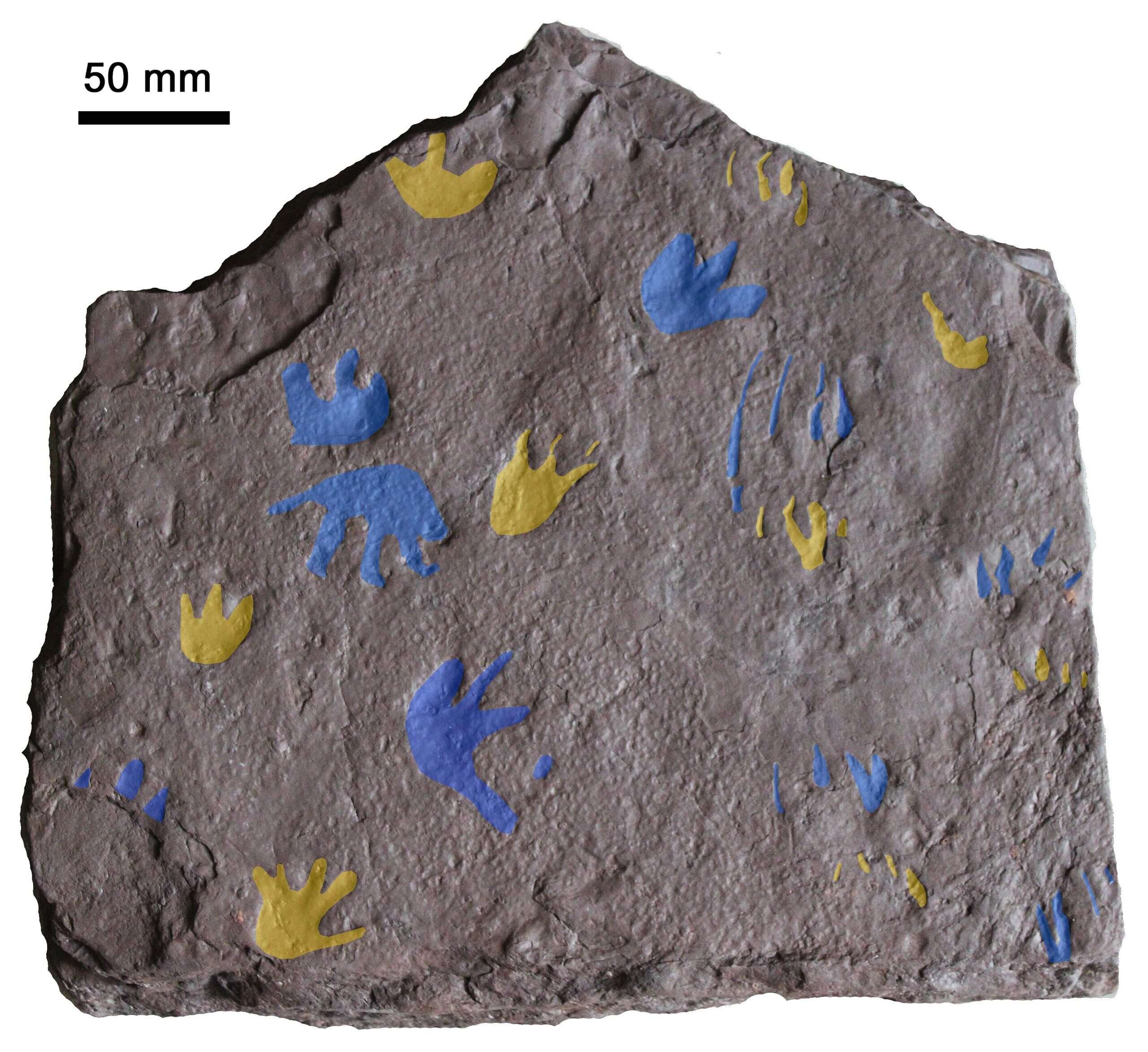
In southeastern Australia, fossilized footprints dating back around 355 million years have prompted a major revision of reptile evolutionary history. Featured in a recent article from Nature, these traces represent the earliest known clawed footprints produced by tetrapods, indicating that early reptiles roamed the land far earlier than scientists previously assumed.
Redefining the Timeline of Tetrapod Evolution
For many years, the scientific consensus held that tetrapods—the first vertebrates with four limbs—evolved during the Devonian as fish-like organisms gradually transitioning to land. This standard model suggested that amphibians appeared first, with reptiles and mammals evolving later, during the Carboniferous period.
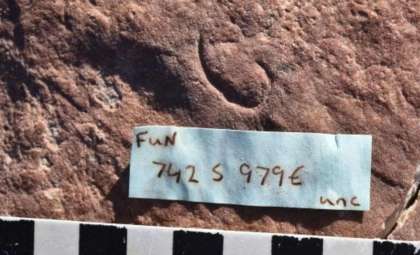
However, these newly uncovered footprints overturn this established narrative. Discovered on a modest sandstone fragment by two hobbyist paleontologists in southeastern Australia, they feature distinctly elongated toes with clear claw impressions. Such characteristics are typical of early reptiles or amniotes, the group encompassing reptiles, birds, and mammals.

Per Ahlberg, the study’s lead researcher at Uppsala University, explained, “This finding pushes back the timing of a crucial split in the tetrapod family tree—specifically the divergence point between reptiles and mammals, known as the amniote crown-group node.” This suggests that the evolutionary separation between these groups occurred significantly earlier than fossil evidence had previously indicated.
The Significance of Clawed Footprints in Early Amniotes
Claws represent a key evolutionary trait because they are absent in early transitional forms like the “fishapod” Tiktaalik and primitive amphibians. The presence of claw marks on these impressions strongly supports the idea that the trackmaker was a more advanced tetrapod.
Co-author Grzegorz Niedźwiedzki recalled his immediate reaction: “Seeing these claw marks so clearly preserved took me by surprise.” This insight disputes the long-standing belief that species like Tiktaalik were direct ancestors of tetrapods. Instead, Tiktaalik likely coexisted with early amniotes rather than preceding them.
Ahlberg added, “This discovery challenges the repeated assumption that Tiktaalik and other ‘fishapods’ were direct precursors or ancestors of tetrapods, despite their close relationship.”
Implications of Moving Amniote Origins Back by 35 Million Years
Combining fossil finds with molecular phylogenetics, scientists now propose that the split between amniotes and amphibians occurred much earlier than once thought, likely during the Devonian period.
Ahlberg pointed out, “Our data suggest the amniote crown-group originated alongside Tiktaalik in the Devonian.” This means that advanced four-limbed vertebrates and their early reptilian relatives were evolving at the same time Tiktaalik was adapting to life in water.
Currently, these footprints are the only known Carboniferous tetrapod fossils from Gondwana, the ancient landmass that included present-day Africa, South America, Antarctica, Australia, and India. As Ahlberg mused, “It makes you wonder what other undiscovered species inhabited those regions.”
Future Discoveries and the Quest to Understand Early Tetrapods
The researchers emphasize the need for ongoing paleontological expeditions in Australia and beyond to uncover additional fossils that could shed more light on early amniote development. While footprints provide valuable behavioral clues, finding skeletal remains would greatly enhance understanding of morphology.
“There’s still so much waiting to be discovered in the field. These Australian footprints are just the start,” Niedźwiedzki stated. This exciting find highlights how much more remains to be understood about the dawn of terrestrial vertebrates and the evolving fossil narrative.
- Categories:
- News







0 comments
Sign in to Comment