

Paleontologists have unveiled a 450-million-year-old arachnid fossil encased in iron pyrite, often called fool’s gold, offering a rare insight into prehistoric marine ecosystems.
This fossil, attributed to a newly identified species named lomankus edgecombei, belongs to the megacheirans—an extinct group of arthropods distantly related to present-day spiders, scorpions, and horseshoe crabs.
Captured in impressive three-dimensional fidelity, this specimen grants researchers crucial clues on the evolutionary progression of arthropod features.

Unearthing the Treasure at Beecher’s Trilobite Bed
The specimen was excavated from Beecher’s Trilobite Bed near Cleveland, New York, a fossil site acclaimed for preserving creatures with exceptional detail. A research group led by scholars from the University of Oxford uncovered the lomankus fossil embedded in iron pyrite, giving it a distinctive golden appearance. This rare preservation enabled the fossil to maintain nearly complete, lifelike three-dimensional form, as though the animal might stir to life.
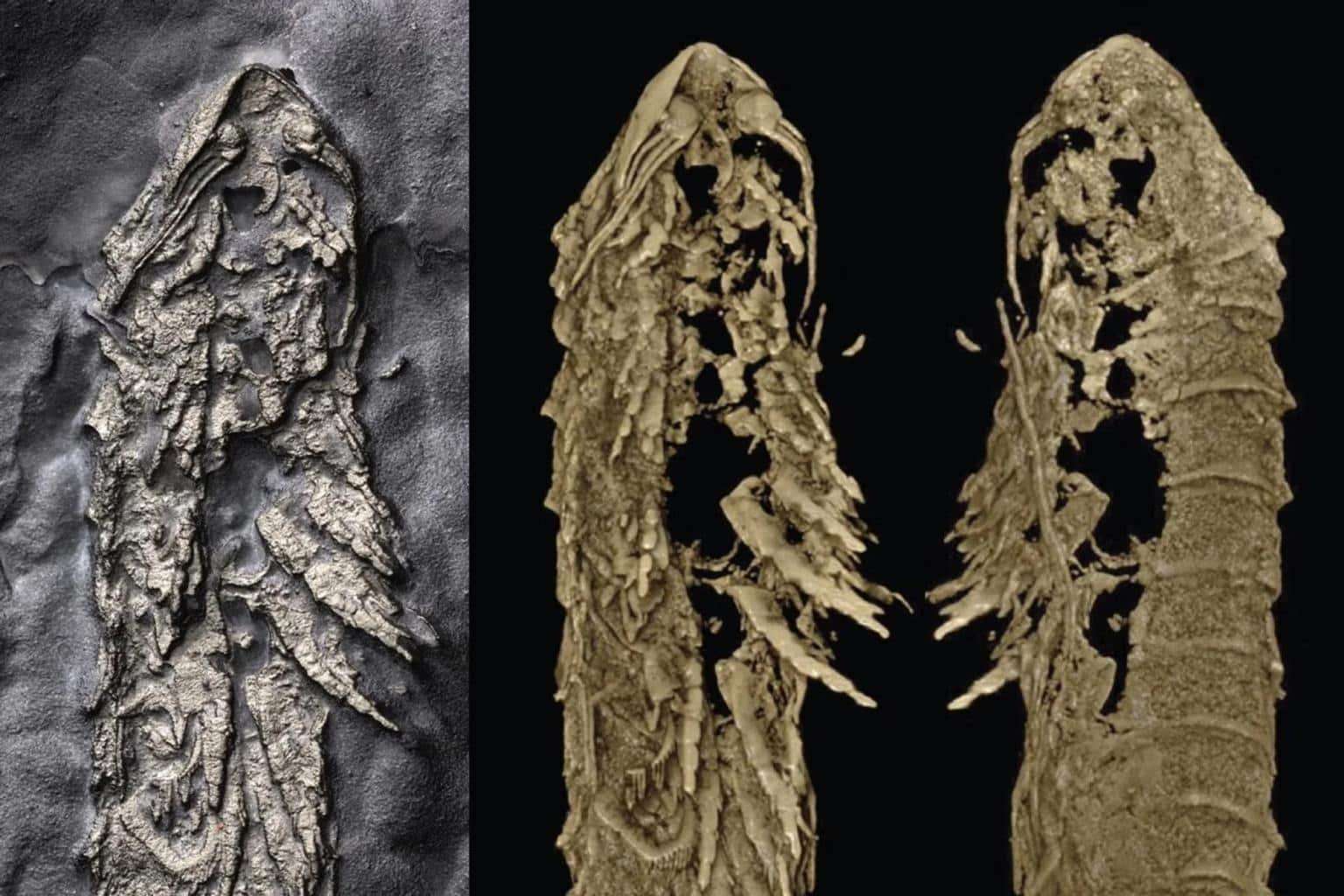
The fossil's golden preservation resulted from a unique set of environmental factors, including oxygen-depleted conditions and abundant iron, which promoted pyritization over millions of years. Luke Parry, an associate professor at Oxford, notes that the sparkly fossil retains intricate structural details, making the creature appear ready to scuttle away.
A Distinctive Morphology Among Early Arachnids
lomankus edgecombei exhibits a standout feature: a specialized front leg differing from other limbs. This modified appendage likely functioned as a tool for capturing prey, offering the animal a competitive edge in its habitat.
This limb, described as a “biological Swiss army knife,” demonstrates the extraordinary adaptability seen in arthropods, enabling them to thrive amidst varying ecological challenges.
Adorned with whip-like sensory hairs, this specialized leg probably served dual roles—both in prey capture and environmental sensing, akin to insect antennae—indicating complex behaviors and nuanced interactions with its surroundings.
Insights into Arthropod Evolutionary Paths
This discovery promises to shed light on the origins of diverse arthropod appendages. Many modern relatives—such as spiders and scorpions—possess specialized head limbs; for example, spiders wield venomous fangs, whereas scorpions bear pincers. The unique modified leg of lomankus edgecombei suggests an ancestral evolutionary avenue that later diverged into these specialized tools.
Researchers view this fossil as a vital link connecting ancient anatomical adaptations to the sophisticated designs observed in extant species. By examining such ancient specimens, scientists aim to trace the emergence of complex structures and the environmental forces that influenced their development.
Golden Fossilization: Opening New Frontiers in Paleontology
The lomankus fossil exemplifies a breakthrough moment due to its extraordinary preservation through pyritization, which conserves minute anatomical details rarely seen in fossils. This "golden" relic not only illuminates an ancient biosphere but also offers a powerful resource for future paleobiological investigations.
The research team anticipates that this discovery will enhance reconstructions of evolutionary trajectories in similar arthropods, refining our understanding of how these creatures adapted and survived across geological epochs.
Findings like that of lomankus edgecombei provide crucial insights into life's resilience and adaptability throughout Earth’s vast history.
- Categories:
- Science









0 comments
Sign in to Comment