
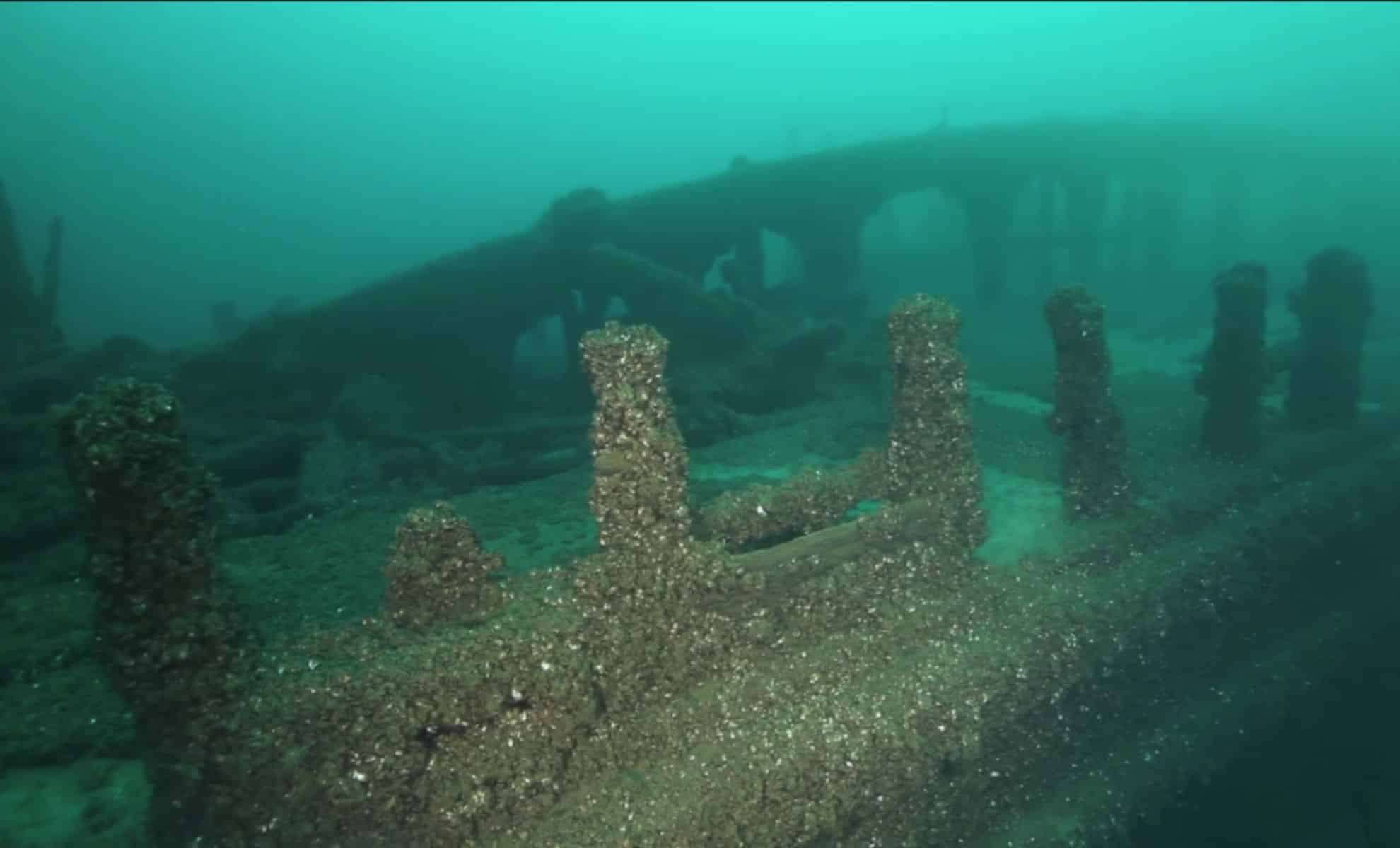
Hidden beneath the calm waters of Lake Michigan, explorers have revealed a fascinating stone formation dating back 9,000 years, capturing the attention of archaeologists and historians. Located about 40 feet underwater in the Grand Traverse Bay area, this prehistoric structure—referred to as “Michigan’s Stonehenge”—might be more modest in scale than the iconic Stonehenge in England but remains an extraordinary find. The carefully positioned stones extend over a mile and originate from a time when the Great Lakes’ basins were still dry land, pointing to a significant role in the lives of the region’s earliest inhabitants.
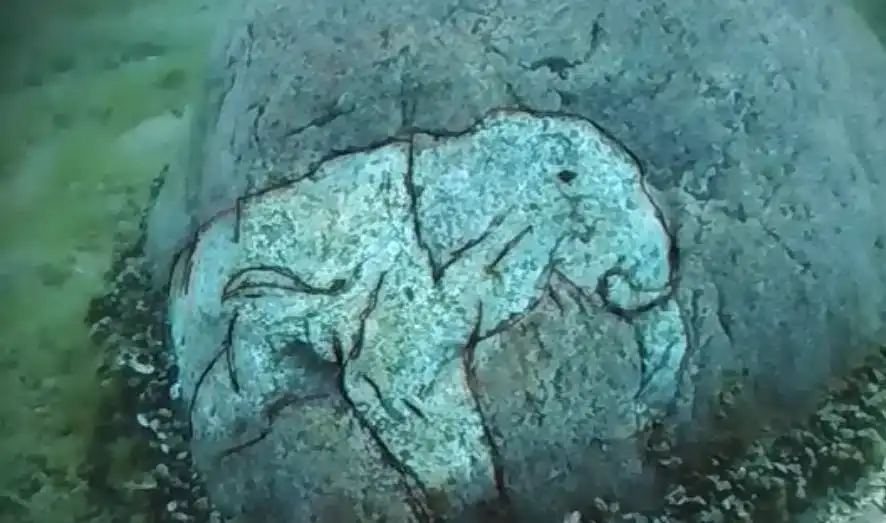
Adding to the discovery's intrigue is a mastodon engraving carved into one of the stones, connecting the site to an era when these giant mammals were still widespread in North America. The find raises numerous questions: Could the site have been designed for observing celestial events, guiding hunts, or serving ceremonial purposes? Alternatively, might the stone arrangement be a natural occurrence? Scientists continue to investigate these possibilities.
Exploring the Underwater Mysteries of Michigan’s Stonehenge
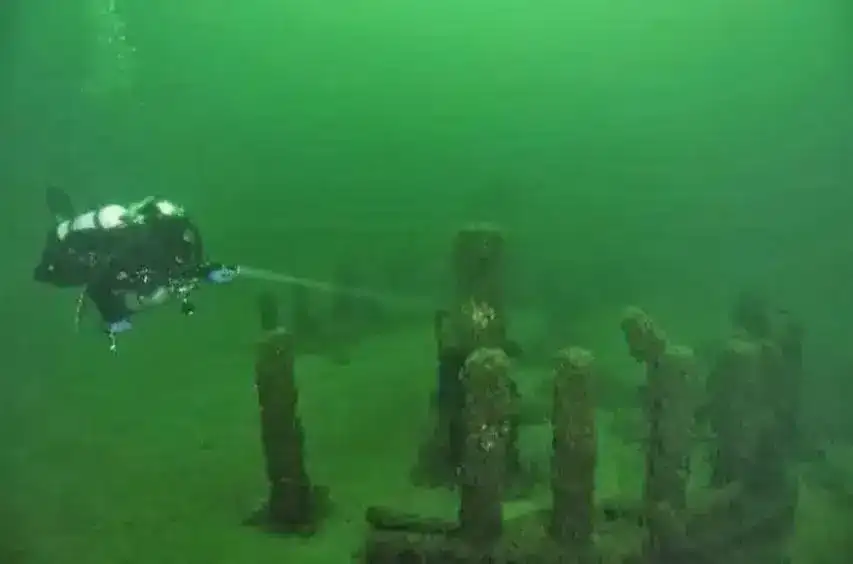
The stone structure within Grand Traverse Bay is an archaeological and geological marvel, revealing valuable insights into North America’s ancient human activity. Estimated to be around 9,000 years old, this submerged array of stones provides clues about early human life, tool use, and potentially spiritual beliefs. Now lying under 40 feet of water, the stones exhibit intentional placement—whether for strategic hunting, astronomical measurement, or ritualistic functions remains open to interpretation.

Essential Information About the Find
Examining Michigan’s Submerged Stonehenge More Closely
While smaller than the famous English Stonehenge, the carefully arranged stones seem deliberately placed. Scholars suggest the monument was built when the lake bed was dry land prior to post-glacial flooding. A sinuous line of stones stretching over a mile hints at purposeful design, sparking debate about its intended role.
One exceptional feature is the mastodon carving etched onto a large boulder, measuring approximately 3.5 to 4 feet tall and 5 feet wide. Attributed to a period when mastodons still roamed the area—before their extinction around 11,000 years ago—the artwork potentially offers rare insight into the cultural and artistic expressions of early humans in North America.
The Need for Protection and Preservation
To safeguard the site from damage and theft, the precise location of this underwater monument has remained confidential. Dr. Mark Holley, the archaeologist who made the discovery, collaborates with the Grand Traverse Band of Ottawa and Chippewa tribes to honor the site as a significant part of indigenous heritage.
This confidentiality has limited public exposure to the site’s full details, leading to ongoing debates about its meaning and importance. Some view it as evidence of advanced prehistoric societies, while others argue the stones might be natural formations without human intervention.
Connections to Other Ancient Great Lakes Discoveries
This stone formation is not the only ancient structure found in the Great Lakes region. For instance, in Lake Huron, archaeologists discovered a 9,000-year-old hunting pathway at the Alpena-Amberley Ridge, a submerged prehistoric land bridge. Stones were arranged to funnel caribou herds into traps. Given its proximity to early human settlements, the Grand Traverse Bay arrangement might have served a similar role.
Meanwhile, on Beaver Island in Lake Michigan, glacial stones set in a circular pattern may indicate ceremonial uses or astronomical functions. These finds collectively imply that ancient communities in this area likely created intentional stone constructions for purposes ranging from ritual events to hunting and celestial observations.
Could It Have Been an Early Astronomical Calendar?
One appealing hypothesis is that the structure served as an early calendar system. Like England’s Stonehenge, its stones may align with celestial phenomena, helping track seasonal changes. Such knowledge would have been crucial for early agricultural techniques or spiritual observances tied to solstices and equinoxes.
However, this remains speculative in the absence of further investigation. The below-water environment complicates conventional archaeological approaches such as carbon dating, and progress in studying the site has been gradual.
- Categories:
- News








0 comments
Sign in to Comment