
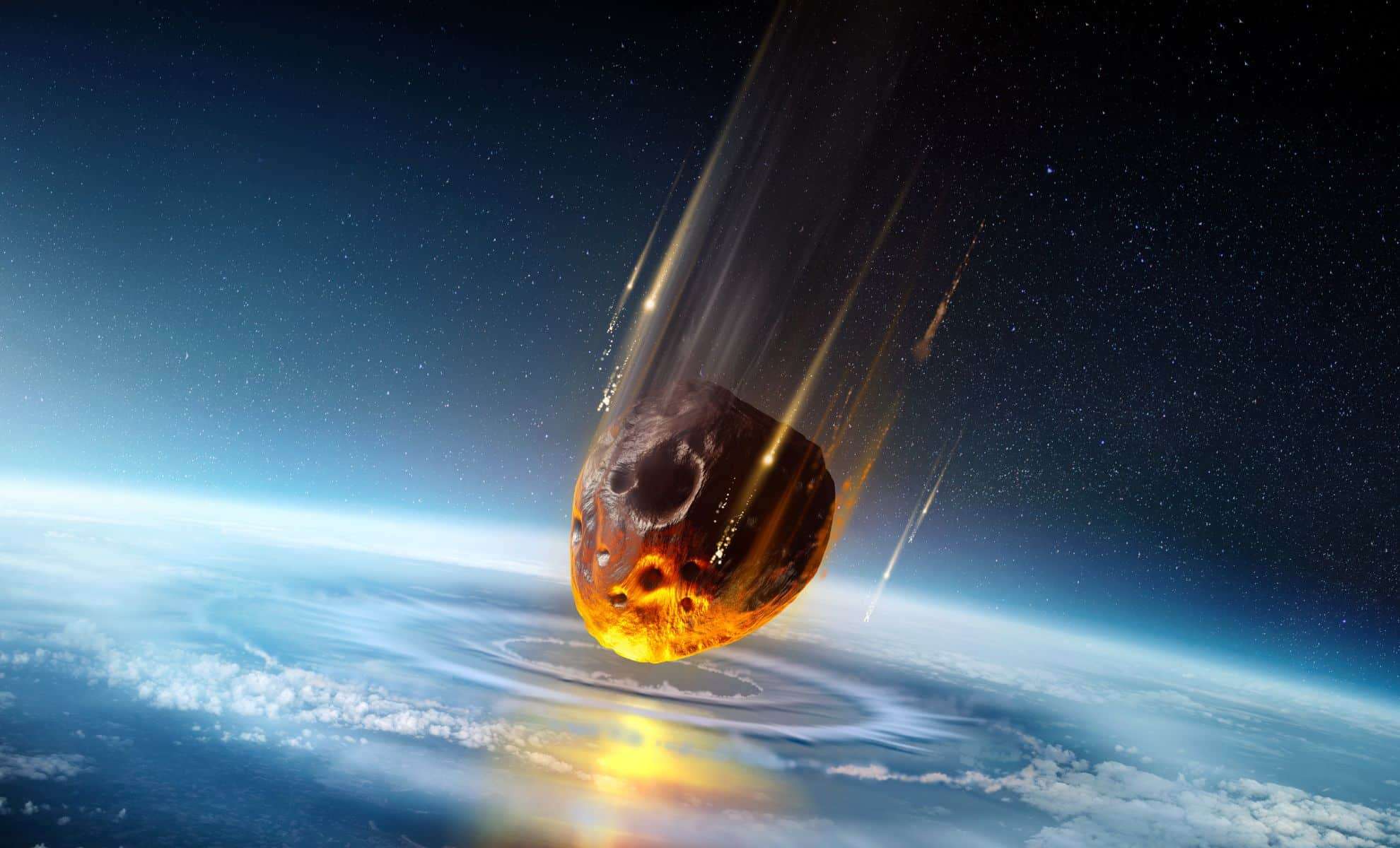
In a groundbreaking study on arXiv, scientists from UC Berkeley, led by theoretical physicist J.J. Zanazzi, demonstrate that colossal impacts between immature gas giants can generate seismic vibrations enduring for millions of years—intense enough to potentially be captured from light-years away by the James Webb Space Telescope (JWST).
Chaotic Beginnings of Young Planetary Systems
The heavily cratered surface of the Moon acts as a historical record. Early in our solar system, enormous celestial bodies frequently collided, shaping planetary evolution. This violent formation process is thought to be common across the galaxy in many young planetary systems.
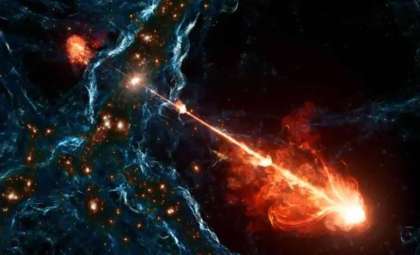
This study investigates the aftermath of merging massive exoplanet collisions. Through advanced simulations, the team modeled an event in which a Neptune-like planet crashes into a significantly larger gas giant, aiming to understand whether the impact could spark seismic waves that persist over geological timescales.

Unraveling the Mystery of Lasting Planetwide Tremors
The team focused on simulating a collision between a 17-Earth-mass body and Beta Pictoris b—a young super-Jupiter around 12 to 20 million years old orbiting the star Beta Pictoris. This enormous exoplanet, weighing roughly 13 times Jupiter’s mass, contains between 100 and 300 Earth masses of heavy elements, hinting it has engulfed smaller planetary fragments.
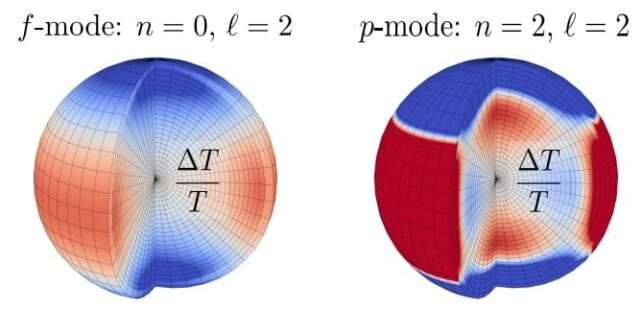
The study concentrated on two key seismic wave forms: p-modes, acoustic-like pressure waves traveling inside the planet, and f-modes, which resemble water's surface waves.
These waves, once instigated, could continue existing for tens of millions of years—comparable to the planet’s lifespan. The findings suggest such pervasive oscillations could alter a planet’s internal structure and surface brightness significantly long after the impact.
A Breakthrough for Exoplanetary Seismology
Though JWST cannot observe seismic waves outright, it can detect minute changes in a planet’s brightness. According to the study, these subtle photometric variations provide indirect signs of internal seismic activity.
Should a massive planetary collision have taken place between 9 and 18 million years ago, JWST could capture lingering vibrational signals through fluctuations in infrared light intensity. This innovative technique offers astronomers a new way to probe the internal makeup and density of distant gas giants, expanding the field of exoplanet research.
“Seismology grants a direct perspective into the interiors of giant planets,” the researchers assert, noting that wave frequencies could uncover details about a planet’s internal layering and composition.
Additional Factors Causing Planetary Vibrations
The paper also discusses other causes behind such persistent planetary oscillations. In particular, the stellar gravitational pull on planets following highly elongated orbits—common among hot Jupiters—can stimulate similar fundamental seismic modes. These tidal forces might induce recurrent seismic waves strong enough for photometric detection.
“Hot and warm Jupiters could originate through a high eccentricity migration process, where tidal forces from the host star amplify the lowest-frequency fundamental mode to significant levels,” the authors explain.
This reveals that even without catastrophic impacts, complex interactions between planets and their stars shape their seismic behavior over time.
- Categories:
- Science










0 comments
Sign in to Comment