
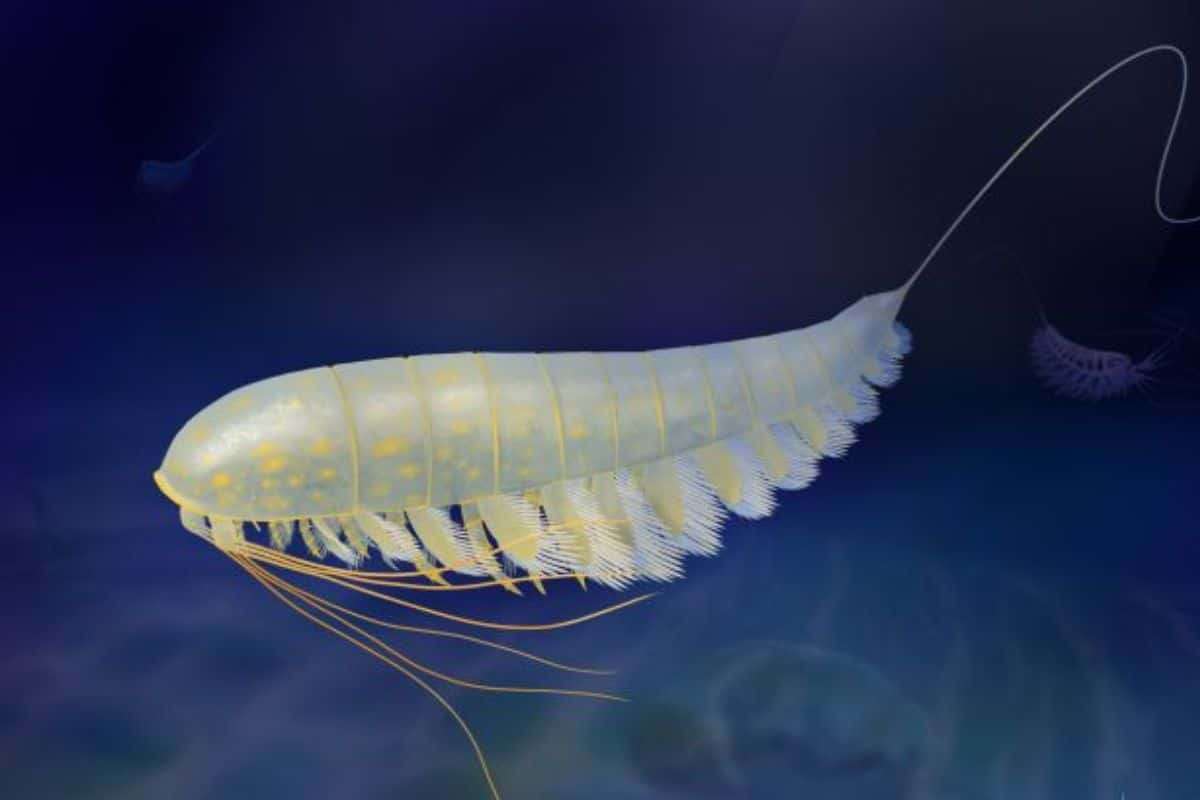
In New York State, scientists have uncovered a remarkable 450-million-year-old fossil that offers new understanding of early arthropod evolution.
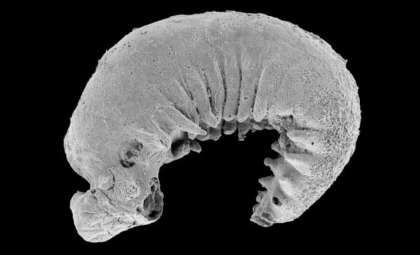
This extraordinary fossil, identified as Lomankus edgecombei, represents a previously unknown species within the extinct Megacheiran group, which is characterized by prominent clawed limbs used to seize prey.
An Exceptional Discovery: The Golden Fossil
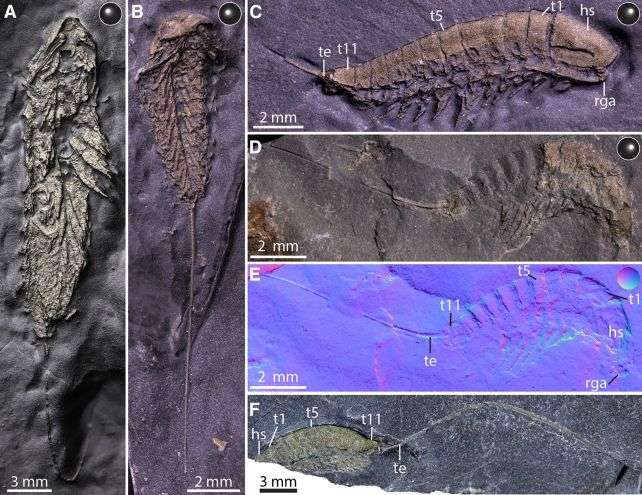
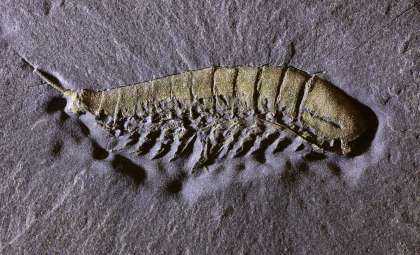
Rather than undergo the common fossilization process of mineral replacement around organic remains, Lomankus edgecombei was preserved through an unusual method. Its body was replaced by pyrite, commonly referred to as fool’s gold.

This rare form of fossilization, called pyritization, captures the organism’s features in detailed three-dimensional form.
Unearthed from the renowned Beecher’s Trilobite Bed, a Lagerstätte known for extraordinary fossil preservation, these specimens offer an unparalleled glimpse into ancient life forms. Lagerstätten are exceptional as they preserve fossils with such clarity that they appear nearly lifelike.
The Science Behind Pyritization
Pyritization occurs when organic tissues decompose in oxygen-free conditions facilitated by sulfate-reducing bacteria. These microbes generate hydrogen sulfide, which then reacts with iron in sediments to form pyrite.
“Pyrite forms today through the action of sulfate-reducing bacteria that break down organic material in the absence of oxygen and produce hydrogen sulfide,” explains Luke Parry, a paleobiologist.
This process enabled the preservation of Lomankus edgecombei’s anatomy in remarkable detail, safeguarding structures that would normally be lost to decay.
Insights into Arthropod Evolution
The finding of Lomankus edgecombei is crucial not only for its pristine preservation but for the clues it offers about arthropod evolutionary history. As a member of the Megacheiran class, this arthropod thrived during the Cambrian era.
By the early Ordovician period, however, the Megacheirans were becoming scarce, making L. edgecombei among the last of its lineage.
The fossil reveals that the front limbs, once large and used to capture prey in other Megacheirans, evolved in L. edgecombei into smaller structures with apparently different roles.
Exploring the Deep Past
This discovery highlights the importance of exceptional fossil sites in uncovering Earth's biological past. The pyritized fossils from Beecher’s Trilobite Bed offer scientists an extraordinary chance to examine ancient creatures with impressive clarity, shedding light on their form and evolution.
The exquisite preservation of Lomankus edgecombei underscores how studying ancient life helps illuminate the mechanisms behind the diversity of species present today.
Through detailed examination of these fossils, researchers are tracing the evolutionary changes that led to modern arthropod features.
The Evolutionary Importance of Megacheirans
The Megacheirans were a prominent group of arthropods during the Cambrian, known for their robust appendages used for hunting. Their decline in the early Ordovician signaled the end of their dominance.
The discovery of Lomankus edgecombei reveals insights into the later stages of Megacheiran evolution. The adaptations seen in this species indicate that they continued to develop new functional uses for their limbs even as their numbers dwindled.
“Lomankus shows us that megacheirans continued to diversify and evolve long after the Cambrian, with the formerly fearsome great appendage now performing a totally different function,” added Parry.
Today’s arthropods, which represent the planet’s most diverse animal group, showcase similarly varied appendage adaptations across insects, spiders, and crustaceans.
- Categories:
- Science




0 comments
Sign in to Comment