
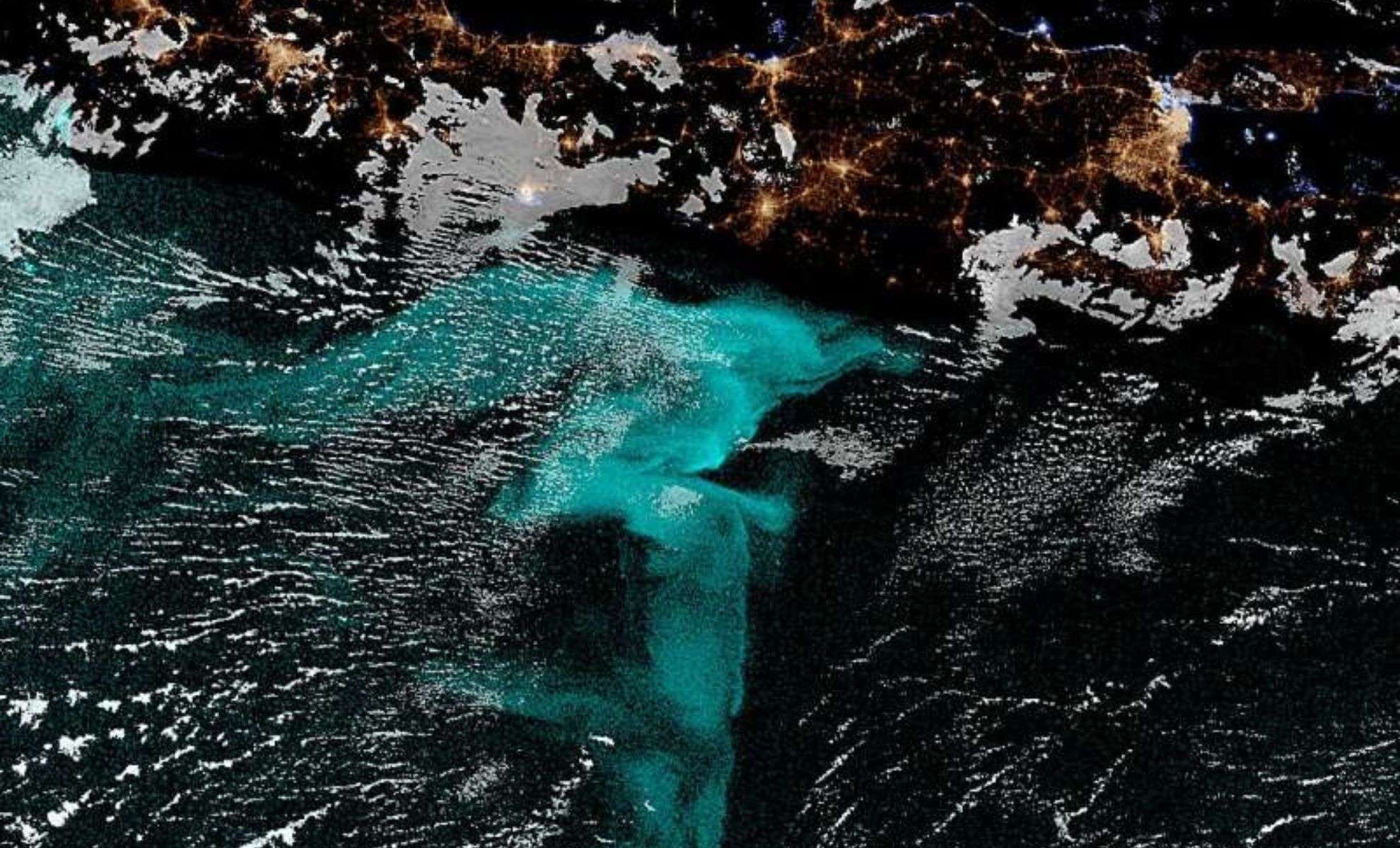
Throughout history, seafarers have recounted mysterious experiences observing vast areas of the ocean aglow with a shimmering white or greenish luminescence, often referred to as "milky seas." A pioneering investigation featured in Earth and Space Science by experts from Colorado State University is shedding new light on the origins of this rare natural spectacle.
Uncommon Bioluminescence Linked to Bacterial Colonies
Milky seas represent an extraordinary form of marine bioluminescence, believed to be generated by populations of Vibrio harveyi, luminous bacteria found in the ocean. Unlike the flickering glints produced by plankton, these phenomena produce a continuous, uniform glow that can span thousands of square miles and persist for extensive periods ranging from days to even months.
One captain from 1849 recalled, "It felt like we were cruising over an endless snowy expanse," a vivid description in line with numerous accounts throughout maritime history. Observers often describe the luminescent water as glowing akin to "green neon tubes" or resembling "molten metal," evoking an eerie tranquility. This calmness might be physical rather than imagined, as researchers discovered some algae involved release mucus that smooths the sea’s surface, potentially intensifying the glowing effect.


Compiling Centuries of Observations into a Comprehensive Dataset
Led by PhD candidate Justin Hudson and atmospheric researcher Steven Miller at CSU, the team meticulously analyzed testimonies, historic ship logs, news archives, and satellite imagery to assemble the inaugural global milky sea sighting database. Their search uncovered fewer than 400 credible incidents stretching back 400 years.
Plankton specialist Abigail McQuatters-Gollop highlighted that "Non-scientific observers document these events in diverse ways," emphasizing the significance of historical narratives despite occasional ambiguity—such as references to “white water” that might not always signify genuine bioluminescence. Nevertheless, Hudson and his colleagues detected strong correlations between milky sea occurrences and climatic phenomena like La Niña and the Indian Ocean Dipole.
Vast Scales Covering Entire Regions
The study reveals the immense scale at which milky seas can develop. Some observed events span over 38,000 square miles—a size surpassing that of Indiana—and shine bright enough to be captured by orbiting satellites. Hudson notes, "Larger occurrences tend to attract more maritime attention," which may lead to a higher frequency of recorded sightings for these grand events.
Most reports are concentrated in the Northwest Indian Ocean and around Maritime Southeast Asia, where seasonal monsoons and oceanic nutrient upwelling create ideal conditions for bacterial growth. According to Hudson, "These weather patterns bring nutrients to the ocean’s surface, spurring rapid expansions in the food web," potentially fueling the glowing bacteria responsible for the phenomenon.
- Categories:
- News









0 comments
Sign in to Comment