
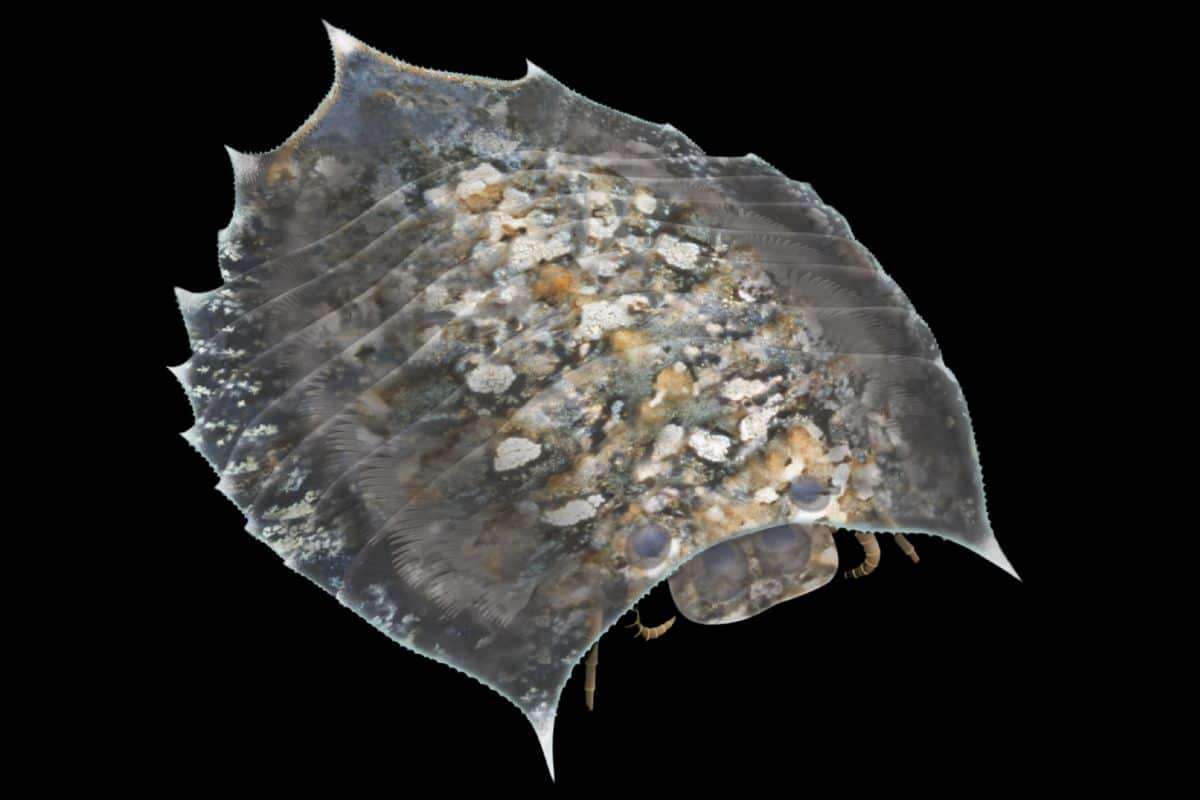
A long-standing enigma surrounding a fossilized marine organism unearthed over 100 years ago has been solved, shedding light on one of the earliest groups of animals on our planet.
Scientists have now fully characterized Helmetia expansa, an arthropod from the Cambrian Era, thanks to a recent investigation conducted by researchers at Harvard University, closing a chapter in a mystery dating back to 1918.
An Age-Old Cambrian Puzzle Clarified
Originally discovered by renowned paleontologist Charles Doolittle Walcott in 1918, Helmetia expansa was initially classified as a crustacean. Despite its frequent mention in scholarly work, only a single specimen was ever accurately illustrated, with its anatomy and biology remaining insufficiently examined.
More than a century later, a research team led by postdoctoral scholar Sarah Losso from Harvard’s Department of Organismic and Evolutionary Biology has provided a comprehensive description of the species and delved deeply into its physical characteristics, behavior, and evolutionary significance.

Exceptional Preservation of Rare Trilobite Relatives
Helmetia expansa is part of the concilitergans, a rare and ancient group of arthropods closely related to trilobites. Unlike trilobites, these animals did not have heavily mineralized exoskeletons, making their fossils scarce and only preserved under unique conditions.
In this case, the Burgess Shale formation in Canada, dated to 508 million years ago, preserved soft body parts, including digestive systems, limbs, and gills.
“Examining numerous specimens is essential to fully understand this species’ range of forms and preservation,” said Losso.
The team analyzed 36 specimens housed at the Smithsonian Institution and the Royal Ontario Museum, employing polarized light microscopy to enhance fragile anatomical features. Their study also incorporated comparisons with similar species found in the Chengjiang biota in China and the Sirius Passet locality in Greenland.
Detailed Anatomy Reveals Movement and Molting Behaviors
Reconstruction efforts unveiled a leaf-shaped exoskeleton along with, for the first time, distinct walking legs, central eyes, and digestive tract details. Previous ideas mistakenly proposed Helmetia was legless and lived solely as a swimmer. The discovery of paired legs and respiratory limbs now suggests it moved similarly to trilobites.
Strikingly, two specimens exhibited evidence of molting — a behavior never recorded before in concilitergans. “Molting is a process known in all arthropods as they shed their exoskeletons to grow, but identifying this behavior in concilitergans requires finding the rare moment when the animal was actually molting,” explained Losso.
The molting method indicated shedding from the front edge of the head, resembling the molting technique of modern horseshoe crabs.
Insights Into an Impressive Cambrian Giant
The specimens displayed considerable size variation, with the smallest measuring just 92 millimeters and the largest exceeding 180 millimeters—large dimensions for Cambrian arthropods.
“These size differences reveal not only the growth stages of these ancient creatures but also the physical limits they achieved,” commented Losso.
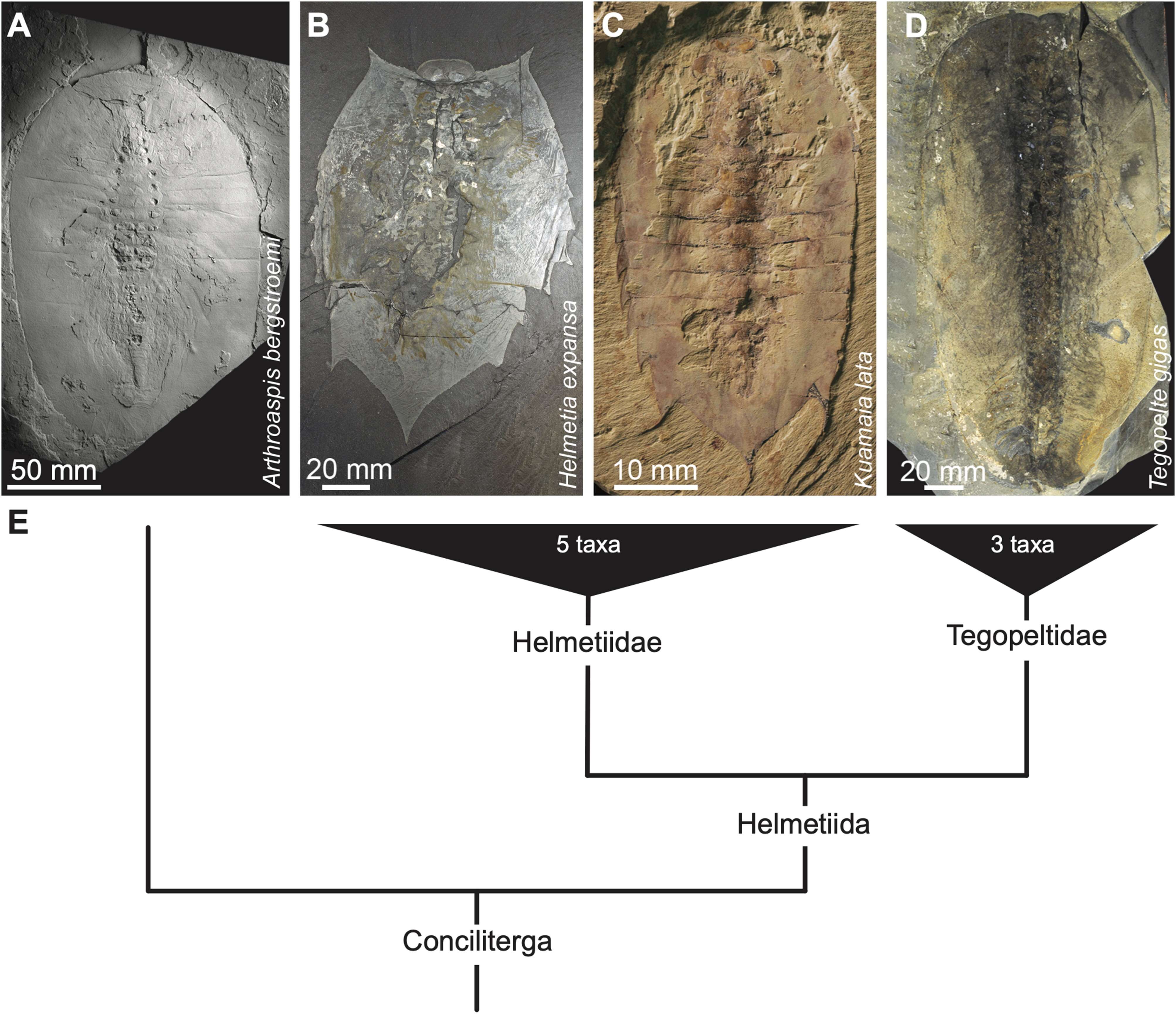
Through careful taxonomic reassessment, the study clarified classification within helmetiids. Helmetia expansa is confirmed as part of the Helmediidae family, known for distinct segment separation and lateral spines.
On the other hand, the Tegopeltidae family features fused segments without spines. Another species, Arthroaspis bergstroemi, was reassigned to concilitergans, refining our understanding of their evolutionary relationships.
- Categories:
- News







0 comments
Sign in to Comment