
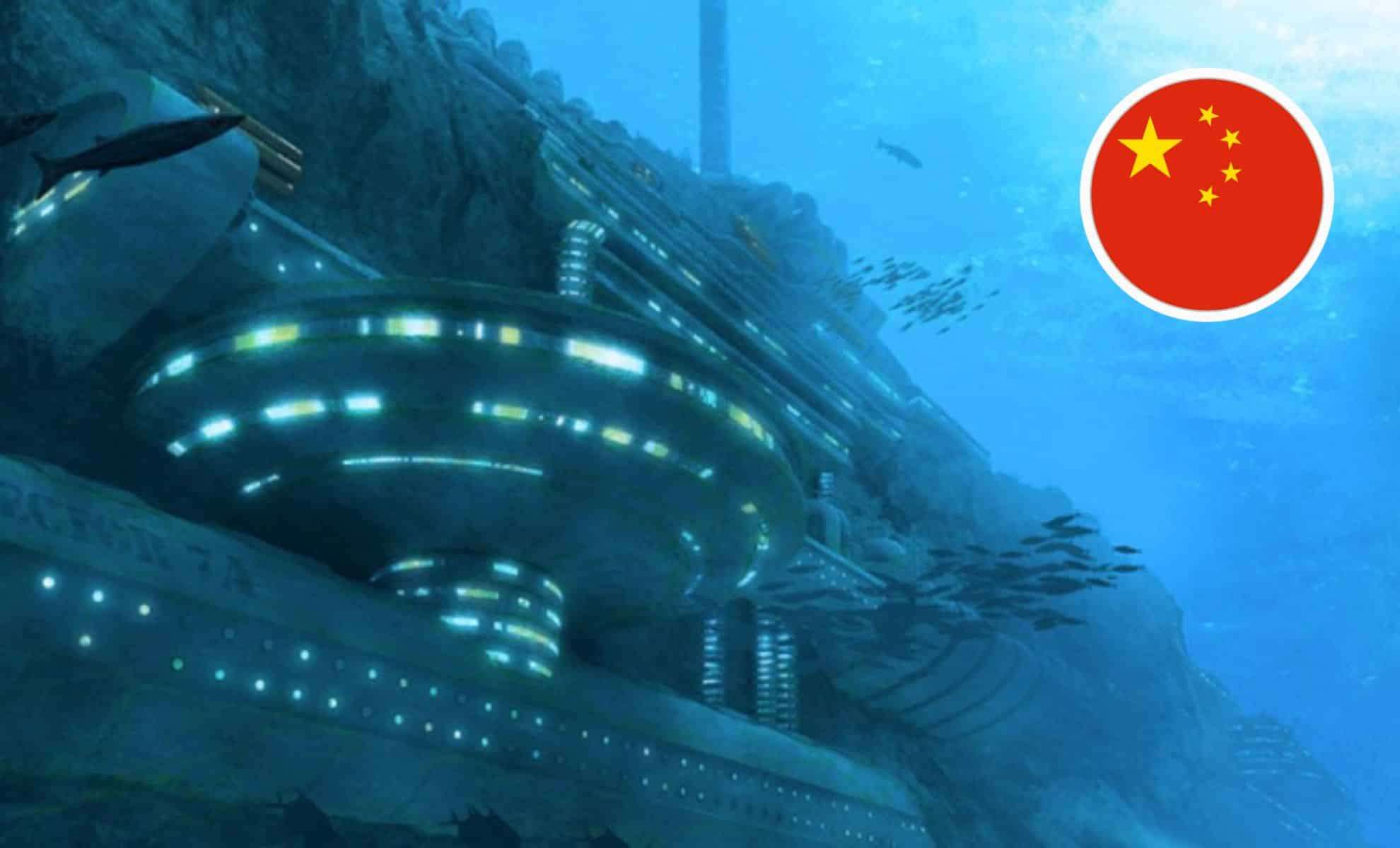
China is moving forward with plans to develop an advanced underwater research base situated 6,000 feet below the surface of the South China Sea. Scheduled for completion by 2030, this “deep-sea space station” will accommodate up to six researchers for extended missions aimed at investigating cold seep ecosystems and monitoring substantial methane hydrate deposits, which are considered promising energy alternatives for the future.
An Innovative Submarine Scientific Facility
Reported by Oceanographic Magazine, the station will feature cutting-edge life-support technology to sustain researchers working in extreme underwater conditions. The installation will maintain a continuous observation system to collect data on methane concentrations, environmental shifts, and seismic activity, offering invaluable insights into one of the planet’s most dynamic and resource-abundant ocean regions.
China’s South China Sea Institute of Oceanology, affiliated with the Chinese Academy of Sciences, has disclosed that this facility will integrate with a fleet of autonomous submersibles, vessels, and seabed monitoring stations to form a sophisticated four-dimensional ocean observation network. This coordinated approach is expected to revolutionize our understanding of marine biodiversity, geophysical processes, and resource utilization.

A Strategic Area Laden With Resources and Disputes
Although China frames the project as a purely scientific venture, its placement in the contested South China Sea has raised geopolitical alarms. The region harbors approximately 70 billion tonnes of methane hydrates, a frozen form of methane viewed as a significant future energy asset. This reserve equates to nearly half of China’s current known oil and natural gas supplies, emphasizing the strategic importance of subsea resource exploitation.
Besides economic interests, the South China Sea is a hotspot for territorial disagreements. Countries such as Taiwan, Vietnam, the Philippines, Malaysia, and Brunei contest China’s extensive claims over the maritime expanse, heightening regional tensions. The announcement coincides with reports from Taiwan’s Ministry of National Defence noting 62 Chinese military aircraft movements near its airspace, sparking speculation about the station’s dual scientific and military potential.
Global Competition in Oceanic Exploration
China’s objective to establish a staffed deep-sea station aligns with a growing international focus on exploring the ocean floor. This announcement comes shortly after news of a U.S.-led effort in the Caribbean to construct an underwater habitat, driven by the National Oceanic and Atmospheric Administration (NOAA) alongside the Proteus Ocean Group.
That initiative aims to develop an international series of subsea research hubs to enable scientists, engineers, and civilians to study long-term challenges such as climate change, pollution, and deep-sea ecosystem preservation. China’s push into deep-subsea research underscores an intensifying global contest to unlock the mysteries—and potential economic benefits—of the ocean depths, echoing the rivalry once seen in space exploration.
Advancing the Frontier of Ocean Science
The establishment of China’s deep-sea station marks a significant advancement in underwater research infrastructure and reflects the increasing strategic importance of the deep ocean. Containing abundant energy deposits, rare earth minerals, and largely unknown ecosystems, the seabed represents a critical new domain for scientific and geopolitical pursuits.
As countries expand their investments in permanent deep-sea laboratories, this emerging era of ocean research promises to transform scientific discovery, economic development, and international diplomacy beneath the world’s waters.
- Categories:
- News










0 comments
Sign in to Comment