
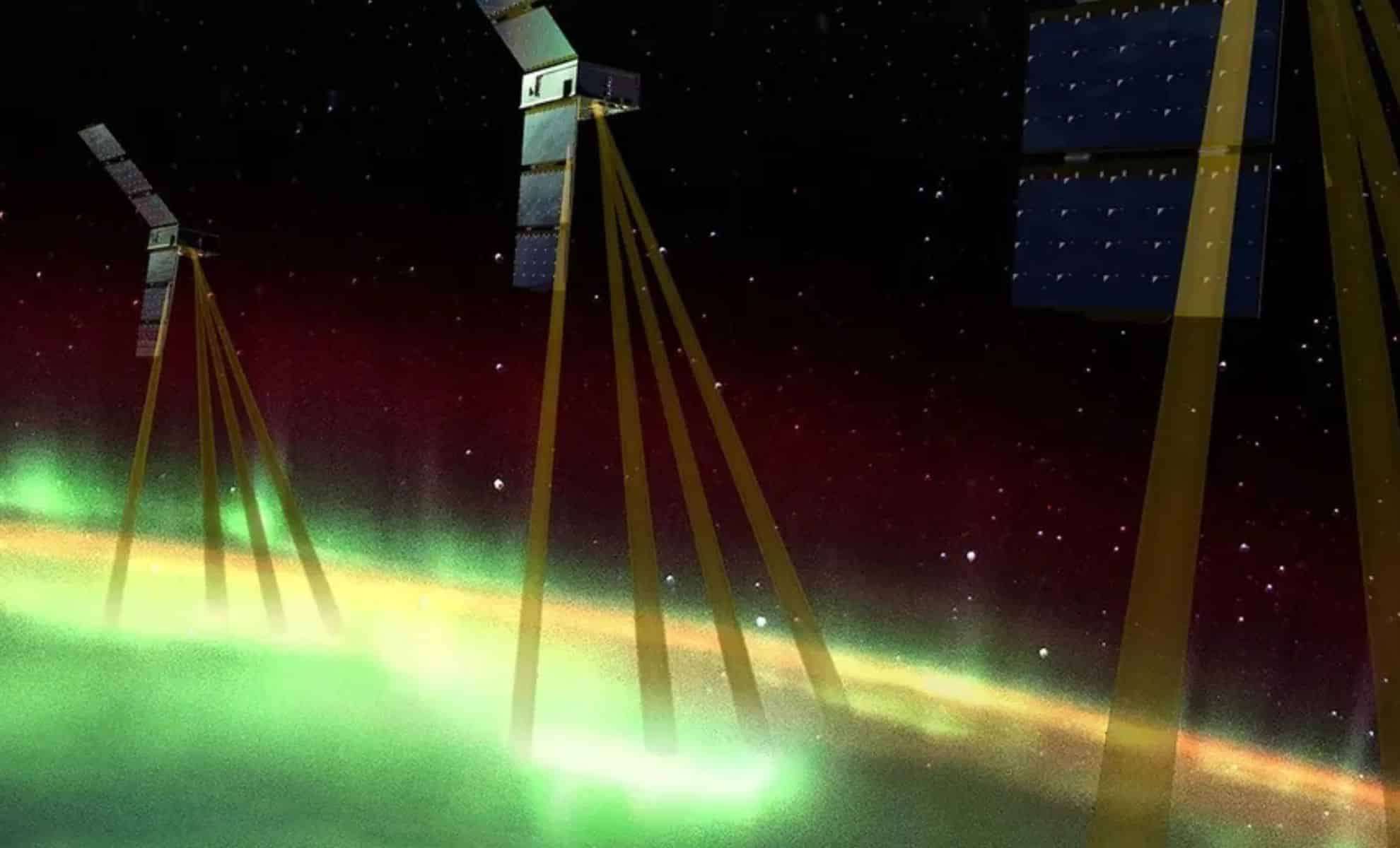
NASA, in partnership with SpaceX, is gearing up for a pioneering mission designed to explore the intense electric currents flowing through Earth's atmosphere during auroral events. These powerful currents, known as auroral electrojets, circulate millions of amps of electrical charge near the planet’s poles each second, affecting space weather phenomena, satellite functionality, and terrestrial power systems.
The upcoming Electrojet Zeeman Imaging Explorer (EZIE) mission, slated for launch this March aboard a SpaceX Falcon 9, will deploy three compact CubeSats into orbit to capture detailed measurements and imagery of these unseen currents. By doing so, the mission aims to deepen our understanding of how auroras influence Earth's magnetic environment and solar storm effects on technology and infrastructure.
Decoding the Dynamics of Auroral Electrojets
Electrojets are massive electrical currents flowing in the upper layers of Earth’s atmosphere, which create the spectacular northern and southern lights while also impacting critical systems like satellites, communication networks, and power grids. These currents have historically been difficult to observe directly, limiting our grasp on their influence on space weather.

As detailed by Space.com, the EZIE mission marks the inaugural space-based endeavor to investigate auroral electrojets. Using a Falcon 9 rocket launched from Vandenberg Space Force Base, the mission will place three CubeSats in low-Earth orbit to continuously monitor and map these electric currents.
The satellites will utilize an innovative method called the Zeeman effect to detect microwave signals emitted by oxygen molecules, revealing fluctuations in the electrojets’ intensity and location. This groundbreaking data could revolutionize space weather prediction, offering new safeguards for Earth’s technological infrastructure against solar-driven disturbances.
The Importance of Understanding Electrojets
Far from mere atmospheric phenomena, auroral electrojets have tangible impacts. When solar activity increases, these currents can intensify, triggering geomagnetic storms that disrupt power grids, impair satellites, and interfere with communication systems. Gaining a clearer picture of their behavior is essential for anticipating and reducing these risks.
With the Sun approaching the height of Solar Cycle 25, the mission’s timing is crucial, as heightened solar events prompt more frequent and potent geomagnetic storms. EZIE’s observations will be key to enhancing space weather alerts and protective measures.
Sam Yee, lead scientist for EZIE at Johns Hopkins Applied Physics Laboratory, emphasized the mission’s innovative capabilities: “Employing the Zeeman technique to remotely track magnetic fields produced by electric currents represents a transformative leap in space weather research.”
Engaging the Public Through Citizen Science
In addition to its orbital studies, EZIE features a citizen science initiative. NASA intends to distribute EZIE-Mag magnetometer kits to students and enthusiasts around the globe, enabling them to gather ground-level magnetic field readings. This data, combined with the satellites’ measurements, will enrich scientists’ understanding of electrojet patterns and their interaction with Earth’s magnetic field.
“EZIE scientists will gather magnetic data from space while volunteers collect complementary information from the surface,” explained Nelli Mosavi-Hoyer, project manager at Johns Hopkins APL. This joint effort holds promise for advancing our knowledge of space weather’s effects on Earth.
SpaceX’s Launch and Mission Synergies
The EZIE CubeSats will be launched aboard a SpaceX Falcon 9 rocket during the Transporter-13 rideshare from California’s Vandenberg Space Force Base. This timing coincides with the Sun’s solar maximum, when auroral electrojets peak in strength.
EZIE will also work in conjunction with other NASA missions, such as PUNCH (Polarimeter to Unify the Corona and Heliosphere), which investigates how solar material generates the solar wind—the key driver of auroras and space weather effects.
- Categories:
- News






0 comments
Sign in to Comment