
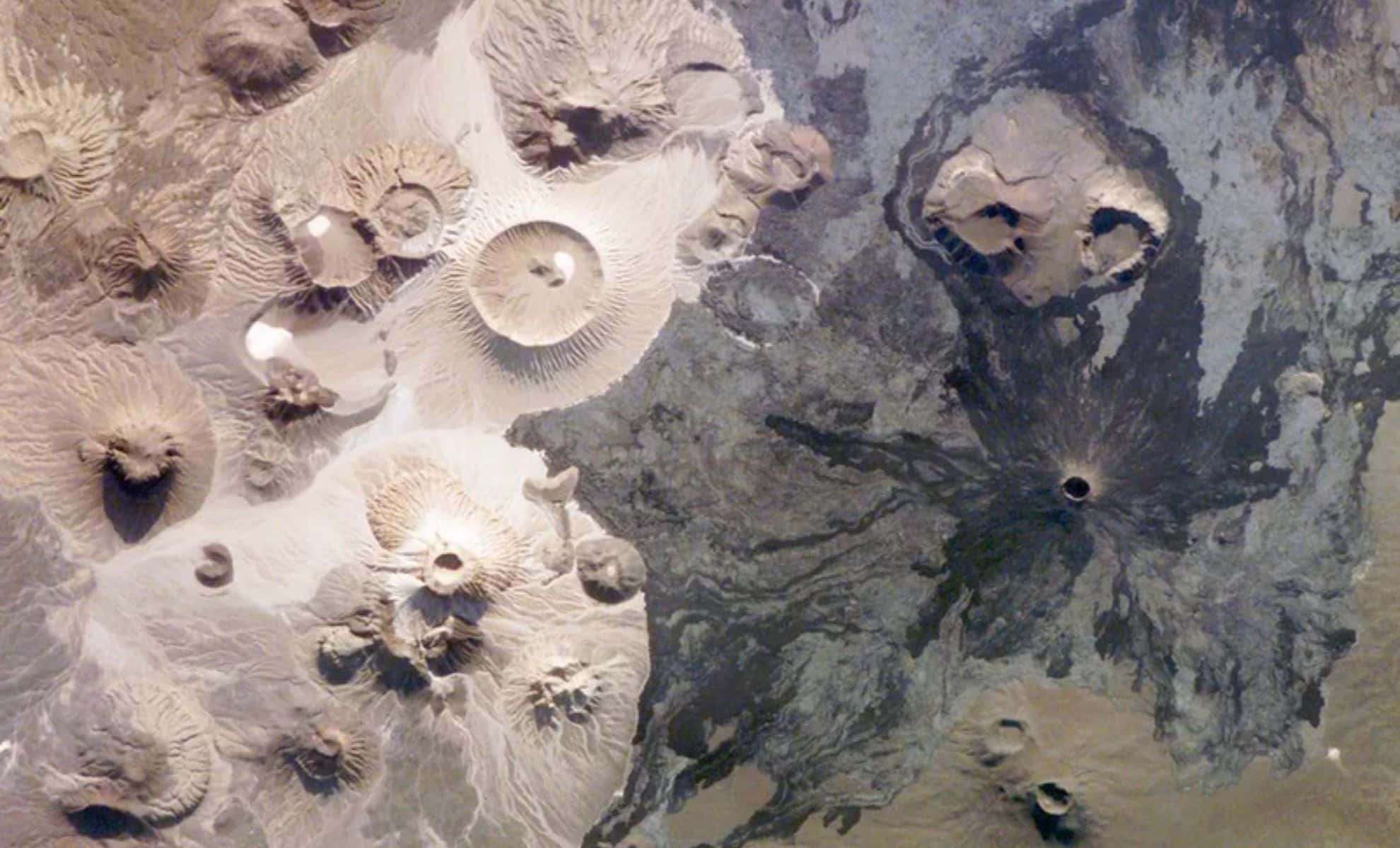
Researchers have discovered hundreds of enigmatic stone structures nestled within Harrat Khaybar, an extensive volcanic lava field in northwestern Saudi Arabia. Dubbed the “gates of hell” due to its volcanic features and barren surroundings, this area is revealing evidence of human activity dating back nearly 9,000 years. These findings were initially detailed in a 2017 paper led by Professor David Kennedy, published in Arabian Archaeology and Epigraphy.
What seemed like ordinary rock formations on the surface have been transformed into a remarkable prehistoric tableau through satellite imaging. Yet, despite their clear antiquity, many of these stone constructions remain puzzling.
A Timeless Prehistoric Terrain Beneath Volcanic Layers
Covering more than 14,000 square kilometers, Harrat Khaybar’s landscape was forged by volcanic eruptions spanning over five million years. The most recent volcanic activity occurred between 600 and 700 A.D, as reported by NASA. Despite its harsh volcanic environment, compelling evidence points to thriving Neolithic communities who inhabited this challenging region.

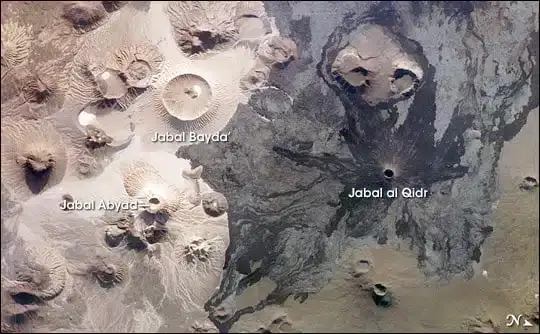
For years, these formations went largely undetected until satellite technology provided archaeologists with a new vantage point. This aerial perspective unveiled a complex network of stone circles, enclosures, and geometric alignments. By 2018, the European Geosciences Union (EGU) hailed the area as a “prehistoric landscape perfectly preserved in time.”strong>
Constructed mainly from locally sourced volcanic stones, the site includes simple settlements, intricate stone barriers, and intriguing structures referred to as “desert kites” and “gates,” each with unique characteristics and purposes.
Decoding the Desert Kites
Desert kites are large, elongated stone constructions shaped like funnels, best observed from an aerial perspective. Initially, they were interpreted as animal hunting traps, but recent studies propose a broader role. According to the EGU, some scholars now consider these as early attempts at “animal domestication,” rather than simple hunting tools.
Instead of solely capturing prey, these structures may have been used to direct and contain animals, hinting at proto-herding strategies. Their design demonstrates an advanced understanding of terrain, animal patterns, and cooperative planning by ancient peoples.
Mysterious Ancient ‘Gates’ Defy Explanation
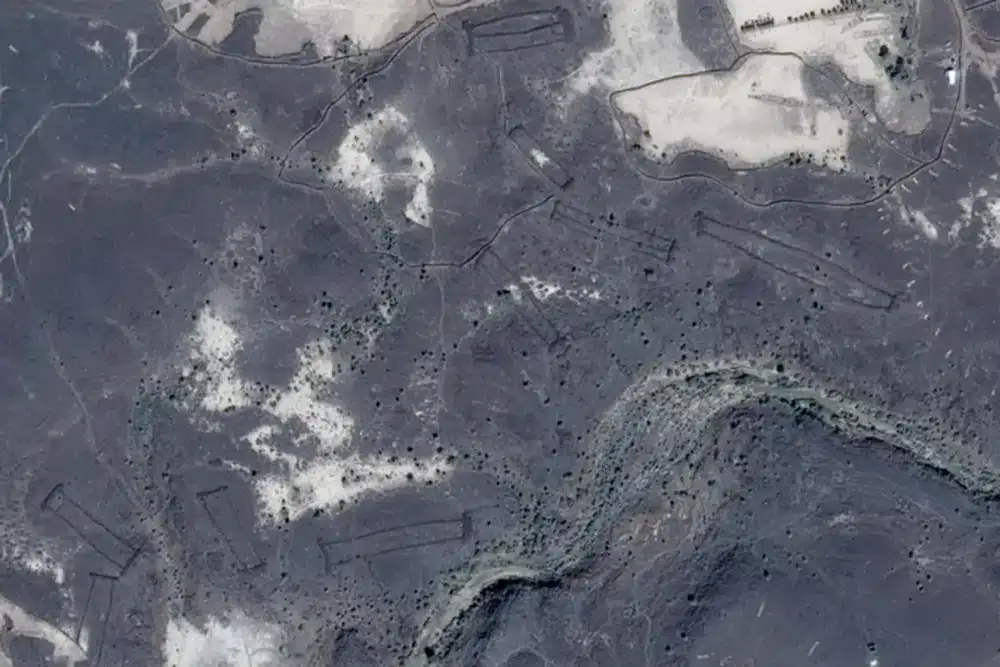
The enigmatic “gates” are even more perplexing. From a bird’s-eye view, they resemble simple field gates. Positioned atop volcanic mounds—some of which were active volcanoes—they consist of low, roughly crafted stone walls. David Kennedy of the University of Western Australia suggested that these might be “the earliest human-made structures in the region.” Yet, despite thorough analysis, their true purpose remains unknown. He explained:
“They don’t look like structures where people would have lived nor do they look like animal traps or for disposing of dead bodies.”
These gates are primarily found in remote, barren lava terrains, far removed from water and plant life, raising questions about why ancient peoples would erect such constructs in such inhospitable locations.
Discovering History from Above
Due to restricted access to the area, archaeologists like David Kennedy and Dr. Hugh Thomas from the University of Sydney have relied on satellite imagery and platforms such as Google Earth to study these puzzling sites. Kennedy shared with The New York Times:
“You can’t see them very well from the ground level, but once you get up a few hundred feet, or with a satellite even higher, they stand out beautifully.”
Satellite analysis revealed not only the scattered “gates” and “kites,” but also evidence of a vastly different, greener environment during the Neolithic era. Dr. Thomas remarked to Arab News:
“The reality is that in the Neolithic period these areas were significantly greener, and there would have been really sizeable populations of people and herds of animals moving across these landscapes.”
- Categories:
- News







0 comments
Sign in to Comment