
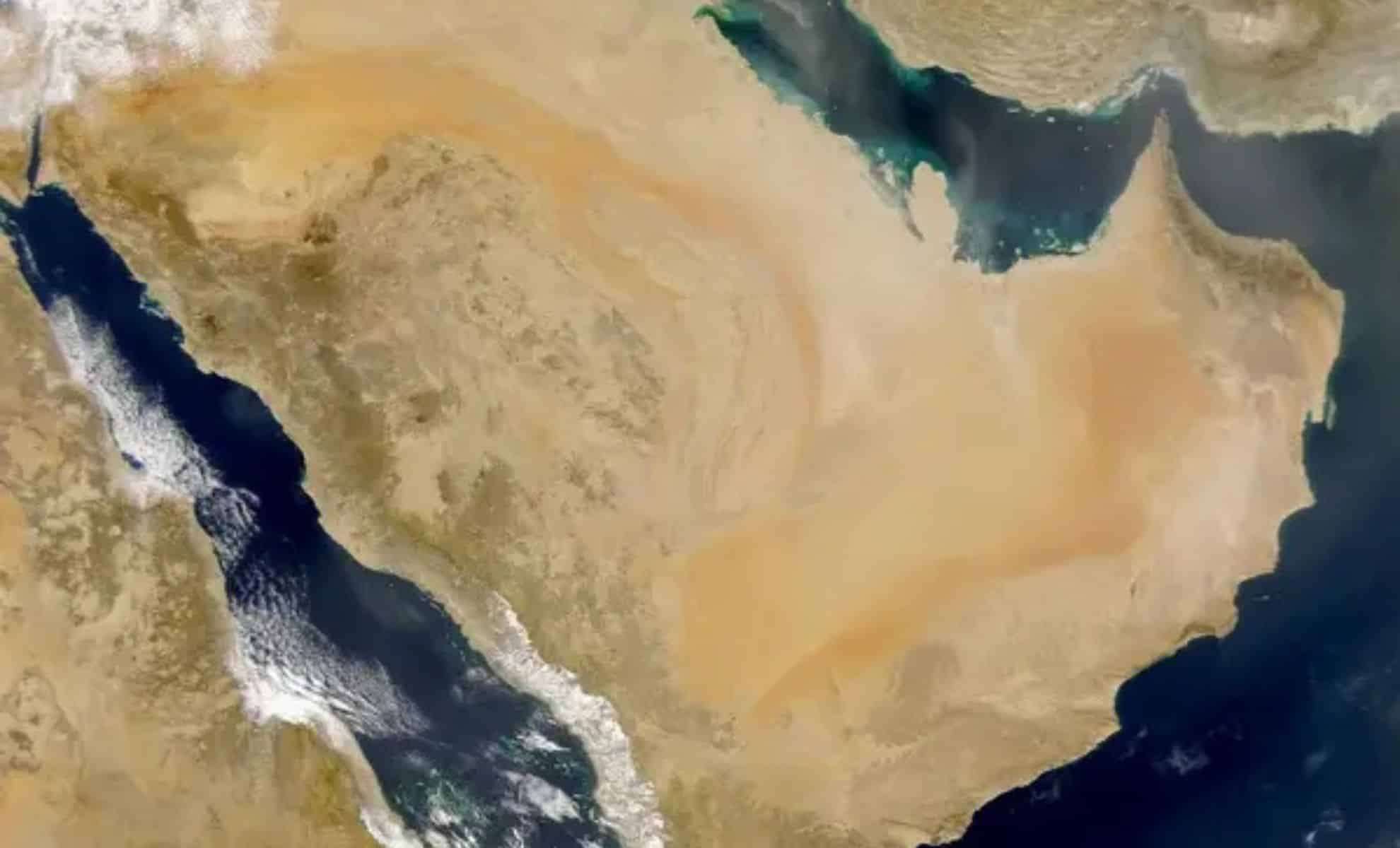
Recent research has unveiled a hidden chapter of Arabia’s past beneath the sweeping sands of the Empty Quarter, one of the planet’s most arid landscapes today. The innovative study, Communications Earth & Environment reports that this vast desert once featured extensive lakes, flowing rivers, and carved valleys, formed during intervals of intense rainfall between roughly 11,000 and 5,500 years ago. This insight offers a fresh perspective on the substantial environmental transformations during the late Quaternary, highlighting the “Green Arabia” epoch.
Under the guidance of Dr. Abdallah Zaki and Professor Sébastien Castelltort from the University of Geneva, partnered with Professor Abdulkader Afifi at King Abdullah University of Science and Technology (KAUST) and Professor Michael Petraglia of Griffith University, the international team identified a gigantic prehistoric lake and a sprawling valley shaped by water erosion. Their findings illuminate how seasonal monsoon rains from Africa once nurtured this landscape into a fertile ecosystem.
Transforming Arabia: From Desert to Water-Rich Terrain
The study illustrates an ancient Arabia that was wetter and sustained by expansive lakes and running rivers instead of barren sands. “Based on radiometric dating, the lake reached its prime size about 9,000 years ago during the 'Green Arabia' interval spanning 11,000 to 5,500 years ago,” explained Dr. Abdallah Zaki, the paper's primary author. This enormous lake, covering approximately 1,100 square meters and plunging to depths of 42 meters, starkly contrasts today’s desert conditions. This watery era transformed the region into a vibrant ecosystem, marking one of the most remarkable climatic phases within this geological period.

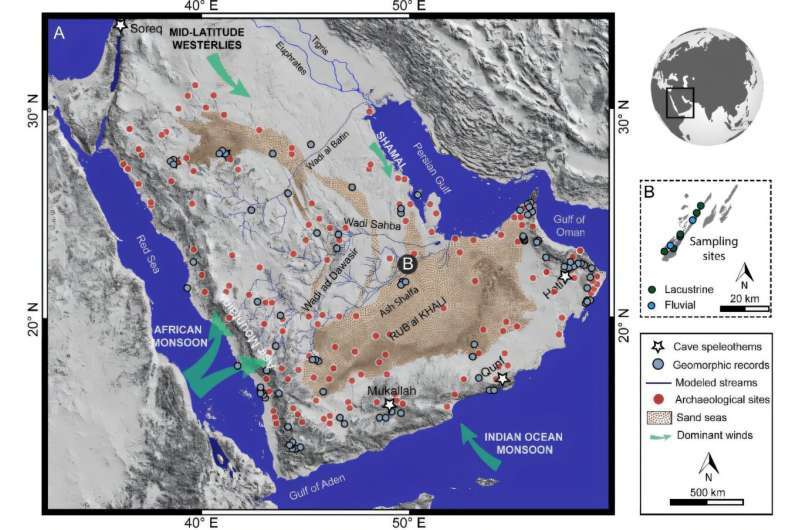
The lake’s eventual failure dramatically reshaped the terrain. Professor Sébastien Castelltort describes how rising rainfall levels caused the lake to overflow, unleashing a powerful flood that carved a massive 150-kilometer valley in the desert bed. “Owing to increased rainfall, the lake eventually breached, causing a great flood and carving out a 150 km–long valley in the desert floor,” Castelltort added. This event stands as a vivid illustration of rapid environmental transformation.
From Lush Habitats to Expansive Desert: Arabia's Ecological Shift
These ancient water bodies created diverse habitats like grasslands and savannas, supporting thriving hunter-gatherer and pastoral communities. This marked an era of flourishing human activity in a region now defined by aridity. “The formation of lake and riverine landscapes, together with grasslands and savanna conditions, would have led to the expansion of hunting and gathering groups and pastoral populations across what is now a dry and barren desert,” noted Professor Michael Petraglia. Archaeological remains uncovered around these watercourses confirm human occupation taking advantage of once-plentiful resources.
The climatic landscape changed drastically after this wet phase. Around 6,000 years ago, a steep rainfall reduction heralded the decline of the “Green Arabia” environment. With diminishing water availability, communities migrated towards more hospitable regions, prompting shifts in subsistence strategies and social organization. “By 6,000 years ago, the Empty Quarter experienced a strong decline in rainfall, which would have created dry, arid conditions, forcing populations to move into more hospitable settings and changing the lifestyle of nomadic populations,” added Petraglia.
- Categories:
- News









0 comments
Sign in to Comment