
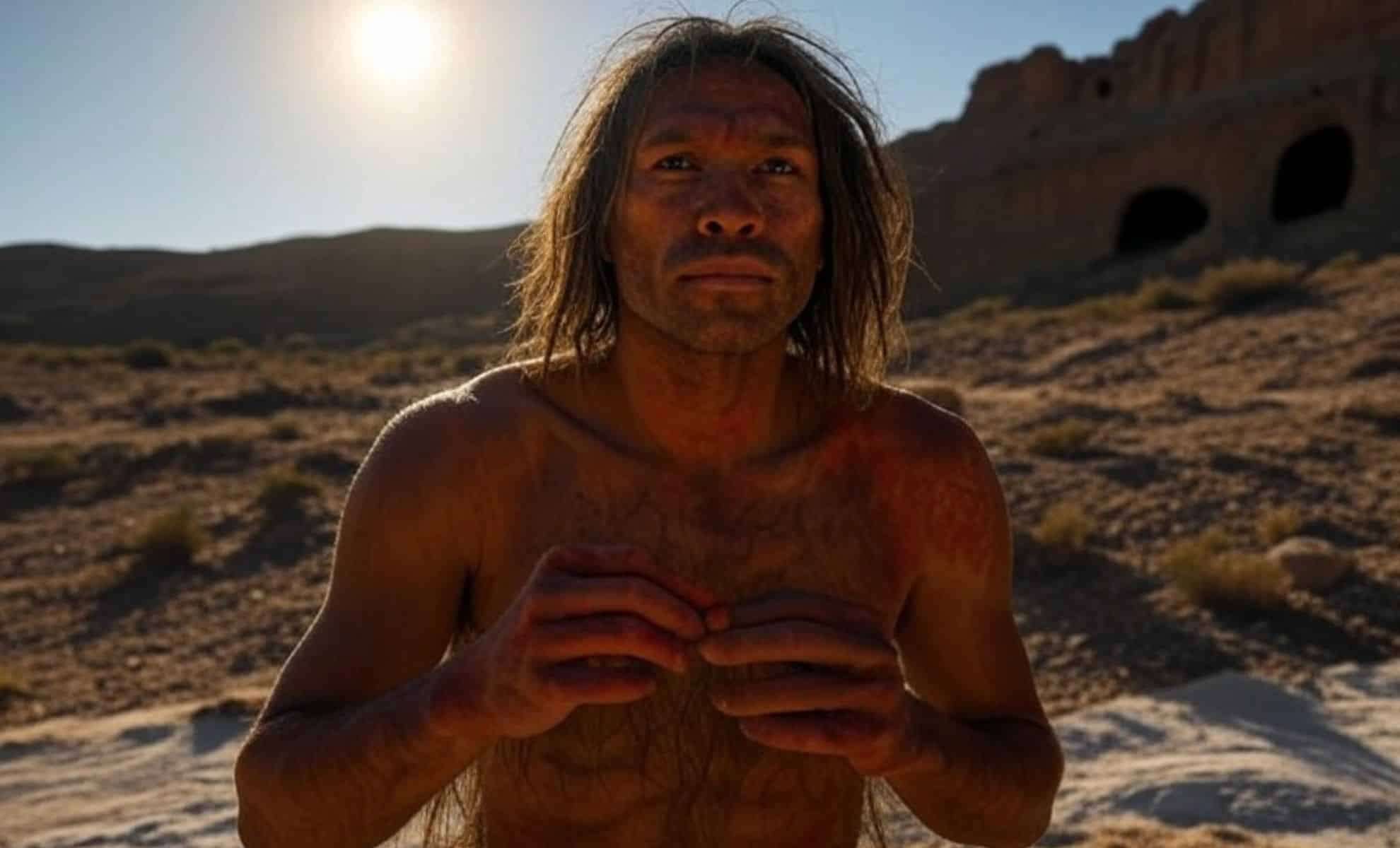
Long before the invention of synthetic sunscreens, early Homo sapiens are believed to have discovered natural methods to guard their skin against the sun’s harmful ultraviolet rays.
Approximately 40,000 years ago, amidst significant environmental changes, ancient humans utilized ochre — a natural red pigment rich in iron — as a protective layer against UV exposure.
New findings published in the Journal Science Advances demonstrate that this primitive form of sunscreen, combined with specialized garments and sheltering in caves, played a crucial role in human adaptation during one of Earth’s most intense geomagnetic disturbances.

Geomagnetic Disruption and Its Impact on Early Humans
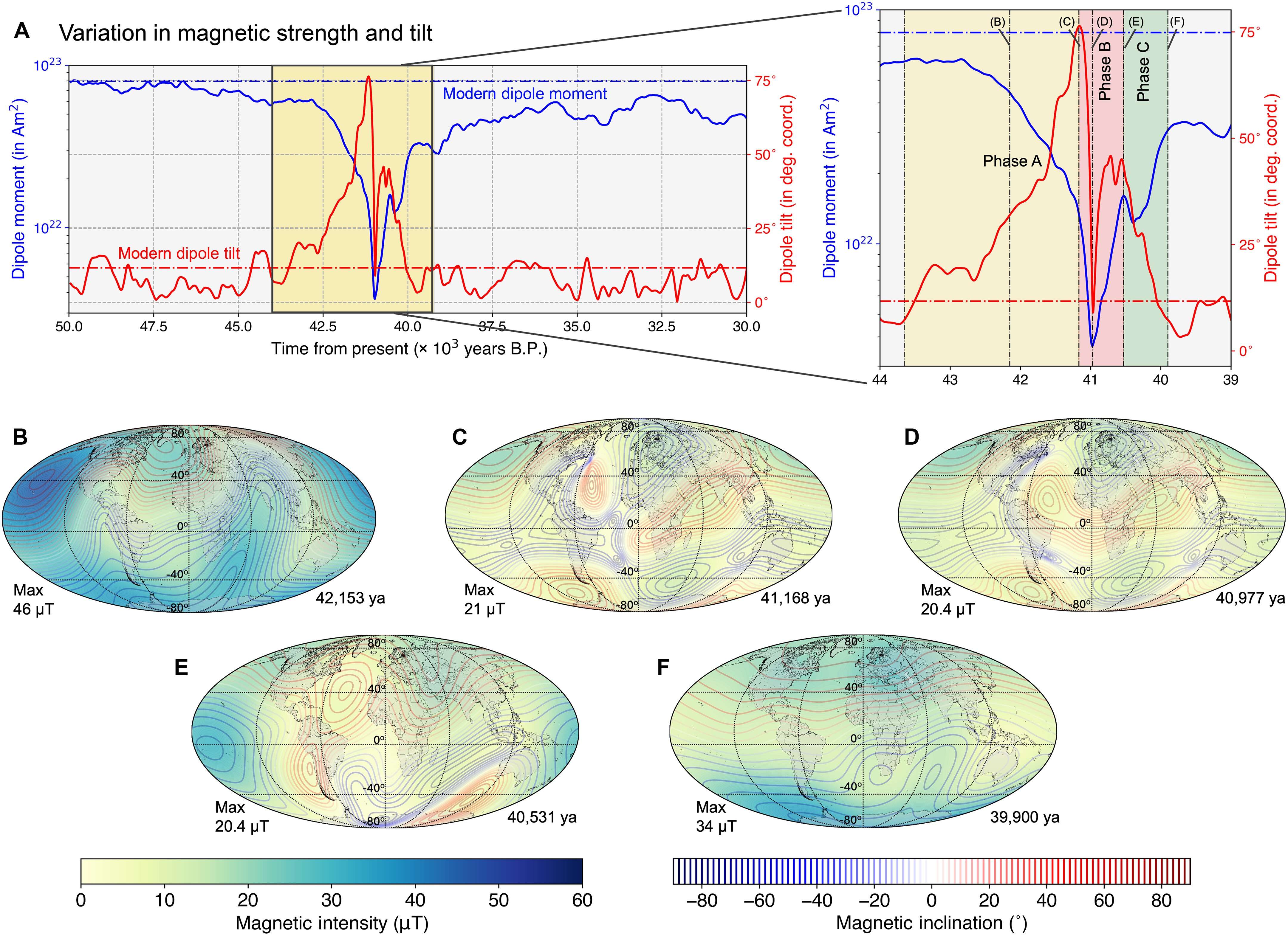
Between roughly 42,200 and 41,500 years ago, the Earth’s magnetic protection significantly diminished during an event known as the Laschamps excursion. Normally acting as a shield against cosmic radiation, the magnetic field’s strength dropped to just about 10% of its usual level.
This weakening subjected the planet to an influx of solar particles, increasing UV radiation exposure and causing auroras to appear far beyond the polar regions, spanning much of Europe and reaching into northern Africa.
Scientists at the University of Michigan developed a detailed 3D reconstruction of these conditions, revealing how cosmic rays penetrated deep into the atmosphere during this time. Their chronology matches a pivotal era when Homo sapiens dramatically altered their lifestyle, which may have contributed to their survival advantages over the Neanderthals.
Ochre and Customized Clothing as Protective Tools
During this period, evidence points to a marked increase in the application of ochre by early Homo sapiens. Beyond its well-known use in body adornment and cave artwork, ochre exhibits properties that can shield skin from UV radiation, as shown by contemporary experimental studies.
Simultaneously, archaeological discoveries indicate that early humans crafted tailored garments. Unlike simple coverings, these clothes were designed to fit closely, offering enhanced insulation and indirect protection against sunlight.
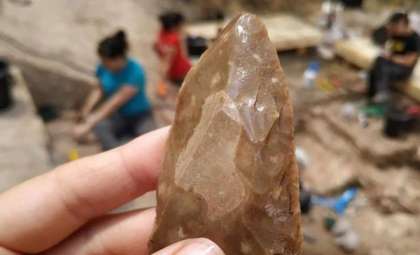
Excavations have uncovered tools such as scrapers, needles, and awls—essential for sewing fitted apparel. This advancement likely provided not only warmth but also a significant barrier against intense sun exposure, improving early humans’ chances in a much more challenging climate.
Reevaluating Neanderthal Extinction
This research sheds new light on why Neanderthals disappeared approximately 40,000 years ago. Traditional explanations have focused on competition or conflict between species.
The new hypothesis suggests that technological differences, like the lack of widespread use of ochre or fitted clothing among Neanderthals, may have left them more exposed to harmful radiation.
Areas most affected by cosmic radiation during the Laschamps excursion largely correspond with known sites of early Homo sapiens. These humans spent more time in caves and enhanced their protective measures, which could have been decisive in their survival over Neanderthals.
Surviving with a Fragile Magnetic Shield
While the findings show correlation rather than direct causation, they provide a new perspective on human adaptability in the face of weakened Earth defenses. This study challenges the notion that a strong magnetic field is essential for maintaining life.
Moreover, scientists caution that if a similar magnetic decline occurred today, it could seriously disrupt modern infrastructure such as satellites and communication networks.
The 3D atmospheric model offers valuable foresight into the effects of future geomagnetic fluctuations on life on Earth and may inform our understanding of how organisms might endure on planets with less potent magnetic shields.
- Categories:
- Science










0 comments
Sign in to Comment