
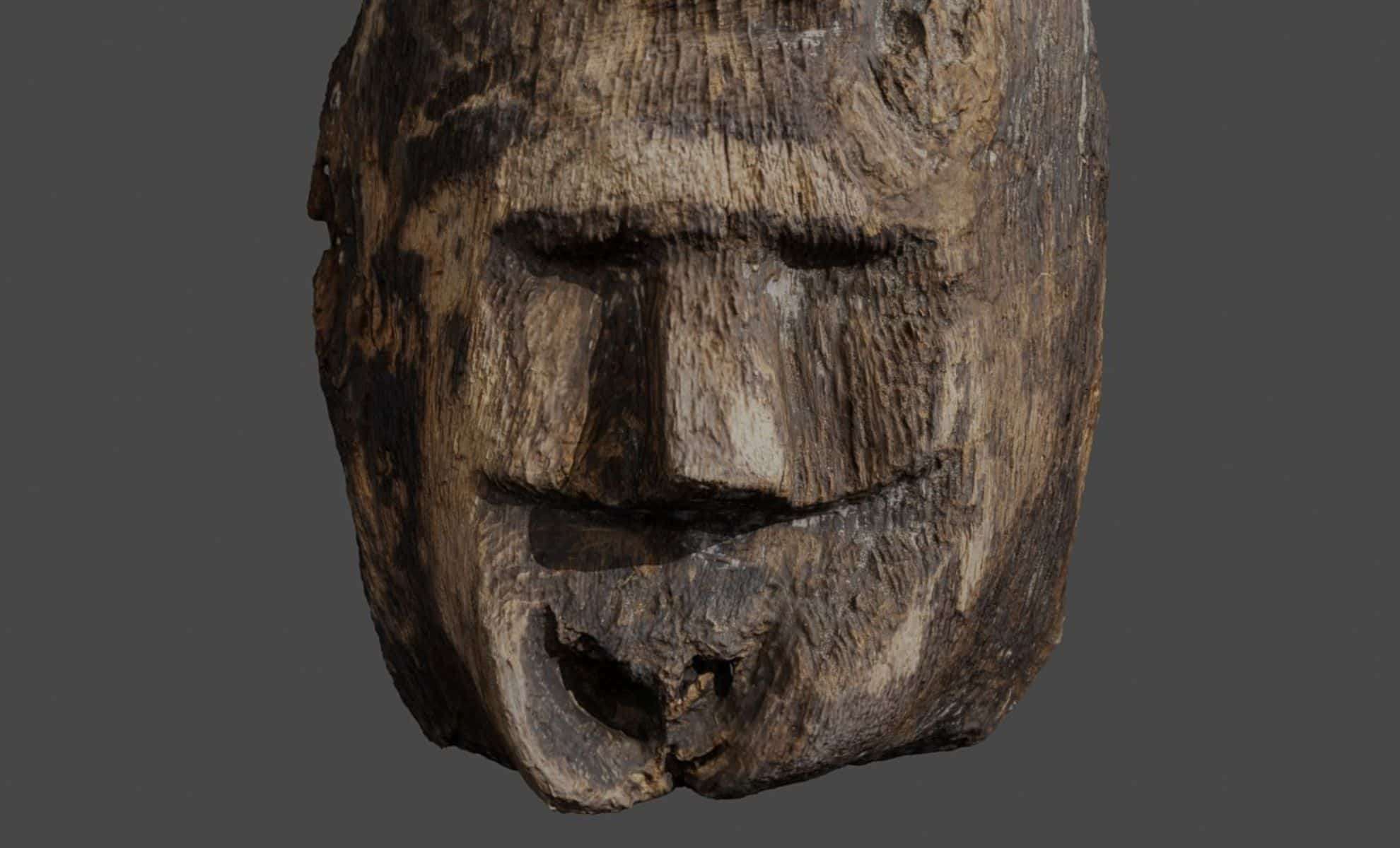
Underwater explorers have made a remarkable find that enhances our understanding of medieval Slavic society: a wooden visage, dating back approximately 1,000 years, unearthed from the depths of Lake Lednica in Poland. This relic, discovered by specialists from Nicolaus Copernicus University (NCU), is detailed in a recent publication by the university’s Center for Underwater Archaeology.
An Enigmatic Wooden Image Frozen in History
The face sculpture, measuring 12 cm in height and 9 cm across, came to light in 2024 during a dive at Lake Lednica. It was found carved into a wooden structural element referred to as a ‘hook,’ thought to have been part of the defensive fortifications of the ancient settlement.
The detailed craftsmanship, showcasing lifelike eyes, a nose, and a mouth, reveals the high skill level of medieval artisans. The beam, inscribed with the identifier 353, is estimated to date to near the year 967, during the early Christianization of Poland under Mieszko I.

The Protective Forces of Waterlogged Wood
Preserving wooden objects from the medieval era is highly uncommon due to wood’s quick decay. Yet, the oxygen-deprived environment of Lake Lednica creates ideal conditions for organic preservation, effectively sealing artifacts for centuries. This find represents a rare example of millennia-old wooden artistry surviving underwater.
NCU’s underwater archaeology team highlights the importance of such discoveries for opening windows into medieval history through submerged sites, as seen in similar underwater excavations.
Connecting to Slavic Mythology and Art
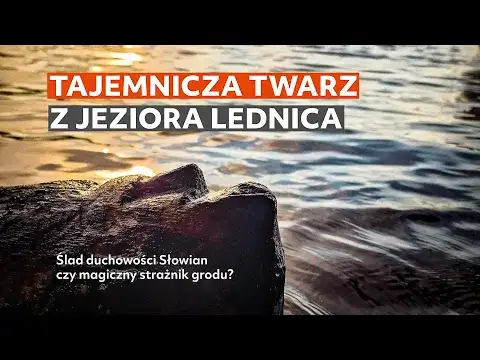
This carved face is part of a wider pattern, with comparable facial images previously uncovered in Slavic regions such as Wolin, Novgorod the Great, and Staraya Ladoga. This points to a shared cultural and spiritual tradition among these communities.
Scholars suggest the visage could symbolize a guardian figure, deity, or mythic hero meant to protect the inhabitants. These findings offer insight into the spiritual dimensions that influenced early Slavic life and their artistic expressions.
Ritualistic Elements in Slavic Medieval Society
Additional archaeological evidence found nearby strengthens the belief that the face was linked to ritual practices. Animal remains, including horse jaws and bones, were discovered by the defensive structures, possibly signifying sacrificial rites or ceremonial protection.
Such findings support the idea that the wooden face played a crucial role in spiritual ceremonies meant to safeguard the settlement from malevolent forces or threats, highlighting the cultural importance of ritual symbolism among medieval Slavs.
- Categories:
- News











0 comments
Sign in to Comment