

A fossilized bird skull dating back 69 million years recently discovered in Antarctica has the potential to transform our understanding of modern bird origins. This near-complete skull belongs to the species Vegavis iaai, an ancient waterfowl that coexisted with Tyrannosaurus rex during the final chapter of the Cretaceous period. Recovered from Vega Island, the find offers compelling proof that modern birds existed before the catastrophic extinction that eliminated the dinosaurs.
Scientists have long debated whether today’s birds emerged before or after the asteroid impact that ended the dinosaur era. The well-preserved skull of Vegavis iaai strengthens the idea that some modern bird lineages had already originated and survived the mass extinction, continuing to develop into the species we recognize today.
A Fossil That Alters Avian History
The tale of Vegavis iaai began in 1992, when paleontologist Julia Clarke from the University of Texas at Austin first uncovered fossil fragments of this species on Vega Island in Antarctica. Although initially dated at roughly 66 to 68 million years old and linked to modern waterfowl, the absence of the skull left its evolutionary connections uncertain.

More than two decades later, during a 2011 expedition to Antarctica, researchers found a second, far more complete fossil specimen of Vegavis iaai that included the elusive skull. Now dated between 68 to 69 million years old, the fossil underwent detailed analysis recently, culminating in a publication in Nature that highlights the unmistakable relationship between Vegavis and modern birds.
“[The first fossil] was a completely different skeleton part, and skulls are crucial because they carry many evolutionary clues about a species,” explained Patrick O’Connor, an evolutionary biologist at Ohio University who co-authored the study.
The team utilized 3D digital reconstruction to examine the skull in extraordinary detail, revealing that Vegavis iaai’s beak shape, brain anatomy, and jaw musculature closely parallel those of present-day diving birds. Unlike more primitive avialans, Vegavis’s beak was largely formed from the pre-maxilla bone, a hallmark of modern birds, missing in earlier Jurassic and Cretaceous species. This character solidifies Vegavis as a true evolutionary bridge from ancient avians to birds of today.
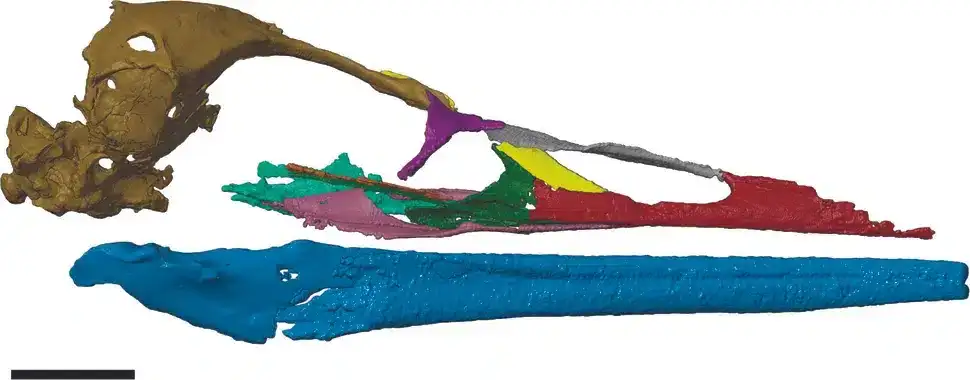
Enduring the Dinosaur Extinction
The massive die-off at the close of the Cretaceous period (about 66 million years ago) eradicated all non-avian dinosaurs and countless other organisms, but some bird groups—especially early landfowls (Galliformes) and waterfowls (Anseriformes)—persisted. Finding Vegavis iaai supports theories that certain modern bird ancestors had already begun diverging before the extinction event, which may have aided their survival.
Vegavis’s habitat and feeding habits likely contributed to its resilience. During the late Cretaceous, Antarctica had a significantly milder climate, with lush forests and abundant wildlife. Additionally, its location far from the asteroid impact zone could have shielded it from the most severe effects of the catastrophe.
Christopher Torres, a paleontologist at The University of the Pacific and co-author, emphasized the importance of the discovery: “The skull’s specialization struck me as the most remarkable aspect. It was unexpected to find such a distinct ecological adaptation so early in avian evolution.”
The results align with genetic studies of current birds indicating that the earliest species diverged prior to the mass extinction, but fossil evidence for this has been limited. Vegavis iaai fills a critical gap in this narrative.
An Enigmatic Early Bird
Although this evidence points to Vegavis iaai being a precursor to modern waterfowl, some experts remain cautious about its precise taxonomic placement.
Daniel Ksepka, a paleontologist at the Bruce Museum in Connecticut who was not involved in the research, described Vegavis iaai as “a bit of an odd duck”. He commented that if the proposed evolutionary tree is correct, then the bird’s bill either evolved early and was later lost in Vegavis or independently emerged multiple times in different bird groups.
Such debates underscore the complexity of avian evolution during the dinosaur era. Vegavis iaai might be one of numerous bird species yet to be found that survived the end-Cretaceous extinction. Upcoming fossil discoveries will be key to determining whether Vegavis truly represents a direct ancestor of today’s waterfowl or an evolutionary dead-end.
Illuminating Early Bird Evolution
The finding of Vegavis iaai sheds new light on avian development during the Mesozoic. It implies that vital adaptations—like modern beak shape, brain configuration, and feeding strategies—appeared significantly earlier than scientists previously assumed.
Beyond avian evolution, this research opens doors to uncovering other ancient life forms that inhabited Antarctica surrounding the asteroid event. As co-author Patrick O’Connor shared, “While the bird story is compelling, examining other animal and especially plant groups through this mass extinction will greatly enhance our understanding of ecosystem responses to global disruptions.”
Given Antarctica’s challenging terrain and climate, many more paleontological treasures about the origins of modern birds could remain hidden beneath the ice. With ongoing expeditions and fresh fossil finds, the evolution story of birds is still unfolding, and Vegavis iaai might be only the opening chapter of a much broader saga.
- Categories:
- News










0 comments
Sign in to Comment