
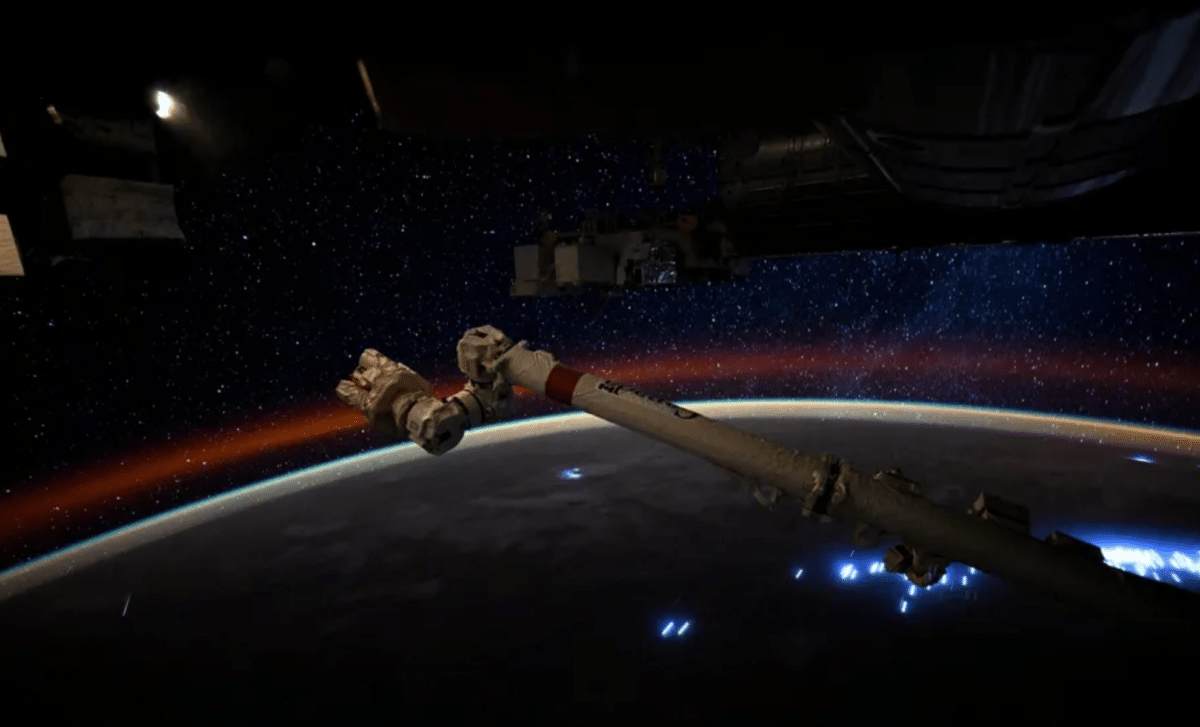
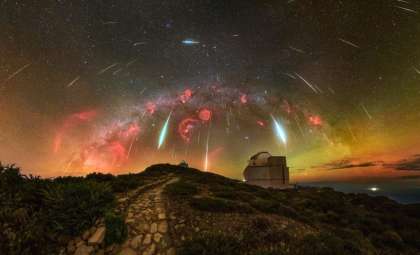
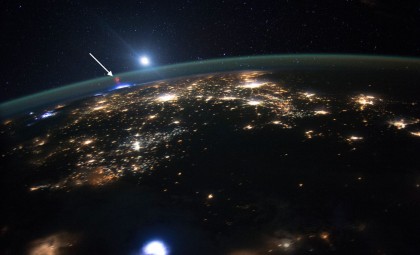
NASA astronaut Jessica Meir has shared a spectacular image of the Lyrid meteor shower taken from the vantage point of the International Space Station (ISS). This stunning photo reveals the bright trails of meteors set against the backdrop of Earth’s slender atmosphere, offering a rare glimpse of this celestial event from space. The image highlights the beauty of both our planet and the night sky in an extraordinary way. (Source: Space.com)
What is the Lyrid Meteor Shower?
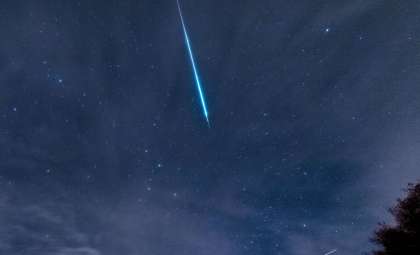
The Lyrid meteor shower is an annual astronomical phenomenon that takes place as Earth crosses the debris left by the comet C/1861 G1 Thatcher. This comet, identified over 160 years ago, follows a long orbit around the sun, leaving behind a stream of particles. When these particles enter Earth’s atmosphere, they ignite and produce striking streaks of light visible during this springtime event.
This year, the Lyrid shower peaked on the evenings of April 21 to 22, providing observers in the Northern Hemisphere a chance to watch this radiant display. Although meteor showers are yearly events, the Lyrids hold special significance due to their connection with a historic comet. Observers can expect about 15 to 20 meteors per hour during the peak, making it a favorite among skywatchers and astronomy fans.

Jessica Meir’s Remarkable Shot from the ISS
Astronaut Jessica Meir, aboard the ISS, captured an extraordinary photo of the Lyrid meteors from the station's cupola—a module designed for observing Earth. Her image displays meteors blazing across the darkness of space, their luminous paths contrasted against Earth’s atmospheric glow.
More than just a captivating visual, this image emphasizes Earth’s delicate atmospheric shield. From space, what feels immense from the surface appears exquisitely thin and vulnerable. Meir’s perspective celebrates the ISS’s role in enabling both scientific observations and inspiring imagery.
Scientific Significance of the Lyrid Meteor Shower
The Lyrid meteor shower offers scientists a valuable window into the solar system’s makeup. As cometary debris burns up in our atmosphere, it releases gases and microscopic material that help researchers investigate comet compositions and space environments. This event is not only a public spectacle but also a critical source of data for space science.
For many years, astronomers have analyzed showers like the Lyrids to enhance knowledge about the solar system’s origins. The particles involved have remained largely unchanged for millions of years, acting as cosmic time capsules. By examining these meteors, scientists can deepen their understanding of comet material and how it interacts with planetary atmospheres.
Seeing Earth’s Fragility from Space
Jessica Meir’s photograph from the ISS does more than highlight a meteor display—it poignantly showcases our planet’s vulnerability. The slim atmospheric layer protecting life below is visibly fragile from orbit, emphasizing how Earth’s defenses against space hazards are delicate despite appearing robust from the ground.
Through her social media reflections, Meir expressed her amazement at witnessing the Lyrids firsthand. Astronauts aboard the ISS experience a profound connection with Earth and a renewed appreciation for its fragile environment. Her photo stands as a striking reminder of space’s ability to broaden our perspective about both cosmic events and our home planet.
- Categories:
- Space




0 comments
Sign in to Comment