
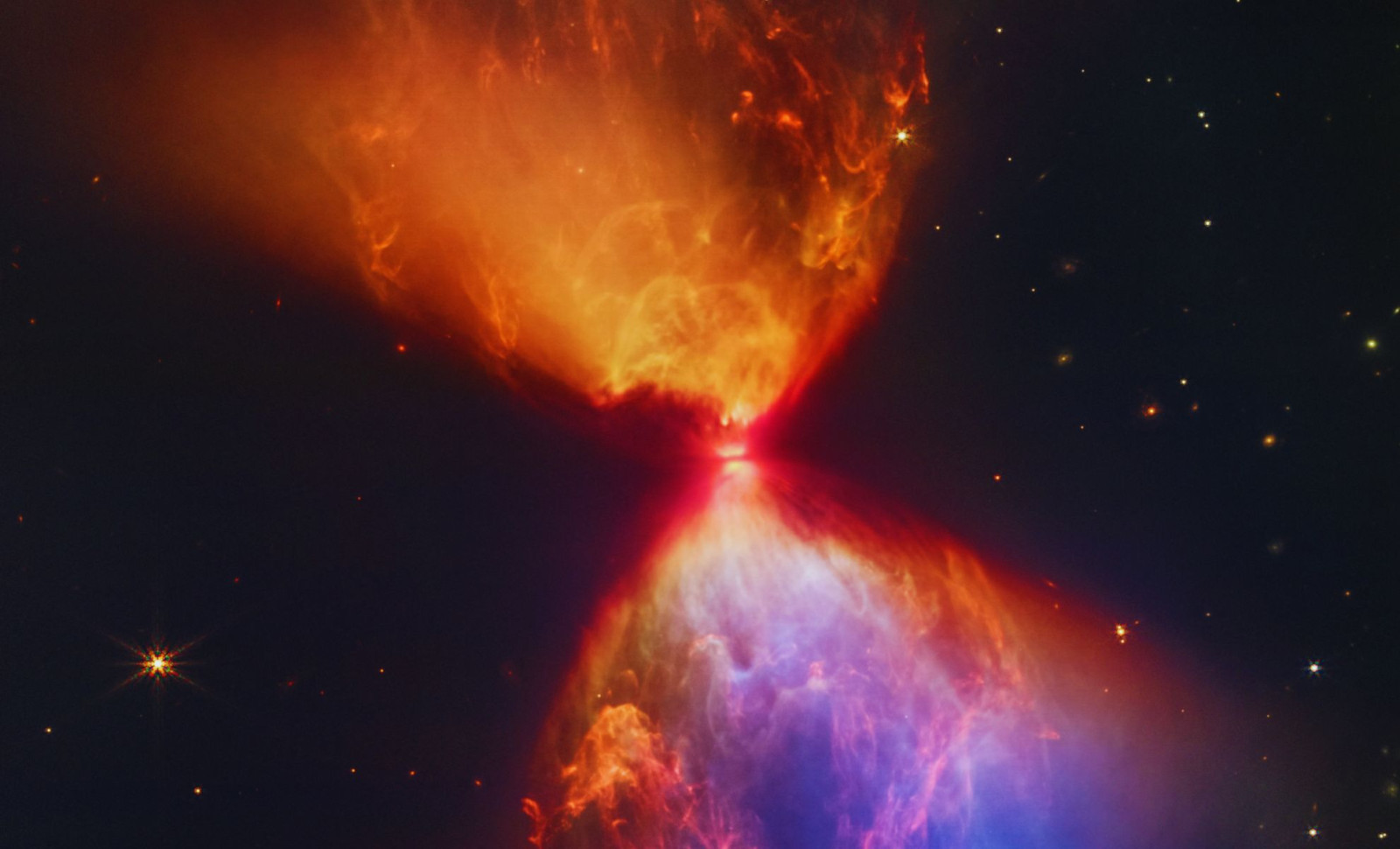
A protostar approximately 200 years old has been detected releasing bursts of gas and energy in sporadic episodes, an event researchers have compared to a stellar “sneeze.” Located within the Taurus Molecular Cloud, this activity may provide new insights into the early development and stabilization of stars similar to our Sun.
The process through which stars form remains a profound mystery in astrophysics. While it’s understood that stars originate from dense pockets of gas and dust where masses comparable to the Sun collapse to a tiny region under 0.1 light-years, the immediate aftermath of a star’s ignition is still not well characterized.
Studying these nascent phases is challenging because young stars are encompassed by thick protostellar disks that obscure much of their radiation. Utilizing observations from the ALMA Observatory in Chile, scientists have uncovered fresh evidence by examining celestial objects in the MC 27 region, around 450 light-years away.

An Infant Star Just Beginning Its Life
The focal point of this research is notable due to its remarkably young age. While our Sun’s age is about 4.6 billion years, this protostar is estimated to have formed just around two centuries ago. Published in The Astrophysical Journal Letters, these results identify it as one of the youngest protostars ever documented.
Such early-stage observations are exceptional since most known young stars are typically about 100,000 years old. This study captures the star almost immediately following its formation phase.
“Thankfully, one of the most promising ways to get a clear view of protostars is to use the Atacama Large Millimeter/submillimeter Array (ALMA) in Chile,” said Professor Masahiro N. Machida of Kyushu University’s Faculty of Science. “This radio telescope lets us see the different materials that make up stellar nurseries.”
Giant Magnetic Ring Indicates Energetic Emissions
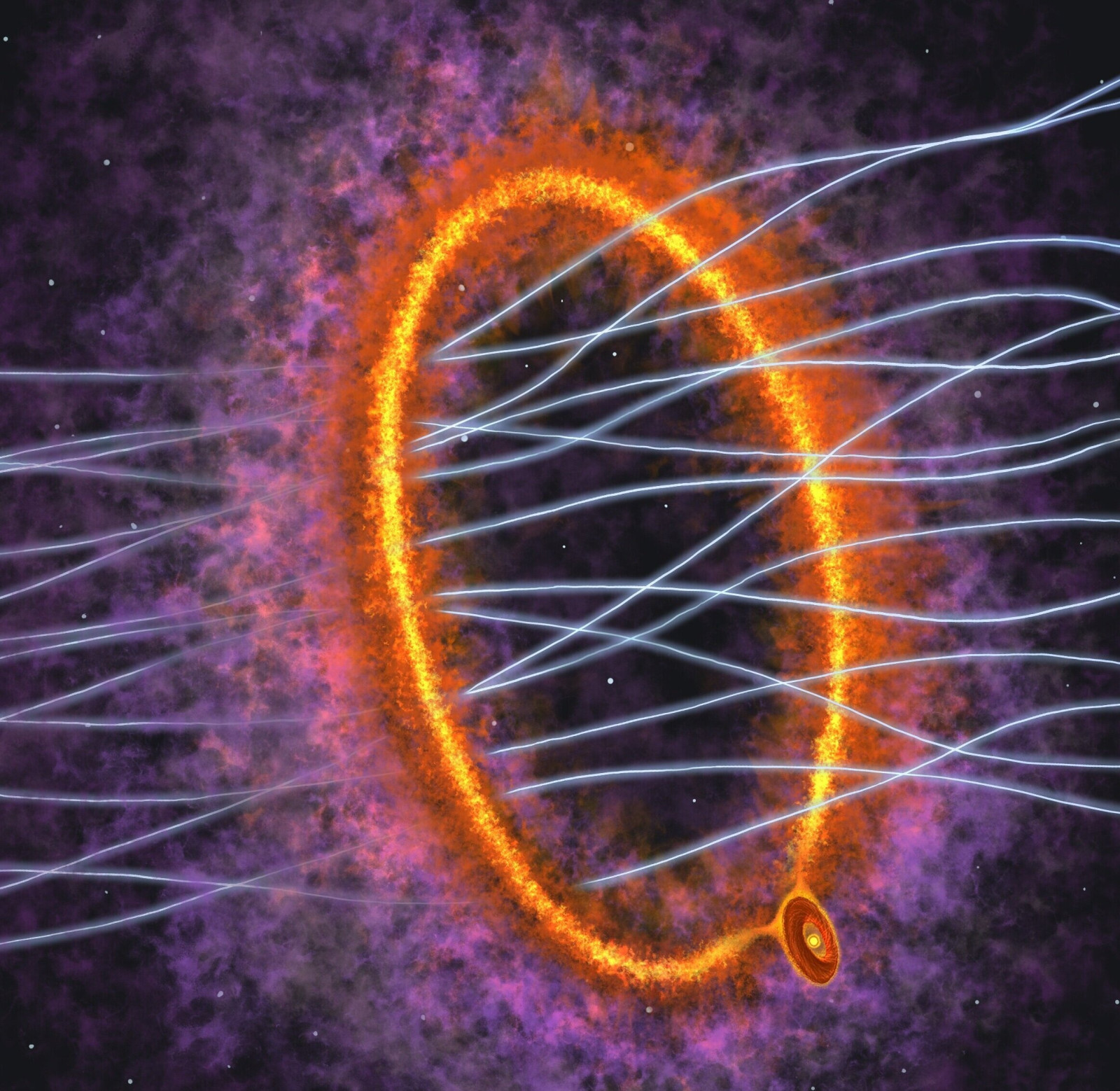
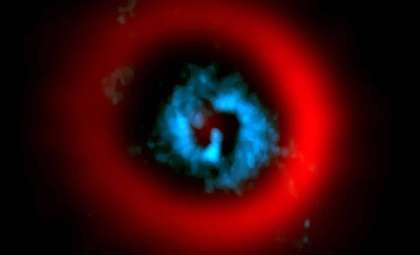
Employing ALMA, researchers discovered a well-defined gaseous ring stretching about 1,000 astronomical units from the protostar. According to Kazuki Tokuda of Kagawa University, this structure is warmer than its immediate environment, indicating ongoing energetic activities.
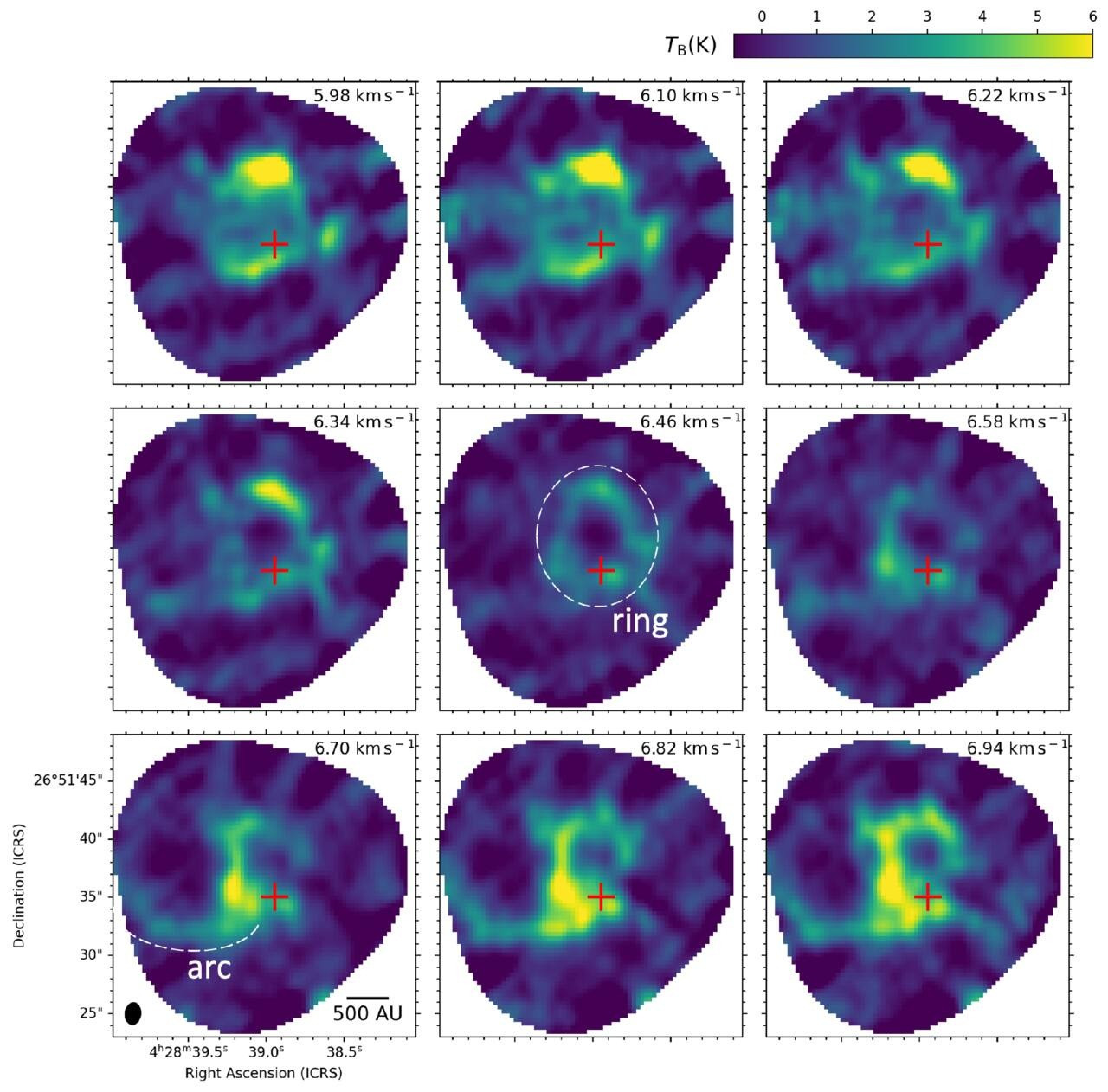
Previous investigations by the team revealed smaller formations around 10 AU, associated with magnetic phenomena within the disk, interpreted as brief energy ejecta. The newly observed ring can be seen as a magnified version of this energetic process.
“The warm ring we detected this time strengthens our hypothesis that baby stars undergo dynamic magnetic-gas redistribution shortly after birth, generating shock waves that warm the surrounding gas.”
Interplay of Magnetic Fields and Shock Waves Unveiled
The primary theory posits that magnetic fields interacting with the protostellar disk produce shock waves, heating surrounding gas and redistributing matter and energy.
This mechanism may enable young stars to expel leftover energy as they continue evolving. Nonetheless, the theory is still being explored. Upcoming high-resolution ALMA observations aim to study these rings’ inner layers to uncover more about their formation.
“We will keep collecting data to strengthen our hypothesis. In the meantime, we welcome rigorous debate on our results so we can advance our field.” Machida added that: “the gas motion involved in star formation is generally ordered, yet very chaotic, appearing in different shapes and sizes. It took us a decade to reach these conclusions, and we look forward to doing more work to uncover the mysteries of the universe.”
- Categories:
- Space





0 comments
Sign in to Comment