
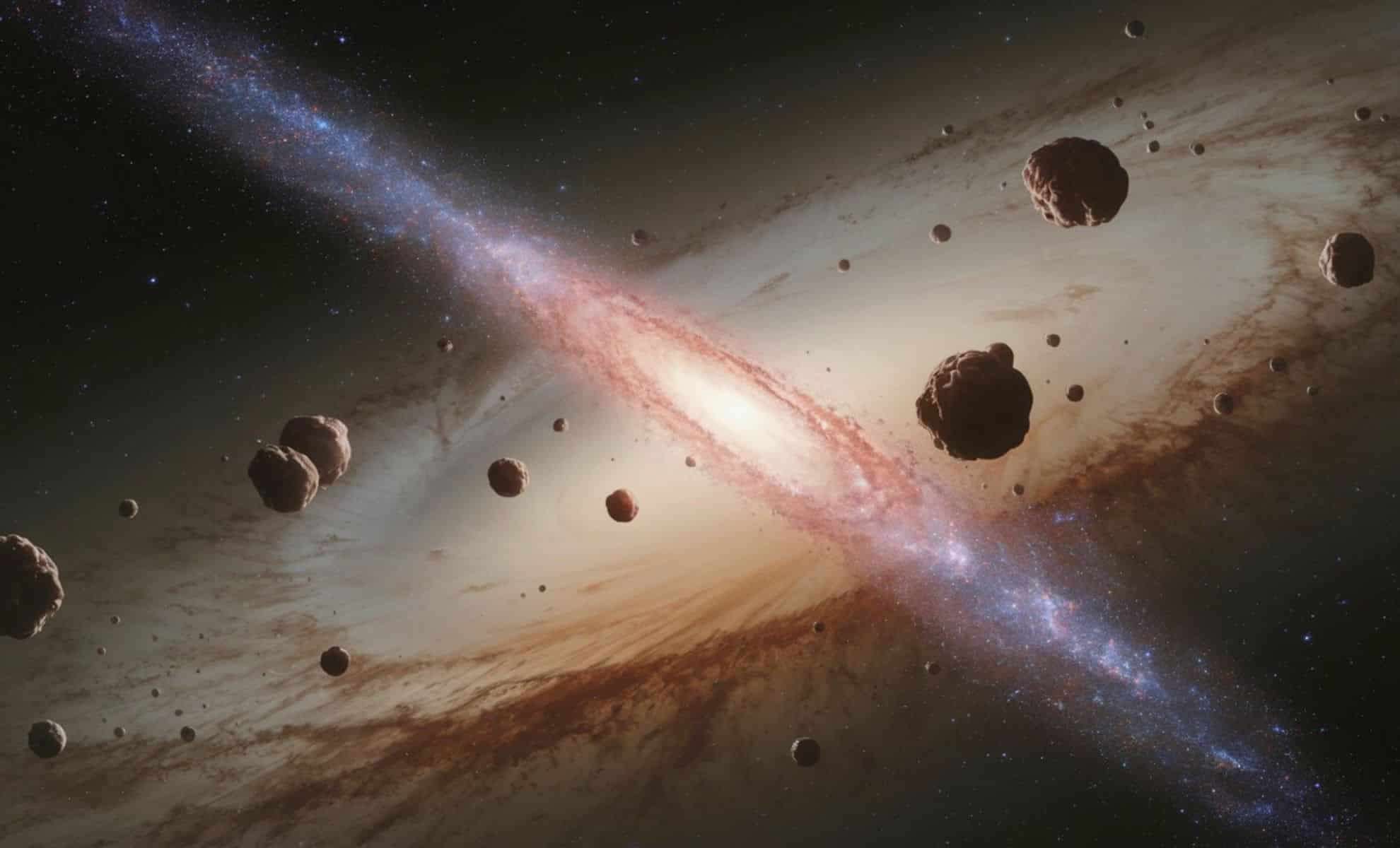
Fast radio bursts (FRBs), brief yet immensely powerful flashes of radio waves from distant parts of the cosmos, continue to intrigue researchers. A recent publication in The Astrophysical Journal Letters reports a surprising discovery: a repeating FRB traced back to a galaxy that has ceased star formation. This finding challenges prevailing theories about FRB sources and prompts fresh exploration into the roles that magnetars and other extreme phenomena might play.
Decoding FRBs: Diverse Origins Explored
FRBs captivate scientists with their incredible energy output concentrated in milliseconds. An individual burst can unleash as much power as the Sun emits in a full day. This rapid emission suggests compact astrophysical objects—like neutron stars or black holes—could be responsible. Research has identified two main categories of FRBs so far:
- Repeating FRBs: These bursts recur sporadically, indicating a surviving, active source.
- One-off FRBs: Believed to arise from cataclysmic events, such as a neutron star collapsing into a black hole, known as a blitzar.
The existence of these distinct types hints at multiple origins for FRBs. Studies of their polarized emissions further suggest that repeating FRBs might be linked to environments with intense magnetic fields—particularly those involving magnetars.

Magnetars in Unexpected Settings
Magnetars, highly magnetized neutron stars, usually form when massive stars end their lives, a process happening in galaxies rich in star formation. Thus, finding a repeating FRB emanating from a galaxy long devoid of star birth presents a puzzling scenario. How could a magnetar exist there?
A possible solution involves globular clusters, which are tightly packed groups of ancient stars. In some cases, these clusters may generate magnetars through uncommon events like stellar mergers or collisions involving older stars.
CHIME’s Precision Pinpoints the Source
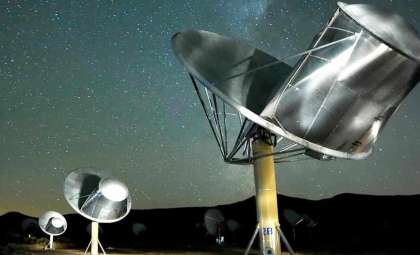
The CHIME telescope has transformed FRB detection by scanning large sky sections continuously, catching signals missed by traditional instruments. In February 2024, it detected a repeating FRB originating from the Ursa Minor constellation and monitored its activity over time. The addition of outrigger radio arrays enhanced localization accuracy, revealing the burst’s source on the outskirts of the inactive host galaxy.
Enhanced by outrigger arrays located in California and West Virginia, the CHIME collaboration’s efforts provide unparalleled precision in tracing FRB origins. Such accuracy is essential to understanding the environments that give rise to these bursts.
Could Globular Clusters be FRB Nurseries?
Globular clusters, situated in the halos of galaxies and composed of stars billions of years old, harbor exotic astrophysical objects such as millisecond pulsars and X-ray binaries. The possibility that FRBs may arise within these clusters suggests alternative formation channels, perhaps involving mergers of compact remnants like white dwarfs or neutron stars, though confirmation awaits further research.
FRBs as Cosmic Probes
Beyond their astrophysical intrigue, FRBs serve as valuable tools for observing the universe. Their radio waves traverse immense distances, interacting with the intergalactic medium and revealing insights about:
- The cosmos’s distribution of ionized gas.
- Magnetic fields permeating intergalactic space.
- The architecture of large-scale cosmic features such as galaxy clusters and filaments.
The recognition that FRBs can originate from galaxies without active star formation expands their significance as cosmic probes and broadens the range of environments under study.
Source: V. Shah et al., Astrophysical Journal Letters, 2025. DOI: 10.3847/2041-8213/ad9ddc
- Categories:
- Space





0 comments
Sign in to Comment