

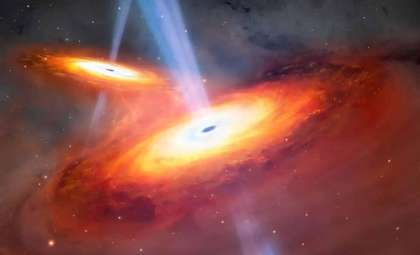
A groundbreaking discovery by astronomers reveals a rapidly growing supermassive black hole dating back to the early universe, captured by the powerful James Webb Space Telescope (JWST). This black hole is defying known physical constraints with unprecedented feeding rates.
LID-568: A Black Hole That Challenges Astrophysical Norms
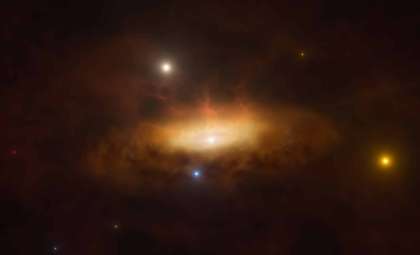
The newly identified black hole, named LID-568, offers valuable insights into a longstanding cosmic mystery: the swift formation of supermassive black holes in the early universe. Detected within a galaxy sample from the Chandra X-ray Observatory COSMOS Legacy Survey, this object eluded optical and near-infrared detection. Only the infrared capabilities of JWST unveiled its presence, thanks to its strong X-ray emissions.
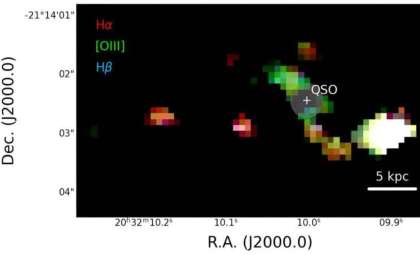
Locating LID-568 precisely proved difficult, as typical X-ray imaging could not fix its position within the JWST’s field of view. To overcome this, Hyewon Suh’s team employed JWST’s NIRSpec integral field spectrograph. This sophisticated instrument records a spectrum at every pixel, revealing finer details than previous methods and pinpointing the black hole’s exact location.

The startling result: LID-568 is undergoing a super-Eddington accretion event, drawing in matter at 40 times the theoretically predicted maximum rate, known as the Eddington limit. This threshold marks the balance where gravitational pull and radiation pressure typically restrict how fast matter can feed a black hole.
“This black hole is having a feast,” said Julia Scharwächter, co-author of the Nature Astronomy study. This finding upends traditional models by demonstrating that some black holes can experience explosive growth rates far beyond what was previously accepted.
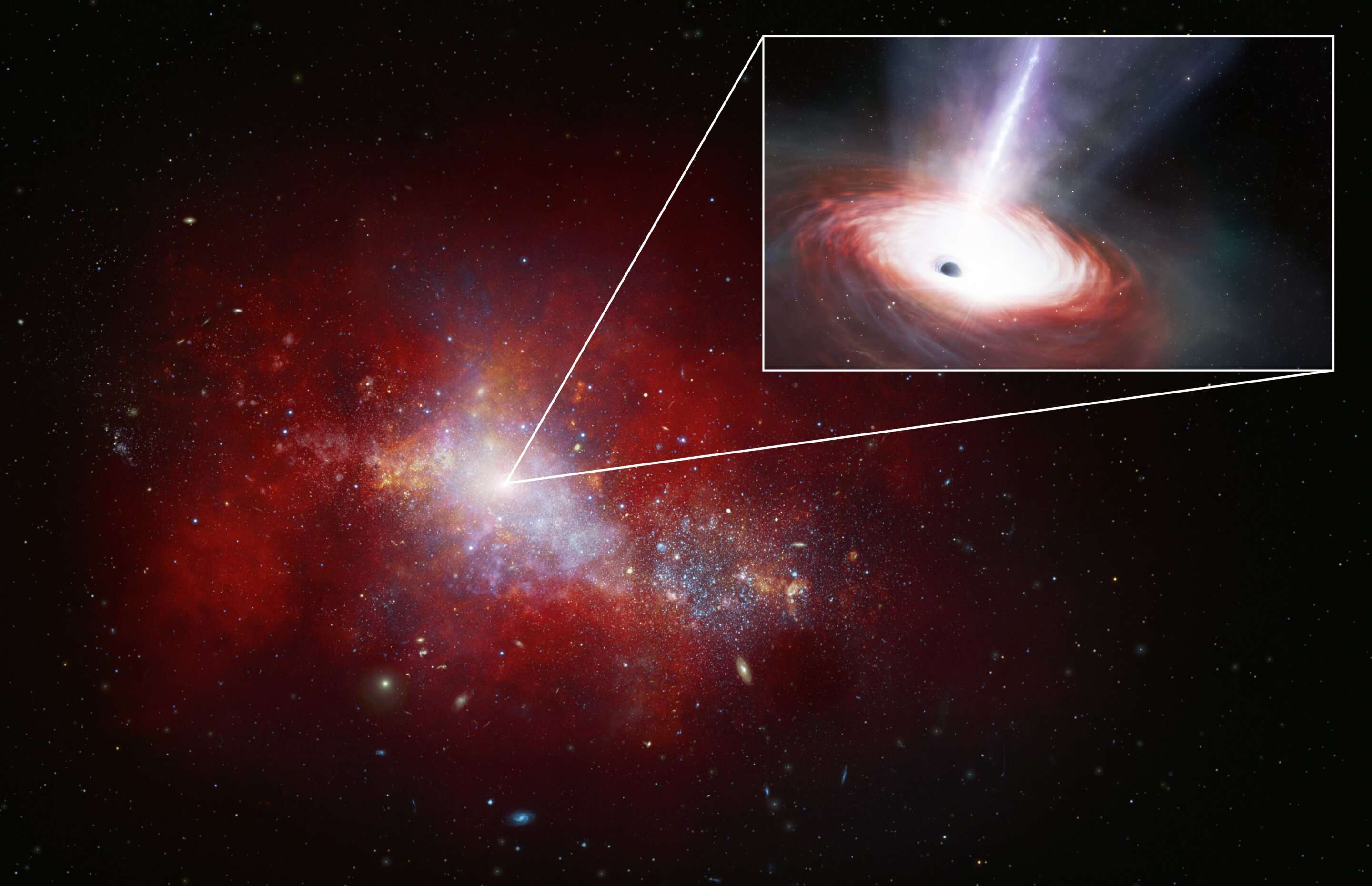
Rewriting Theories on Black Hole Growth
This discovery sheds new light on the rapid birth of supermassive black holes. Earlier ideas suggested two main origins: small "light seeds" from stellar collapse or massive "heavy seeds" from direct gas cloud collapses. The extraordinary growth of LID-568 indicates that even modest seeds could experience rapid mass gain when conditions are right, revealing alternative routes for early black hole maturation.
The team also detected significant high-speed gas outflows surrounding LID-568. These powerful streams may act as pressure relief valves, stabilizing the black hole’s surroundings and allowing it to maintain such intensive growth without causing system-wide chaos. These outflows might be a critical factor enabling these extreme feeding phases.
Future investigations are planned, with the researchers aiming to use JWST to study these phenomena in greater detail. As new data emerges, LID-568 promises to challenge existing astrophysical paradigms and deepen our understanding of the universe’s infancy, reminding us that the cosmos still holds many secrets to explore.
- Categories:
- Space





0 comments
Sign in to Comment